


 Health and Medicine
 PUBLISHED



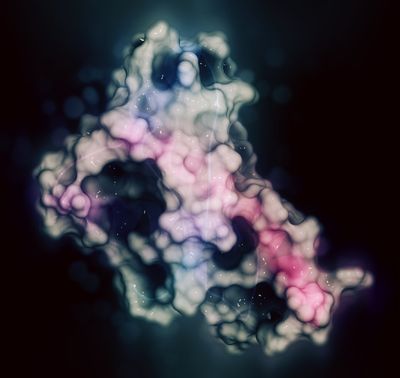


Prions are nasty, strange, generally detestable infectious agents that cause some rather horrible illnesses, but could they also offer a new tool against antibiotic resistance? Using AI, scientists have identified hundreds of peptides hiding within the structure of prions that appear to hold potent antimicrobial properties.
What are prions?
Prions are corrupted, misfolded proteins that trigger normal proteins to fold abnormally in a domino effect. You can imagine them as "bad apples" in a bunch, causing neighboring fruit to turn rotten until the whole lot has gone bad.
In animals, this activity allows prions to act as infectious agents, despite not being alive and containing no genetic material like pathogenic bacteria or viruses, and they can lead to lethal neurodegenerative diseases.
In most cases, the protein misfolding is spontaneous, although it can also be picked up by coming into close contact with a prion-infected material, such as eating the tissues of infected animals. This is one of many reasons why cannibalism isn’t recommended.
The good news is that this is all exceptionally rare. The bad news is that prions aren't alive, so they can't be killed or inactivated by standard sterilization techniques like boiling or autoclaving. This means that prion diseases, such as Creutzfeldt-Jakob disease, are effectively incurable.
How can prions help with drug discovery?
This isn't exactly the first place you'd start looking for potential new drugs. However, prions are fundamentally just proteins, and proteins are built from amino acids, which link together into short chains called peptides, and some peptides can have antimicrobial properties when isolated.
The problem is the sheer number of peptides at play, and the challenge of sifting through millions of these fragments. Fortunately, AI is very good with exactly this kind of task – and much more patient than a human.
In a new study, scientists used a machine learning system called APEX to analyse 19.3 million short peptide fragments from 2,897 prion and prion-like proteins sourced from humans, mice, cows, naked mole rats, and many other animals.
Within this batch, they identified 1,179 candidate antimicrobial peptides, which the researchers named "prionins."
“This work changes where we think antibiotics might be hiding,” César de la Fuente at the University of Pennsylvania, senior author of the study, said in a statement.
“Prions have long been seen almost entirely through the lens of disease, but AI let us ask a different question: whether these proteins also encode useful molecular fragments. The answer appears to be yes.”
The team picked out 75 of the most promising peptides and tested how they performed against 11 different bacteria, including drug-resistant strains. At least 59 inhibited at least one bacterial pathogen, while 42 of them showed strong activity at low concentrations.
The prionins did this, they found, by disrupting bacterial membranes, much like how conventional antimicrobial agents work
“The AI search gave us a short list of candidates, but the important point is that many of those molecules worked in the lab, and two worked in an animal infection model. That is what makes this a discovery platform, not just a prediction exercise,” added Marcelo D. T. Torres, co-first author of the study.
AI is a genuine game-changer for drug discovery
Prions might just be the beginning of this new avenue opened up by AI. The team argues that "encrypted peptides" may be hiding within all kinds of things, from human proteins and extinct organisms to microbiomes and venoms. Now we have the opportunity to scour through it all at incredible speed.
“For a long time, drug discovery has been limited not only by what we can test, but by where we choose to look,” de la Fuente said.
“AI is changing that. It gives us a way to search the hidden layers of biology and ask whether molecules associated with one story – in this case, disease – may also carry another story with therapeutic potential,” he added.
The new study is published in the journal Nature Microbiology.

 1
1