Health and Medicine
 PUBLISHED





At some point in your life, you've probably heard the age-old wisdom that you shouldn't put your tongue on a frozen lamppost, or other metal post or railing. According to the rumor, and Homer Simpson in The Simpsons, if you do it, you will find yourself stuck to the object by your tongue. It certainly sounds like an urban legend, but apparently, you would do well to avoid testing it out. According to a new study, which investigated past cases of so-called "tundra tongue" and conducted experiments using the tongues of pigs, there are real risks to taking a lick of cold metal objects.
The project, led by Anders Hagen Jarmund of the Norwegian University of Science and Technology, was conducted in the researchers' spare time, and was prompted by personal experience.
"I’m from a small place called Hattfjelldal, which is quite cold in the winter,” Jarmund explained in a statement. “I don’t remember if it was a signpost or a lamppost behind the school, but I remember licking it and my tongue got stuck."
Jarmund and his fellow researchers, which included his brother, decided to look into what danger this really poses. First, they decided to do a good old-fashioned literature search, combing through Scandinavian newspapers all the way back to 1748 for incidents of people getting their tongues stuck to cold metal. Surprisingly – or unsurprisingly, if you have ever come into contact with a child – they first found 856 reports of such incidents. Eliminating where multiple papers had reported on the same incident, they discovered 113 unique cases of people not being able to resist a lick, and getting themselves into the newspaper.
The first instance they found came in 1845. Analyzing the reports, they found that over 60 percent of them involved boys, and were generally not too harmful to the unfortunate victim. However, in 18 percent of the cases, the lickers required hospital treatment, for problems like avulsion, or when the flesh of your tongue gets ripped away because it is stuck to the metal.
A 1929 report explained that a boy in Vienna got his tongue stuck to a bar. Though the fire department heated the bar until it came loose, the boy may have required part of his tongue to be amputated as a result. Another incident involved scarring in the face, whilst one boy was reportedly stuck for 90 minutes during his ordeal.
"Severe injuries were reported in several cases through three distinct mechanisms: (1) the direct effect of cold on tissue, (2) detachment injuries, and (3) the consequences of immobility," the team explains in their first paper, adding "Ice-crystal formation causes immediate tissue injury and is probable at tissue temperature −4.4 °C, and possible at tissue temperatures as high as −.55 °C."
In a second study, the team acquired 84 pig tongues and began attaching them to a cold lamppost, before removing them slowly or rapidly.
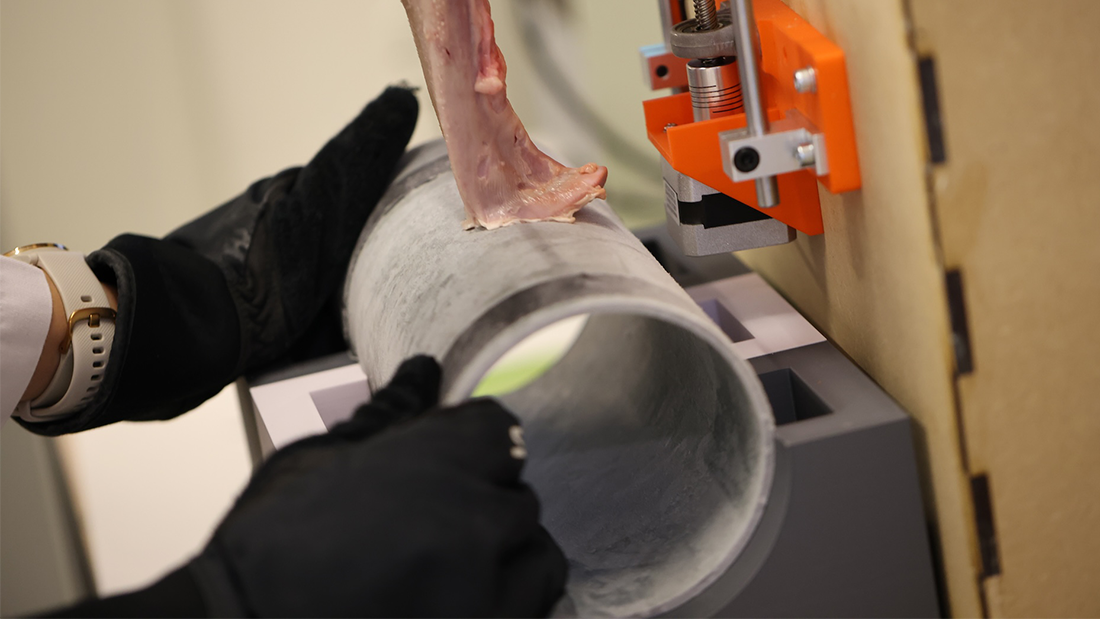
Overall, the team found that 54 percent of the time, the tongue-sticking ended in avulsion, with the pig tongue's flesh being ripped away as the tongue was removed from the post. The team found that the pigs' tongues did indeed stick to the lampposts, and the risk of avulsion was greatest when temperatures were between -5 and -15 °C (5-23 °F).
Lower than this, there was less chance of such injury. But the team believes this may be due to the tongues freezing hard enough to resist tearing, so don't go thinking you can dodge hospital by simply licking a cold enough lamppost.
"Notably, peel force does not always correlate with injury severity, highlighting the complexity of avulsion mechanisms," the team adds in the second study. "Freezing likely changes tissue mechanical properties, and the structural integrity of the skin, making thawed skin more fragile."
So, what should we make of the research? In short, try to keep your tongue away from freezing metal objects. In Norway, where these sorts of temperatures occur regularly in the winter, the use of metal on playgrounds has been banned since 1998, making incidents more difficult. But should you find yourself in that situation, Jarmund has advice.
"Try not to panic," he said. “I remember the panic, you’re standing there and your tongue is stuck to metal. But above all else: Don’t pull your tongue off too fast."
The first study is published in the International Journal of Pediatric Otorhinolaryngology, the second in Head & Face Medicine.