Nature
 PUBLISHED
 8
8



The recent government shutdown was the longest in history, lasting 35 days and beating the previous record by two weeks.
It was finally brought to an end (at least, temporarily) on Friday and the economy is expected to recover most if not all of the $11 billion in lost revenue. The ramifications of the shutdown on the country's national parks, however, could last years – centuries, even.
Take, for example, Joshua Tree National Park. Management of the park returned to normal on Monday, when hundreds of staff who had been furloughed during the shutdown returned to work.
Speaking at an earlier rally, former superintendent Curt Sauer praised the efforts of volunteers who stepped in over the past few weeks. He also pointed to the degree of damage reaped during the park's partial closure, during which time certain visitors took advantage of the lack of authority.
"What’s happened to our park in the last 34 days is irreparable for the next 200 to 300 years," Sauer said, reports the Desert Sun.
He's not the first to warn the parks may take centuries to recover. "It’s really easy to damage a dryland soil, you can basically do it in seconds with your Jeep," soil ecologist Matthew Bowker told Popular Science last month.
Clean-up crews may be able to clean the toilets, pick up the overflowing garbage, and repair the broken gates and signs, but the damage caused by illegal camping, campfires, and driving, not to mention the vandalization of the park's famed Joshua Trees, cannot be so easily fixed.
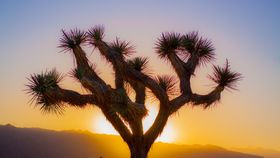
The spikey and surreal-looking plants – reminiscent of something in a Dr Seuss novel – are not trees, like their name suggests, but a species of yucca plant (Yucca brevifolia).
Because they do not have rings like, say, an oak tree, their age can be hard to determine, but a rough estimate can be made based on their height. Joshua trees grow between a half inch and three inches per year and some experts think they live, on average, 150 years. Some particularly long-lasting individuals may live to 500 or older, making them extremely hard to replace in the face of vandalization.
John Lauretig, the executive director of the Friends of Joshua Tree nonprofit and a volunteer, helped clean toilets during the shutdown.
"If the government doesn't fund or staff the parks appropriately, then they should just close the parks to protect the parks and protect the people," he told the Desert Sun, speaking in line with the National Parks Conservation Association (NPCA). The organization states it's "reckless" to keep the parks open without adequate staffing on its website.
In previous shutdowns, the parks have been temporarily closed in the interest of health and safety, but this time around, the Trump administration took the unusual decision to keep the parks open. Without adequate funds, the majority of park rangers, cleaners, and other staff members had to be furloughed, while 3,298 of the 20,000 or so people employed by the Park Services continued work in skeletal crews.
It has also been estimated that the Park Services lost more than $13 million in uncollected entrance fee revenue – not to mention financial loss due to lost labor, stalled projects, and follow-up clean-up operations.
"Fully reopening the federal government will mean so much to so many," Theresa Pierno, president and CEO for National Parks Conservation Association, said in a statement. "Now is when the real work begins."
Trump declared a short-term agreement to re-open the federal government on Friday, but with no settlement on his controversial border wall and the agreement due to expire on February 15, he is already threatening to issue another shutdown.
Let's hope for the sake of the national parks at the very least, this does not come to pass.