Nature



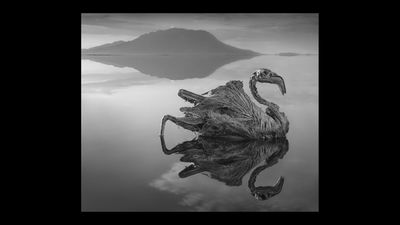


Back in 2013, a set of images from photographer Nick Brandt set the internet a-chatter. In stark black and white, they showed birds and bats seemingly turned to stone where they stood, a vast lake behind their eternally preserved bodies.
What could have happened to these animals? Why did they die so close to water, and in such a ghastly, almost mythological way? Well, as it turns out, the truth is even stranger than the mystery.
The bright and deadly waters
Throughout the history of Earth, species have always clung to water. We crave the rain; we walk for hundreds of kilometers to find oases in the desert. Water is, very literally, the source of our planet’s life.
But with very few exceptions, any animal hoping to find succor in Tanzania’s Lake Natron should think again. Its blood-red waters are extremely hot – up to 60°C (140°F), which is about the same temperature as a cup of coffee and much warmer than a bath or even hot tub. At those temperatures, a dip in the lake would give you third-degree burns in just a few seconds – and that’s not even the worst part of it.
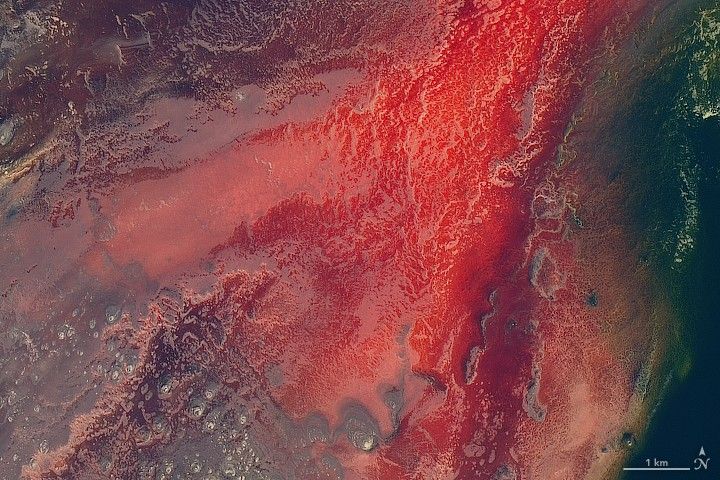
See, the water isn’t just hot. It’s also extremely alkaline – the opposite of acidic, but equally dangerous – with a pH that can sometimes reach as high as 12. In other words: get to the lake on a bad day, and you’ll be faced with water that’s about as caustic as household bleach.
It is, you might say, a strange lake – and that’s thanks to the rather unique set of circumstances that created it. Lake Natron is connected to just one naturally dammed river and no seas, and the area in which it sits is so hot and arid that evaporation usually outpaces any rainfall, leaving a lake that’s so salty it's referred to as "hypersaline" in the technical literature.
But that’s not all that gives Lake Natron its weirder properties. In fact, it’s probably not even the most important part.
“It’s the region’s volcanism that leads to the lake’s unusual chemistry,” explains NASA’s Earth Observatory. “Volcanoes, such as Ol Doinyo Lengai (about 20 kilometers to the south), produce molten mixtures of sodium carbonate and calcium carbonate salts. The mixture moves through the ground via a system of faults and wells up in more than 20 hot springs that ultimately empty into the lake.”
With those, and the fact that the lake never really reaches even 3 meters deep under the hot equatorial sun, the lake can’t help but reach those extremely warm temperatures, topping off the hostile trilogy: hot, caustic, and salty.
“Not many people venture near the shores of Lake Natron,” says NASA. “The lake is mostly inhospitable to life.”
Keyword: mostly. But not entirely.
Life and death at Lake Natron
As haunting as the images of those “stone” bodies at Lake Natron were, their color palette arguably did them dirty. In black and white, they failed to show off the striking red of the water – a result of salt-loving microorganisms known as haloarchaea that call the otherwise inhospitable lake their home.
These microorganisms, in turn, attract some animals – most notably the lesser flamingo, for whom the shores of Lake Natron form the only regular breeding area in East Africa. It’s a delicate balancing act – you need look no further than Bradt’s photo of a long-dead flamingo in the water to see how easily it can go wrong – but with plentiful Spirulina algae to feast on and conditions harsh enough to ward off most predators, the birds evidently think it’s worth the risk.
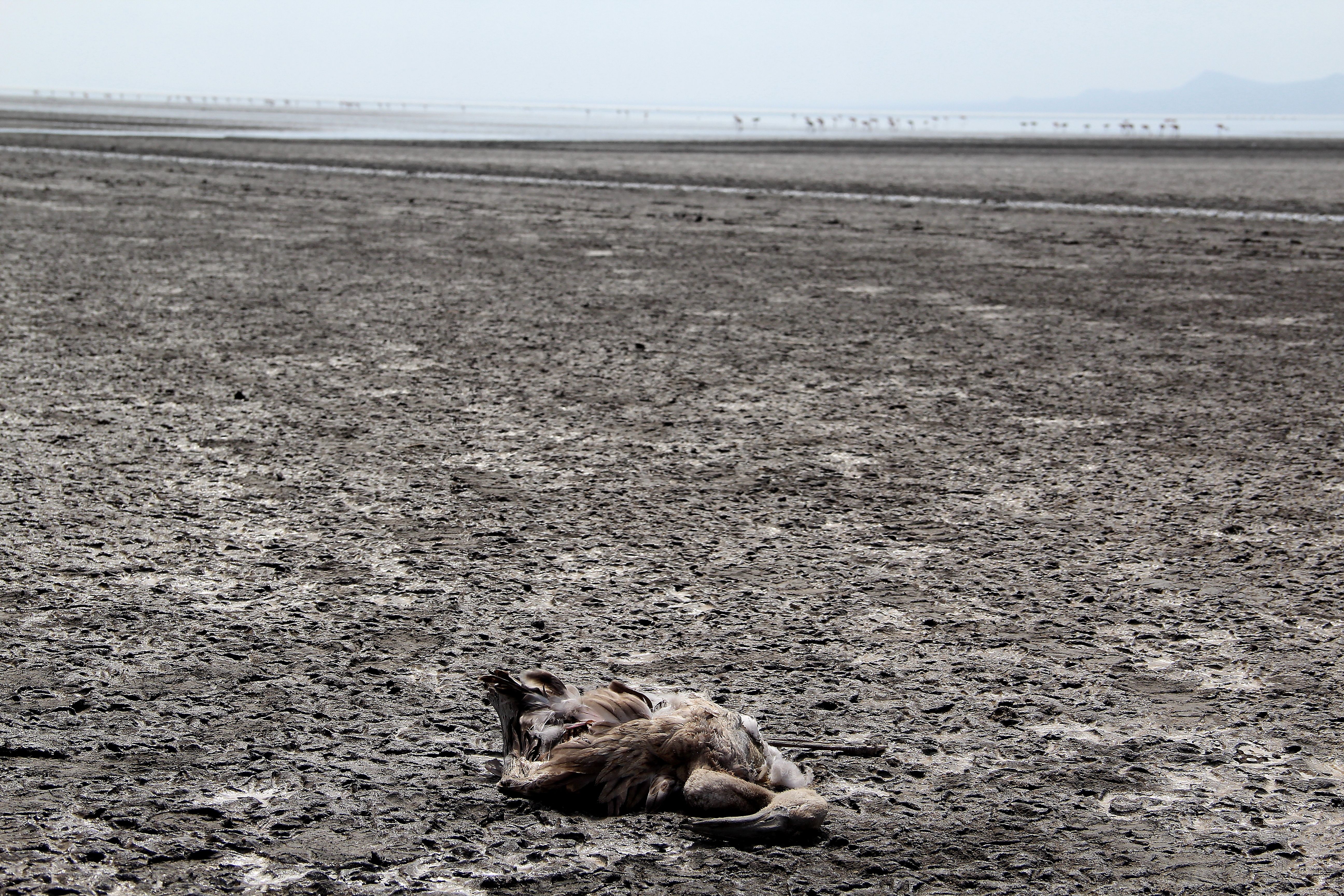
Others, though, aren’t so canny. Pretty frequently, migrating birds will crash into the lake’s surface, perhaps fooled by the highly reflective water into thinking they could fly straight through it. They wouldn’t be the only ones to fall prey to such an illusion: back in 2007, a helicopter pilot was so disorientated by the mirror-like water that he crashed the aircraft, resulting in an explosion in the water.
“The water was burning my eyes,” cameraman Ben Herbertson recalled after the event. “The water is physically hot.”
That’s why, when birds or bats or any other small unfortunate thing falls into the water, they probably won’t make it out. “I unexpectedly found the creatures – all manner of birds and bats – washed up along the shoreline,” Brandt wrote in his book Across the Ravaged Land, in which the photos were published. “No one knows for certain exactly how they die, but […] the water has an extremely high soda and salt content, so high that it would strip the ink off my Kodak film boxes within a few seconds.”
But as for the birds “turning to stone” – well, that’s a bit more complicated than it seems.
Not quite petrified
Lake Natron has, at times, also been known as Medusa Lake – named for the gorgon who could turn her victims to stone with a single glance. But despite appearances, the animals in Brandt’s shots didn’t just hit the water and petrify – and in fact, even now, they’re not stone at all.
Indeed, look at the bodies and you’ll easily see the remains of feathers and flesh – and that’s because these animals aren’t petrified, but mummified. Or, at least, desiccated and calcified: natron, the mix of salts for which the lake gets its name, absorbs moisture and fat so well that the Ancient Egyptians once used it to preserve their own dead. The bodies of birds and animals that fall in end up dehydrated – certainly an ironic end for a death by drowning.
It's that, plus the plentiful mineral deposits in the water that build up around these spooky, hollowed-out remains, which produces bodies that seem to be set in stone. And, to be clear, this process takes time – the only reason Brandt’s figures appear posed as if suddenly transformed into death is because they are, literally, posed that way: “I took these creatures as I found them on the shoreline, and then placed them in ‘living’ positions, bringing them back to ‘life,’ as it were,” Brandt explained in his book. “Reanimated, alive again in death.”
If you fall into Lake Natron, then, fear not: you won’t immediately turn to stone. But neither would you enjoy yourself: “It’s so caustic, that even if you’ve got the tiniest cut, it’s very painful,” Brandt told Smithsonian Magazine back in 2013.
“Nobody would ever swim in this,” he warned. “It’d be complete madness.”