Nature
 PUBLISHED
 3
3



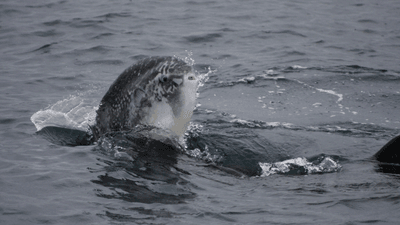


I can still remember what sprang to mind when I first laid eyes on a Mola mola. “What the…” I muttered to myself. “Where’s the rest of it?”
Looking like a concrete slab with all the resolution of PS1 Hagrid, it was hard to make sense of what I was looking at. A giant head with a tiny face and two oars for fins… it seemed half-finished, as if a child had been tasked with creating a new creature from the deep and dredged up something from their imagination ripe for the mercy rock.
I was instantly in love.
A quick internet search yields some similarly unkind takes on the world’s largest bony fish. Results to the effect of “Worst fish ever?” and claims they are too big, slow, and stupid.
Given the number of photos of them swimming around with large chunks of their body missing, I can see where they’re coming from, but I disagree. Life as a 2,000-kilogram pancake can’t be easy at sea, and yet they’ve endured for 40 million years on this planet. They've got to be doing something right.
Sure, they’re not particularly agile, they’re not pretty, and they don’t seem to know what’s going on. But might I suggest they’re the greatest fish in the world?
“Too big”
It’s not often in life you can throw a piece of popcorn into the ocean and expect it to transform into the largest bony fish on Earth. And yet, here’s how Mola mola, also known as giant ocean sunfish, begin their lives:
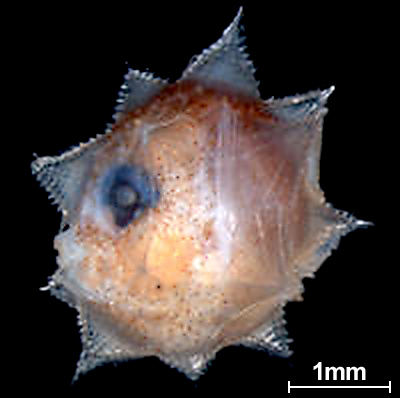
Pictured is the larval form (Mola alexandrini is an even cuter version). At a mere ~2 millimeters (0.07 inches), it weighs less than a gram, but not for long.
With a bit of luck and a few years under its belt, a Mola mola can increase its original weight up to 60 million times – that’s the equivalent of a human baby growing up to weigh the same as half the Empire State Building (there’s not a mercy rock on Earth…).
From a tiny speck to a slab 3 meters (9.8 feet) long that can weigh over 2,000 kilograms (315 stone), it’s a Kafkaesque transformation. Arguably the most extreme size increase of any vertebrate animal.
Like one of those Magic Grow Creature Capsules you used to chuck in the tub, the end result is lumpy, wet, and seemingly uncertain of its place in this world.
“Too slow”
Mola mola exhibit an unusually wide global range. So wide, in fact, scientists once suspected they were simply getting dragged around by ocean currents like plankton, powerless to correct course.
And I mean, I get it. If the embarrassment that was my first attempt grappling with a coracle taught me anything, it’s that a round body with two sticky-out bits isn't the easiest way to go forwards (or sideways, or indeed in any intended direction).
For the Mola mola, however, it’s a system that works just fine.
Despite looking like a boulder with two piddly paddles, Mola mola are surprisingly powerful swimmers. No tail is apparently no problem as they propel themselves through the water with synchronized pulses from their dorsal and anal fins. Sort of like a penguin, just like, sideways.
As adults they tend to cruise around at speeds of 3.2 kilometers per hour (2 miles per hour), which, for their size, isn't half bad. They can even generate enough speed to catch air, breaching out of the water in a rare act of athleticism that’s thought to get rid of parasites. In the babies it sort of looks like a case of the zoomies.
And those dorsal fins? They can be so big that people often mistake sunfish for sharks, which reminds me – had a similar Spielberg flick been made about these guys, it would’ve been called BEAKS.
“Too stupid”
The relatively small mouths of Mola mola are made up of fused teeth shaped like a beak. It’s stuck permanently open, which explains why sunfish always look so delightfully bamboozled.
It is also, unfortunately, why so many of them suffocate on plastic bags cosplaying at jellyfish. But hey, if there were decoy hotdogs floating around in my environment, my days would be numbered, too.
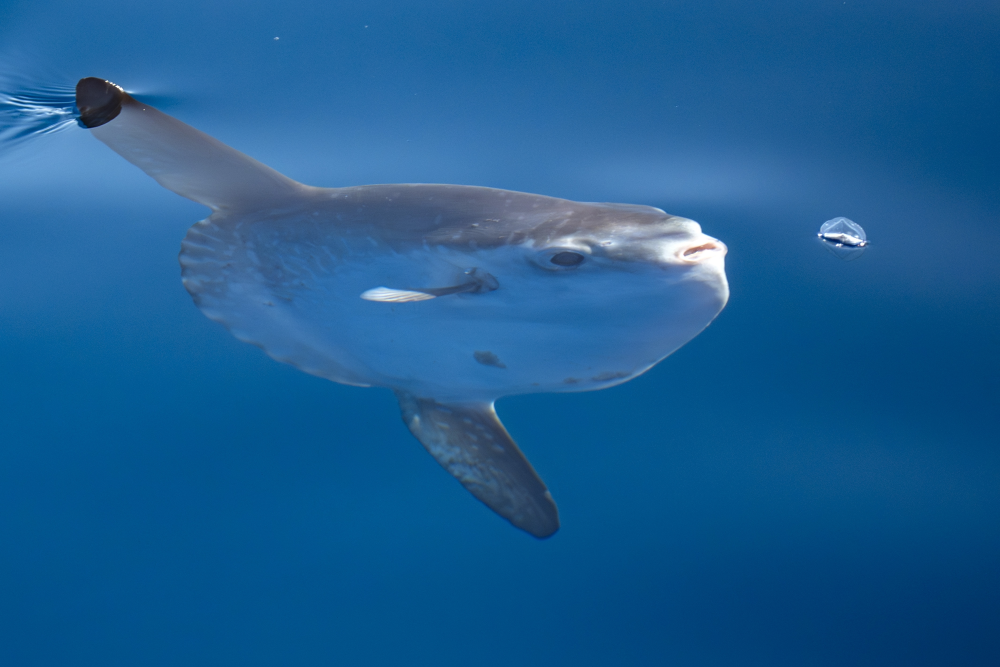
Plastic bags aside, the specificity with which Mola mola hunt their preferred prey – jellyfish and siphonophores – is really something. A 2015 study reported that they make daily excursions to the surface to rewarm before plunging back to depths of up to 200 meters (650 feet) to hunt.
The researchers strapped cameras to sunfish and discovered that merely catching invertebrate prey wasn’t enough for some of them. A series of images taken at 4-second intervals revealed how one sunfish captured a jellyfish and selectively fed on its gonads (reproductive organs) and oral arms. Aka, the most nutritious bits...
In fact, it's this pursuit of jellyfish (and their nads) that explains why the Mola mola, slab-like as it is, is actually the image of peak performance. By growing so big – which they achieve by packing themselves full of collagen (a substance that takes little effort to produce or maintain) – they can hold onto heat for longer and get more jellyfish snacking done before they have to return to warmer waters at the surface.
So enough, I say, with this Mola mola bashing. They’re not too big, slow, or stupid. They're transformer globetrotters with a taste for the finer things in life.
And a fish you can slap like a big bag of topsoil? Spectacular, give me 14 of 'em right now.
IFLScience Hot Takes is a semi-satirical Opinion column where we take a silly or outrageous idea and argue for it as if it's our earnestly held belief… as long as we can find good scientific reasons to back it up.
Do you agree with Rachael? Is the Mola mola an icon, or a hot mess? Let us know!