Health and Medicine
 PUBLISHED


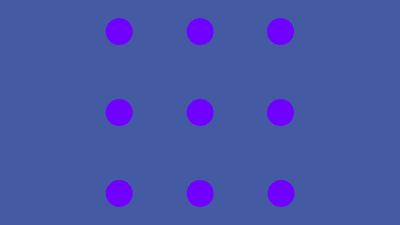


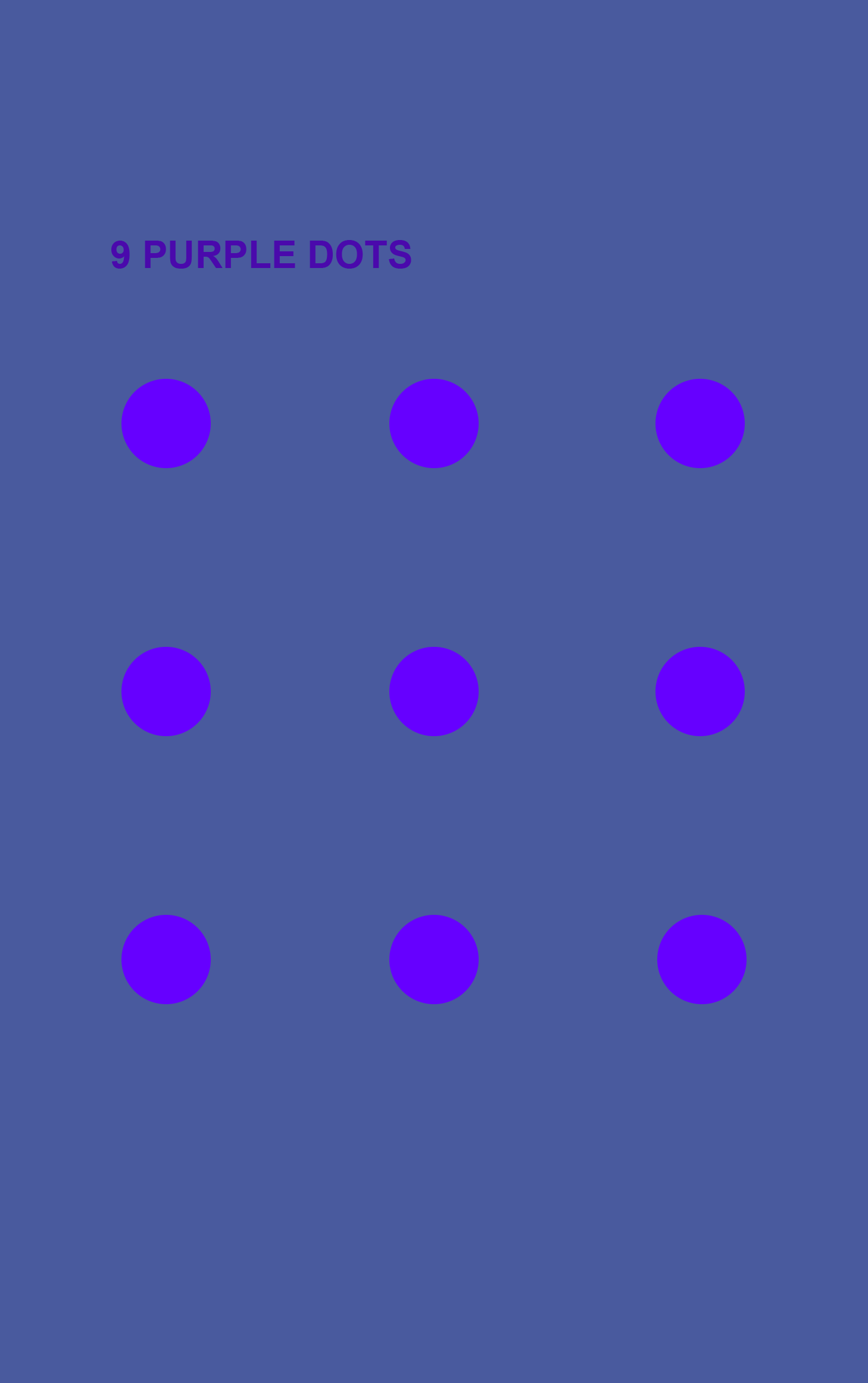
How many purple dots do you see in the image above? Are they all the same hue? This new optical illusion, developed by biomedical optics engineer Hinnerk Schulz-Hildebrandt, is more revealing than you might think.
“The perception of color is not a direct consequence of the wavelength of electromagnetic radiation, but rather an active construction of the human visual system,” begins Schulz-Hildebrandt in a new paper detailing the illusion. The way our cones are placed, how they’re stimulated, and which particular wavelengths they best pick up, all add up to “a unique visual illusion,” he explains, “in which a purple element on a bluish background is perceived as purple only at the point of fixation, while the perception of surrounding elements of the same color is shifted toward a blue hue.”
In other words: y’see how the dots around the outside kinda… disappear?
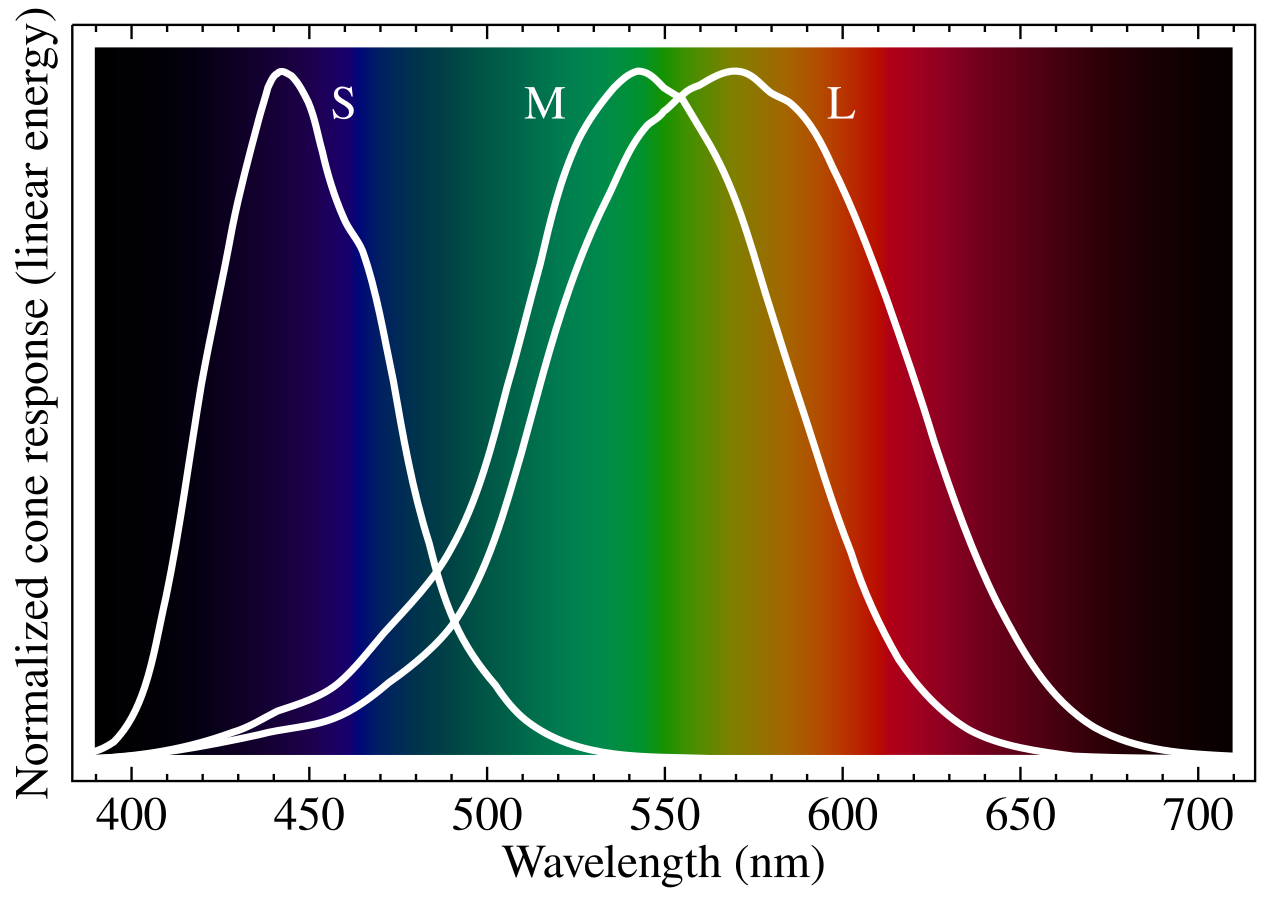
So, how exactly does it work? Well, there are three types of cones – that is, color-detecting cells – in our eyes: L-cones, S-cones, and M-cones. Those letters stand for long, short, and medium – nobody said neuroanatomists were inventive namers – and reflect which wavelengths each is responsive to: L-cones pick up red tones best; S-cones, the blues; and M-cones are most sensitive to the greens and yellows in the middle.
But these three types of cone are far from equally distributed in the eye. Not only do they appear in wildly different numbers, with L and M cones outnumbering S cones by a factor of around 10 to one, but they’re also unevenly spread throughout the eye. “In the fovea, the area of sharpest vision, L- and M-cones are present in high density, enabling the finest detail and color discrimination,” Schulz-Hildebrandt wrote. “The S-cones […] are almost completely absent in the absolute center of the fovea.”
The upshot of this, plus the additional impact of the retina’s various protective measures against blue light, is that your eyes simply aren’t as good at seeing blue as they are other colors – especially when you’re looking directly at it. “We don’t notice this usually,” Jenny Bosten, a visual neuroscientist at University of Sussex, told Scientific American this week, “because our brains have learned to ‘calibrate’ out the difference.”
And therein lies the final ingredient in this illusion: our brain. “The perception of colors is not absolute and isolated,” Schultz-Hildebrandt points out, “but depends on the context and their integration into the ambient scene.” Think, for example, of the arguments surrounding The Dress, or all those “you won’t believe these pictures are the same color!” illusions that captivate the internet every so often – these memes only exist thanks to our brains’ propensity to, well, get a bit confused and make stuff up.
In this nine-dot illusion, what we’re seeing is an effect called simultaneous contrast – when your brain changes how you perceive a color so it can stand out more. Basically – well, you might have noticed, when you first squinted at the image above, that the dots and the background colors are pretty similar – a purplish-purple on top of a bluish-purple. Our brain sees that combination, and interprets the dots as being “more purple” to help distinguish them from the background.
The result of all these factors combined is a striking illusion: your brain makes the dot you’re looking at “more purple” while your eyes make it “less blue”; to provide a contrast, your brain then makes the surrounding dots look more blue. The effect is so reliable that it moves in real-time as you scan the image – despite every dot being a stable, single hue.
The study is published in the journal Perception.