Nature
 PUBLISHED


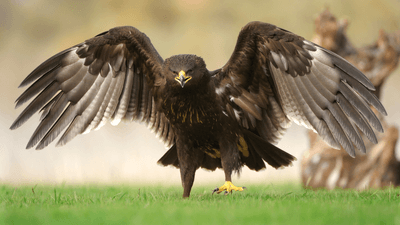


The impact of war on the migration of an endangered species has been revealed for the first time. The study looked at the migration of the greater spotted eagle through Ukraine, before and after it was invaded by Russia back in 2022.
The investigation into the effects of war came about unexpectedly, as the team from the University of East Anglia (UEA), the British Trust for Ornithology (BTO), and the Estonian University of Life Sciences were already studying these birds before the invasion began in February. They had initially been investigating the influence of disruptive weather events including drought, destruction of habitats, and changing land use, and then human conflict got added to the list.
In total, 19 greater spotted eagles had been fitted with GPS tracking devices as part of the research, and this revealed that they were exposed to multiple conflict events during their journey through Ukraine from March through to April. Warfare included artillery fire, jets, and tanks, as well as unprecedented movement of people as civilians were displaced and soldiers moved through the landscape.
The results showed that the eagles were having to make big deviations from their ordinary migratory route, spending less time at refueling sites in Ukraine, or failing to stop at them at all. From 2018 – 2021, 90 percent of the birds were stopping at refueling sites, but after the invasion, this dropped down to just 30 percent.
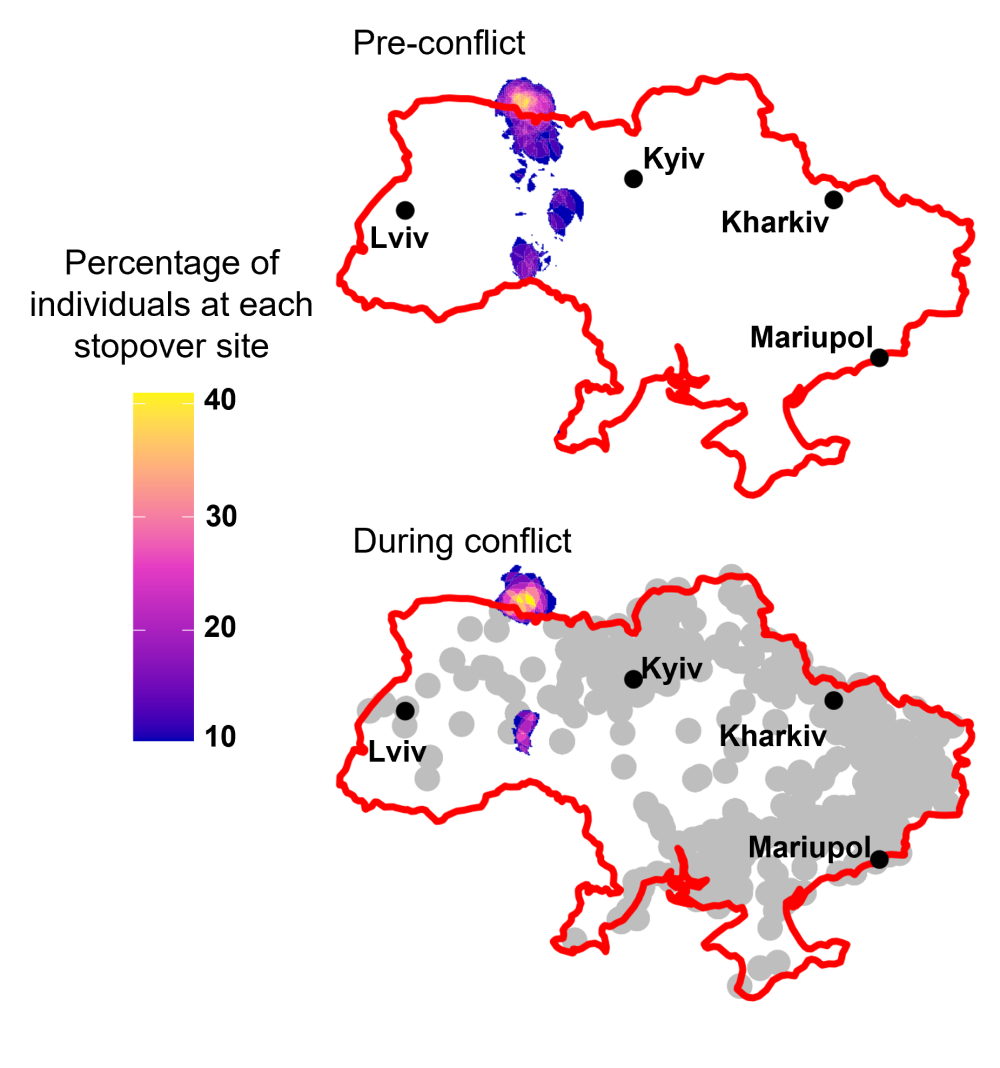
Migrating males moved more slowly, and on average the eagles were traveling an extra 85 kilometers (53 miles) to reach the breeding grounds. That amounted to a pre-conflict migration time of around 193 hours for females jumping to 246 hours, meanwhile, males jumped from 125 hours to 181 hours.
The combination of longer flying times and fewer opportunities to stop off for food makes it likely that the birds’ fitness is impacted, which – considering the journey is made ahead of the breeding season – could have a very negative impact on an already endangered species.
“The war in Ukraine has had a devastating impact on people and the environment,” said the study’s lead author Charlie Russell, a postgraduate researcher in the School of Environmental Sciences at UEA, in a statement. “Our findings provide a rare window into how conflicts affect wildlife, improving our understanding of the potential impacts of exposure to such events or other extreme human activities that are difficult to predict or monitor.”
“These types of disturbances can have significant impacts on the behaviour, and potentially fitness of the eagles. For individuals breeding in these areas, or other species that are less able to respond to disturbance, the impacts are likely to be much greater."
The study is published in Current Biology.