Nature
 PUBLISHED


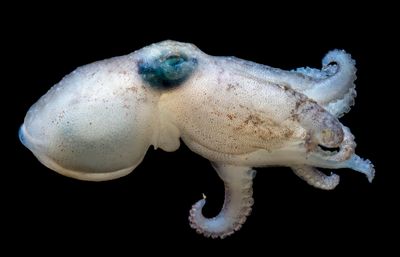


The waters surrounding Antarctica are the coldest in the world, ranging from a frosty -2°C to a comparatively balmy 10°C (28 to 50°F). That might not sound like an ideal place to make roots, and yet life in the Southern Ocean thrives – but how? Antarctic octopuses (Pareledone) might hold some answers, with researchers having discovered a key molecular change that allows the creatures to survive even in the coolest of conditions.
Enzymes, biological catalysts critical to cell function, are vulnerable to temperature – they often slow their activity in extreme cold. In determining why Antarctic octopuses can survive in freezing waters, enzymes are one of the most logical places to look; the cold reduces the rate of enzyme activity by 30 times, and yet the octopuses remain alive and well.
An inter-institutional team of researchers focused on one of the most important enzymes in the nervous system – the sodium-potassium ion pump. This protein sits within the cellular membrane, pumping sodium ions out of the cell and bringing potassium ions in, a process critical to bringing neurons back to “rest” after activity.
Previous research from the team had found that in the cold, sodium-potassium ion pumps slowed down far less in Antarctic octopuses than in those found in more temperate waters, suggesting that there may be molecular differences – aka mutations – in the pumps that have allowed the Antarctic species to function in colder waters.
When investigating differences in proteins, the key place to look is the amino acid structure – these are the building blocks of proteins. The team examined the amino acid structure of the sodium-potassium ion pump in both Antarctic octopuses and Octopus bimaculatus, a temperate-living species.
Although the pumps were largely the same, there were some differences between the two. To figure out which of these amino acid alterations played a role in adaptation to the cold, the researchers did some molecular jiggling around. They transferred the uniquely Antarctic amino acids into the temperate octopus’ pump, tested for cold tolerance, removed the changes, and tested again.
Through this process, the team discovered 12 mutations that conferred cold tolerance, although one change contributed a fair bit more to this than the others – the 314th amino acid in the Pareledone sodium-potassium ion pump, which was a leucine.
The researchers believe that this change affects how part of the pump moves against the membrane; they think that it could reduce drag, which in turn allows the pump to work more quickly. “It makes sense to us” that the interface between the protein and the membrane would be a site for such adaptations, said study author Miguel Holmgren in a statement. “Once we have studied more membrane proteins, I think we will see more examples of this.”
The study is published in Proceedings of the National Academy of Sciences.