Nature
 PUBLISHED


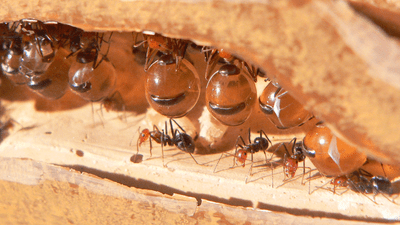


Honeypot ants have found a unique way to stay fed while food is sparse: by stuffing one-fifth of the colony with so much nectar that they warp into living jugs. Known as repletes, these bodacious ants hang from the ceiling like ornate light fixtures, ready to drip-feed their relatives when they come knocking.
Ant colonies are famously complex, with every individual having a role to play – and honeypot ants are no different. The species, Camponotus inflatus, live in arid parts of the western United States and Mexico, and their colony members are divided into several roles. At the top of it all is the queen who churns out tiny eggs that will one day hatch and specialize.
What do honeypot ants do?
One option for young honeypot ants is to become workers who help to raise the young, keep the colony clean, and forage for food. Then, there are the repletes: A group of honeypot ants whose role is decided essentially by the size of their behind.
Repletes emerge as the largest newly hatched honeypot ants are given lots of food. Honeypot ants forage for proteins and fats, but the desert is also rich with plants carrying nectar which gets stuffed into the bonnie babies.
Eventually, the replete's body changes shape as valves preventing the nectar from moving into their stomachs mean it builds up in a cavity of the body called a crop, making it balloon. The dark flecks you can see on their swollen abdomens are the plates that protect the bodies of normal-sized honeypot ants, the rest is the underlying membrane that expands to fit in enough honey to make the ants as big as a grape.

Why do replete honeypot ants get so big?
Repletes usually make up about one-fifth of the colony, so they have to store a lot of nectar-rich junk in the trunk if they’re going to keep everyone fed.
When food is low and worker honeypot ants need nourishment, the repletes will regurgitate their nectar stores and drip-feed it into hungry mandibles. When foraging is going well, the workers return the favor, delivering nectar to their living food stores to hold onto until it’s needed.
Who eats honeypot ants?
The downside for honeypot ants is that their jewel-like repletes stuffed with nectar represent a pretty juicy find for predators. One is badgers, whose sharp claws can burrow into honeypot ants’ colonies and claim the repletes. Other ants will even pillage honeypot ants' colonies and steal the nectar-stuffed repletes. Talk about precious booty.
Not only is the juicy nectar of honeypot ants fit for human consumption, but according to some people it’s the best honey out there. It’s long been enjoyed by humans sharing their habitat with honeypot ants, and even Father Nature himself, Sir David Attenborough, has enjoyed sweet candy ants.
[H/T: Oddity Central]