Nature
 PUBLISHED


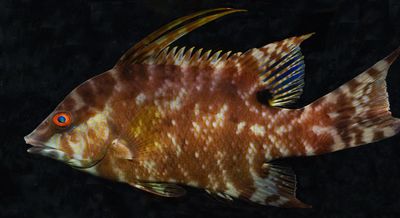


Hogfish, like many reef-dwelling sea creatures, are experts in changing the color of their skin – and it turns out they don’t even have to be alive to do so. Without the use of their eyes, how can hogfish detect the environmental changes that lead them to color shift in the first place? Researchers believe the answer lies underneath their skin.
When a hogfish in the Florida Keys swam towards the bait on biologist Lori Schweikert’s fishing rod, it probably wasn’t aware that a) it was about to meet an untimely end and b) it would open up a whole new avenue of research. Going to retrieve it from the boat deck, she noticed that the dead fish had changed color and pattern to match the floor. Given that it definitely no longer had use of its eyes, Schweikert wanted to know how it had detected a new environment and camouflaged.

Like many other color-changing creatures, hogfish have a layer of specialist pigment-containing cells in their skin called chromatophores. When the granules of pigment in these cells move closer together, or further apart, the skin changes color. In some animals, this process might be triggered visually; its eyes detect a predator, which triggers a signal to the brain, which in turn sends a signal to chromatophores. What researchers needed to figure out was what sparked the process when the eyes and brain of a hogfish weren’t involved.
Using microscopy, Schweikert and her team took a closer look at what was going on in the fish’s skin. Under the layer of chromatophores, they discovered another layer made up of another type of cell, crammed full of a light-detecting protein known as opsin. In a display of unconscious perfectionism, these layers work together to form a feedback loop that allows the hogfish to refine its color.

Opsins detect changes in the light that’s able to penetrate through the granules, acting like a live feed of the changes happening outside. “The animals can literally take a photo of their own skin from the inside,” said Sönke Johnsen, a member of the research team, in a statement. “In a way they can tell the animal what [its] skin looks like, since it can’t really bend over to look.”
The researchers are still not sure exactly how, but the opsins feed this information back to the chromatophores above, triggering the movement of pigment and a color change in the hogfish’s skin.
Whilst this research finally gave a biologist an answer to why her seafood dinner changed color, it has implications beyond the natural world. The researchers involved hope that it can be used to improve technologies that also use sensory feedback loops.
The study is published in the journal Nature Communications.