Nature
 PUBLISHED


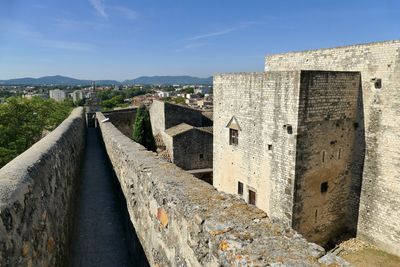


An unusual earthquake that damaged villages in France’s Rhône Valley appears to have been caused by heavy rain. Although no one was killed in this event and its impact was quite localized, the findings show that human effects on climate can have unexpected indirect consequences we haven’t taken into account.
Most earthquakes, particularly larger ones, take place along plate boundaries. So when earthquakes large enough to do damage happen within plates, seismologists are interested in their possible causes, particularly in locations not known for such events.
On November 11, 2019, a magnitude 4.9 earthquake caused hundreds of houses to partially collapse in the villages of Le Teil and Saint-Thomé in southwest France. The fact that these houses were centuries old and previous earthquakes had been too small to disturb their stones testified to the exceptional nature of this event, setting off a search for a cause.
Initial suspicion focused on a nearby quarry, but further research has now pointed the blame on heavy rains the month before. That’s actually much more of a worry in terms of precedent. When we try to estimate the cost of rising temperatures, we include sea levels, and worsening droughts, floods, and storms, but few calculations take movements of the Earth itself into account.
Scientists at the Bureau de Recherches Géologiques et Minières constructed a 3D geological model of the region around the earthquake site and factored in the rocks taken from the quarry since 1850. The reduced weight from the exported rocks shifts forces in the area, but this has certainly been a slow process.
In contrast, an influx of groundwater and hydrated soils as a result of intense rains took place in just the previous month when major floods hit the region. The researchers used soil moisture data from the SMOS satellite to estimate water infiltration. They found pressure from this extra water was at its highest for at least 10 years just before the quake, reaching almost 1 million pascals 1.2 kilometers (0.7 miles) beneath the surface near the point where two fault lines meet. They estimated the pressures produced by the water were 2.5 times those released by the quarrying and think this could have been enough to trigger shallow fault lines in the area.
The earthquake took place at a depth of around 1 kilometer (0.6 miles), unusually close to the surface, explaining why so much damage could be done, albeit over a small region, by a relatively modest quake.
Whether or not the 2019 floods can be attributed to human-induced climate change, there is little doubt events like this will become more serious and extreme in future.
The pressure produced by fracking for oil and gas, particularly the disposal of wastewater afterward, has been blamed for an upsurge in earthquakes at many locations across the world. This finding shows that fossil fuels can make the Earth move long after they were extracted.
The study is published in Remote Sensing.