Health and Medicine
 PUBLISHED
 1
1


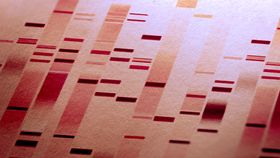


It was long assumed that a huge chunk of our genome, perhaps up to 99 percent of it, was just useless “junk” because it didn’t appear to code for protein sequences like the rest of our DNA. However, an increasing amount of research is starting to challenge that idea, revealing how this so-called "junk DNA" might actually help to regulate how genes are expressed and even dictate the development of conditions.
A new study has shown that mutations in the noncoding junk DNA appear to be associated with the development of autism spectrum disorder (ASD), a condition that's known to have a strong – albeit elusive – genetic underpinning. While the mechanism behind the link still isn’t crystal clear, the discovery further highlights how “dark DNA” might not be useless junk, instead playing a pivotal role in autism and other conditions.
"This is the first clear demonstration of non-inherited, noncoding mutations causing any complex human disease or disorder," senior study author Olga Troyanskaya, a professor of computer science and genomics at Princeton University, said in a statement.
Reporting their findings in the journal Nature Genetics, researchers from Princeton University and Rockefeller University used artificial intelligence (AI) to study the genomes of 1,790 families where one child has ASD but other members of the family don’t have ASD. The deep-learning algorithm taught itself to sniff out relevant sections of DNA and learn how any given DNA sequence could change protein interactions that would affect gene expression. By finding patterns in this, the AI can predict the effect of mutating any chemical unit in the entire genome and the chances of it affecting a disease, known as a “disease impact score”.
"What our paper really allows you to do is take all those possibilities and rank them," noted study co-author Christopher Park, a research scientist at the Flatiron Institute's Center for Computational Biology, in a separate press release. "That prioritization itself is very useful, because now you can also go ahead and do the experiments in just the highest priority cases."
Previously, fewer than 30 percent of people with ASD had an identified genetic cause. These new findings showed that mutations in the junk DNA altered the expression of genes associated with synaptic transmission and neuronal development in the brain, which appears to lead to an increased risk of ASD development. "This is consistent with how autism most likely manifests in the brain," added Park.
Now, the team hopes this insight could be used to study neurological disorders, cancer, heart disease, and many other conditions that scientists have previously struggled to link with a clear genetic cause. "This transforms the way we need to think about the possible causes of those diseases," concluded Troyanskaya.
"This method provides a framework for doing this analysis with any disease."