Space and Physics
 PUBLISHED


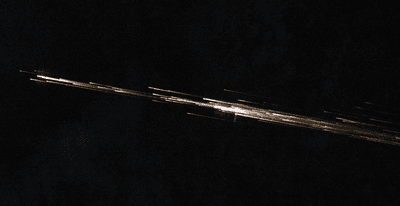


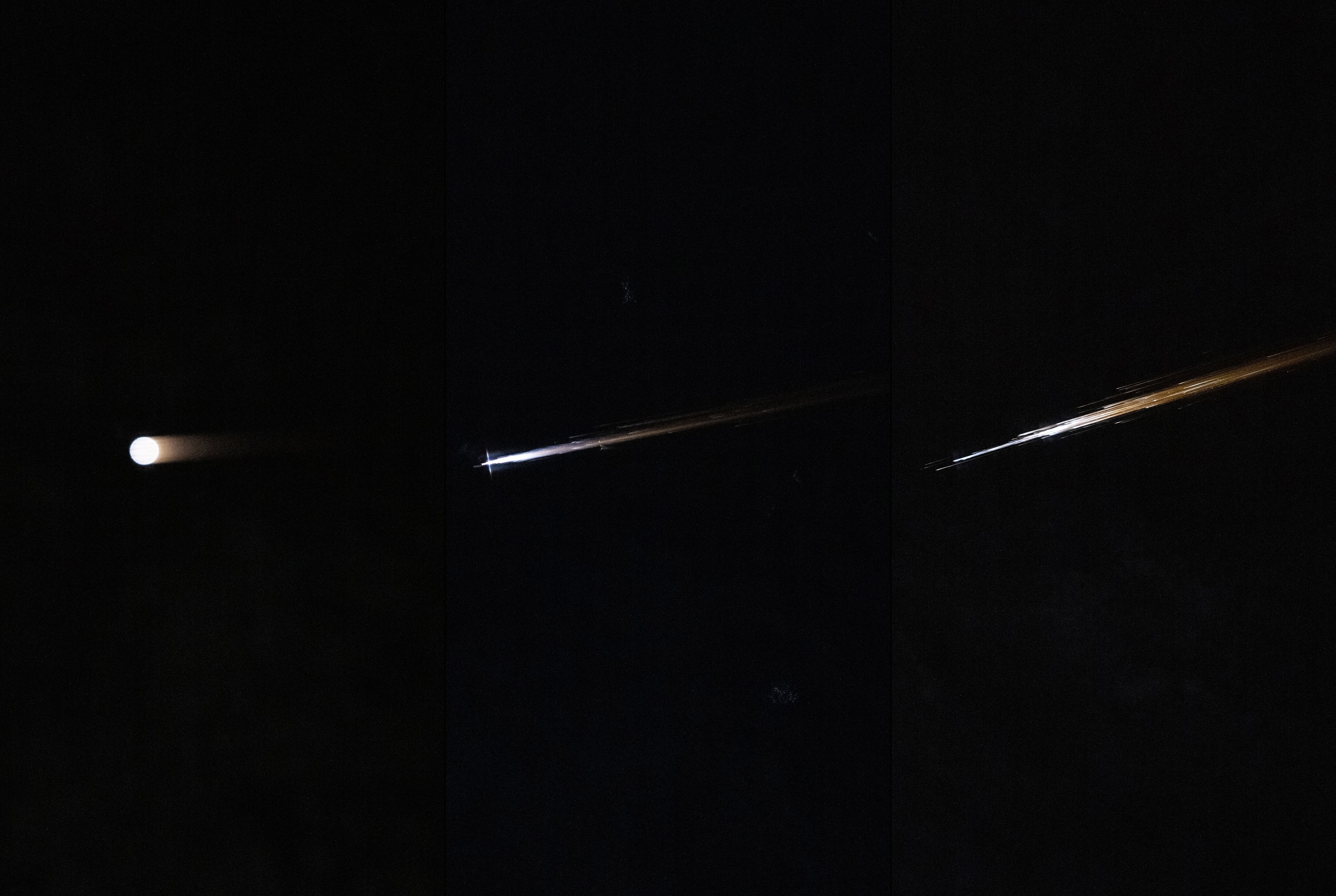
What you're about to see is something no human could have witnessed before the last century: a breathtaking view from space as a Russian rocket, or perhaps some rogue piece of human-made debris, tears through Earth's atmosphere, shattering in a blaze of glory and scattering a brilliant shower of light across the sky.
This extraordinary sight was recently captured by NASA astronaut Chris Williams, who had the ultimate front-row seat aboard the International Space Station (ISS). As the station glided over West Africa on April 27, Williams watched from the cupola as a blazing object carved a fiery trail through the upper atmosphere.
“I saw its tail grow and then split apart into a shower of smaller pieces,” he commented on social media. “It was quite a light show!”
In a blog post, NASA explained that the astronaut had most likely witnessed the rocket that launched the Russian cargo resupply ship Progress 95, aka Progress MS-34, which had docked safely at the ISS earlier that day. However, they couldn't rule out that it was a satellite, another rocket fragment, a random piece of space junk, or even natural meteoric material.
Earth's orbit is considerably more crowded than most people realise. The planet is currently being lapped by approximately 25,000 trackable pieces of debris larger than 10 centimeters (inches), plus millions upon millions of smaller, untracked fragments. All told, approximately 9,000 metric tons of metal and scrap material are washing around up there.
Altitude plays a major role in how long debris lingers in orbit. Objects below around 600 kilometres (372 miles) tend to fall back to Earth within a few years, while those above 800 kilometres (497 miles) may stay aloft for centuries. Beyond 1,000 kilometres (621 miles), debris can keep circling the planet for a millennium or longer.
Fortunately, the chances of any of this debris actually reaching the ground are small — but not zero. During a launch, spacecraft shed certain components, such as single-use rocket boosters, to lighten their load. These castoffs are designed to incinerate as they plunge back through the atmosphere.
Scientists have highlighted how the lifespan of space junk is increasing as materials become stronger and more heat-resistant. While these improvements make space travel safer and more efficient, it means the risk of space junk reaching solid ground is rising.
NASA estimates that an average of one piece of debris has fallen back to Earth each day for the past 50 years. No one – yet – has ever been seriously hurt by a piece of artificial space junk. In fact, officially, only one person has ever been hit by falling space debris. But as humanity launches ever more into the cosmos, those odds are creeping up.
A 2022 study argued that there’s a 10 percent chance that uncontrolled space junk will come crashing back home and cause human casualties in the next 10 years. Where it will strike is unknown, but the biggest risk is for people living in the Global South, with rocket bodies being approximately three times more likely to land at the latitudes of Jakarta, Dhaka, and Lagos than those of New York, Beijing, or Moscow.