Space and Physics
 PUBLISHED
 1
1



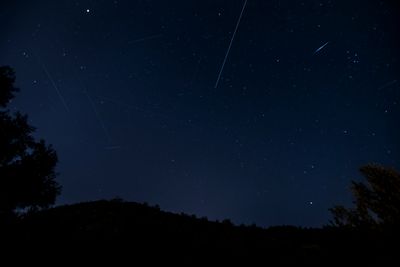


On July 28 and 29, not one but two meteor showers are expected to peak in the sky. This is a rare treat. Meteor showers constantly overlap but the peak of these two showers is completely serendipitous. The showers in question are the Alpha Capricornids and the Southern Delta Aquariids.
Neither of the two showers is particularly impressive (well, at least for now). The Alpha Capricornids peak will see about five meteors per hour, while the Southern Delta Aquariids’ rate is 16 per hour. The former are also slower than the latter. But don’t let the number put you off because from around the same location, come more meteors.
The two showers sit on the opposite side of the Antihelion Source. This is a large, roughly oval area from which a lot of meteors come. If you are familiar with Greek, you will have already worked out its position in the sky. The name means opposite to the Sun. The meteors from these sources are all coming from that general location in the sky but they are all easy to distinguish based on their velocity.
If you see something very swift, it is probably neither of them – the more likely source is the Perseids. While we are a few weeks away from them peaking, this is one of the strongest showers there is, with around a meteor per minute during its regular period and almost double that around the peak between August 11 and 12.
But the Perseids' position as the Northern Summer's most intense meteor shower will eventually be challenged by the Alpha Capricornids. Currently, the Perseids beat the other shower 20 to 1, but between 2220–2420 CE, Earth will enter the bulk of the debris left over by the partial destruction of comet 169P/NEAT. This happened several thousand years ago, and the diminutive shower is the evidence. Once we get in the thick of it, it will be the strongest annual meteor shower. One to tell your great-grandkids to look out for.
The source of the Southern Delta Aquariids is unknown.
For these showers, pre-dawn hours away from the city lights are the best. People in the Northern Hemisphere have better views of the Alpha Capricornids, while people in the Southern Hemisphere have a better view of the Southern Delta Aquariids.