Health and Medicine
 PUBLISHED


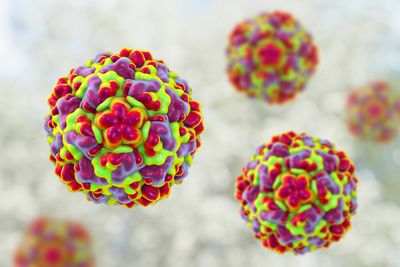


Around 250 years ago, a woman in London caught a cold. Perhaps this is not an overly remarkable point on its own, but scientists have now been able to identify the virus’s genome from preserved medical specimens. Not only does this represent the oldest confirmed human RNA virus, it may also allow scientists to trace its evolution as a cause of illness in humans.
RNA viruses are a group of organisms whose genetic material is made up of ribonucleic acid (RNA) – a nucleic acid molecule that in human cells is essential for coding, decoding, regulating, and expressing genes. Many of the more lethal viruses that have affected humans across the globe during recent decades fall within this group, including influenza, HIV, Ebola, poliovirus, COVID-19, and even the common cold (rhinovirus).
It is likely these viruses have been, for want of a better word, plaguing humans for centuries. For instance, there is evidence from Ancient Egypt dating back to around 1500 BCE that shows certain individuals living with the aftereffects of polio. But while we can be sure these viruses interacted with humans in the past, we have not been able to assess their overall impacts in contexts pre-dating the 20th century.
However, recent years have seen significant advancements in palaeogenomics, a field that examines and reconstructs ancient nucleic acids from fossilized or well-preserved specimens. These developments have allowed scientists to characterize pathogens hidden within human remains that have otherwise been impossible to analyze in the past.
Previous work has managed to reconstruct numerous hepatitis B viral genomes from ancient specimens dating back to the Bronze Age, which they used to understand the its evolution in relation to the humans it infected.
But despite this progress, recovering viral RNA genomes from historical specimens remains challenging. This is due to their structure: RNA can exist as single stranded molecules, which are not very stable (especially compared to DNA or even double stranded RNA). At the same time, RNA tends to not survive very long when it is left in the environment.
One way around this has been for researchers to recover RNA from historical tissue specimens kept in anatomical and pathology collections. From 1990 onwards, many of these collections preserved their specimens in formalin, an organic compound that is known to preserve RNA. This has allowed for some important reconstruction of viral genomes, such as influenza A and measles viruses.
But as you’ve probably guessed, this still presents a problem: how do you access RNA from specimens that predate the use of formalin?
In their latest study, an international team of researchers were able to identify viral RNA genomes from RNA obtained from medical specimens collected around 250 years ago. These specimens – one belonging to a woman from London who died during the 1700s, and the other from an unknown individual who likely died around 1877 – were held at the Hunterian Anatomy Museum at the University of Glasgow. Both these specimens were preserved in alcohol and had documentary evidence of severe respiratory disease.
Having identified their specimens, the team then set about isolating both RNA and DNA from their lung tissues. This was not an easy task. According the New Scientist, the RNA they recovered was fragmented, with most pieces averaging around 20 to 30 nucleotides long. This is extremely small, especially when you consider that average living cells contain RNA molecules that are typically over 1,000 nucleotides long.
But with perseverance, the team were able to eventually reconstruct the entire RNA genome of a rhinovirus from the woman who died in the 1700s.
“Our extraction protocol uniquely enables the dual isolation of DNA and RNA from the same sample, providing a comprehensive view of the molecular history of museum specimens”, the team write in their preprint paper, which has not yet been peer reviewed.
Once the genome was reconstructed, the team compared it to a database at the US National Institutes of Health. This public database contains records of genomes for millions of viruses from across the world. From this analysis, they were able to show that the reconstructed virus was likely a type of human rhinovirus A, one that went extinct but is closely related to the modern A19 genotype.
“Our analyses show that the historical [human Rhinovirus] A genome represents an extinct lineage closely related to HRV A19 and suggests a dynamic turnover of [human Rhinovirus] A genotypes”, the team write.
In addition to the cold, the woman was also had additional bacterial infections that cause respiratory disease. These included Streptococcus pneumoniae, Moraxella catarrhalis, and Haemophilus influenzae.
“Rhinovirus infections are typically limited to the upper respiratory tract but are known to infect the lower respiratory tract and cause severe disease when associated with bacterial co-infections,” the team explain.
“This clinical scenario is well recognized today but rarely described in 18th-century medical texts.”
The discovery represents a significant step in the field of palaeogenomics, as it demonstrates the ability to recover RNA from collections that pre-date the use of formalin. By accessing these previously unobtainable specimens, we may be able to better understand how existing viruses may evolve in the future.
The preprint paper, which has not yet undergone peer review, is posted to bioRxiv.