


 Space and Physics
 PUBLISHED


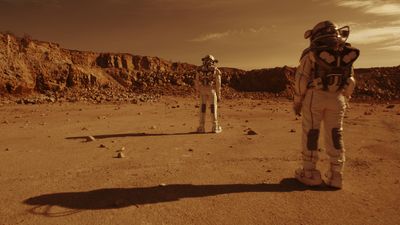


Videos of astronauts on the Moon show them often bouncing across the lunar surface, helped by the fact that the gravity of our satellite is just one-sixth of Earth’s surface gravity. That experience might only be reserved for the initial time on the Moon, and long-term permanence on our satellite might lead to a lot smaller bounce. Astronauts are likely to lose muscle mass.
It's well known that microgravity in space affects the human body detrimentally, including bone density loss and muscle atrophy. In a study conducted in mice on the International Space Station (ISS) that may have implications for space-faring humans, scientists wanted to investigate the gravitational threshold below which muscles start to deteriorate. The team sent 24 male mice to the ISS, exposing the animals to different levels of simulated gravity using a centrifuge. With 1g being the normal Earth gravity, the mice experienced either 0.33g, 0.67g, or 1g conditions for up to 28 days.
The researchers measured the grip strength and atrophy of the mice's soleus, a hindlimb muscle that is particularly sensitive to changes in gravity. At 0.33g, the gravity was just enough to prevent full deterioration, but the muscle myofibers showed changes in composition. Instead, 0.67g was enough to stop the muscle from deterioration and atrophy. They found 11 metabolites that varied with changing gravity.
“With NASA’s goal of sending humans to Mars in the 2030s, a comprehensive understanding of the molecular mechanisms underlying these gravity-induced changes is urgently required, as is the development of appropriate countermeasures to prevent deleterious effects on skeletal muscles,” the team wrote in the paper.
“However, the mechanisms by which gravity regulates skeletal muscle homeostasis and the effects of its absence during spaceflight remain largely unclear, owing to the lack of tools available to study the effect of gravity on mammalian skeletal muscles.”
Going to the Moon is faster, as it would take only days for astronauts to get there. The Moon, though, has a much weaker gravity than the two thresholds investigated here. Mars would be a much longer journey, at least many months, but its gravity is about 38 percent of what we experience at Earth, enough to stave off deterioration but likely not atrophy.
Astronauts on the ISS are in free-fall, so while the actual pull of gravity is just slightly less than on the surface, they experience microgravity, basically zero g, which causes a whole array of changes to happen to their bodies.
Without exercise, astronauts can lose 20 percent of their muscle mass in five to 11 days. For this reason, those on the ISS spend at least two hours a day exercising. Even with the constant exercise, astronauts can still lose 40 percent of their muscle after five months in space.
Astronauts use the Advanced Resistive Exercise Device (ARED) weight-lifting system, a second-generation treadmill called T2, and the Cycle Ergometer with Vibration Isolation and Stabilization System (CEVIS) cycling machine. These devices simulate the resistance that one would have on Earth with gravity.
“Collectively, this experiment helps us better understand how the body adapts to reduced gravity levels, and highlights critical pathways to be further investigated,” Professor Marie Mortreux of the Department of Nutrition, Metabolism and Muscle Biology Lab at the University of Rhode Island, told IFLScience.
“Since we will not be able to use the ISS for a journey to Mars, being able to rely on artificial gravity by centrifugation or on newly developed countermeasures that prevent such metabolic changes might be key to preserving health in space.”
This study can give insights in the gravitational threshold for keeping muscles healthy but a lot more needs to be known to understand what the long-term effects of residence on another world might be like for astronauts. A lot of exercise might not be enough to counterbalance it all.
A paper describing the results was published in Science Advances.


