


 Space and Physics
 PUBLISHED


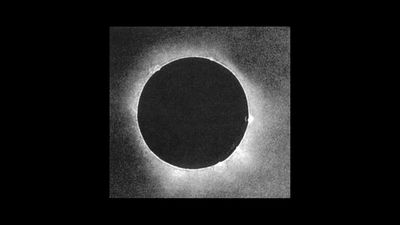


It is July 28, 1851, and a total solar eclipse is about to take place. The Moon will block the Sun in the sky, and its shadow will move from Canada to the Russian Empire. In Prussia, a photographer is attempting to do what has never been done before: capture the solar eclipse.
His name was Johann Julius Friedrich Berkowski, and he succeeded in making history. Berkowski was at the Koenigsberg Observatory, which is located in what is now Kaliningrad in Russia. He was one of the city's most skilled daguerreotypists. In short, he was the man for the job.
Daguerreotype is an early form of photography. The daguerreotypists would use a sheet of silver-plated copper and treat it with specific chemical fumes that would make the sheet sensitive to light. It was then exposed in a camera for as long as needed to capture a scene. The sheets were then chemically treated to keep the image.
The 1851 eclipse was 221 seconds long at maximum. Berkowski had an exposure of 84 seconds and used a small 6-centimeter refracting telescope attached to a heliometer. The result is the first-ever photograph of the Sun during an eclipse.
If the primacy wasn't enough, this daguerreotype is also very good, showing the subtleties of the solar corona, the wispy outer layer of the Sun that becomes visible once the glare of the Sun is blocked by the Moon.
This was basically the only real opportunity to capture an image of the sun in this way. Daguerreotypes were going out of style as better, cheaper photography came into the market in the 1850s, but this was certainly a great last hurrah.
Can you do better? Now’s your chance!
On August 12, 2026, there will be a total solar eclipse. It is quite a peculiar one, starting in northern Siberia, crossing the Arctic, and coming down across Greenland and Iceland to end in Spain.
The path of totality will be 294 kilometers (183 miles) at its widest and will last a maximum of 2 minutes and 18 seconds at the center. It’s a good time to try to take your own photo, or, if you can't make it to a spot where you can see it in person, you could watch a livestream like this one.
Remember to never look at the Sun without proper glasses until it has reached totality. If you aren't in the path of totality or you want to take a picture of the sun during partiality, put another set of glasses over your phone or get a camera filter.
During totality, the corona has a wide range of brightness, so it’s best to use a fixed aperture and a range of exposures from approximately 1/1,000 to 1 second.
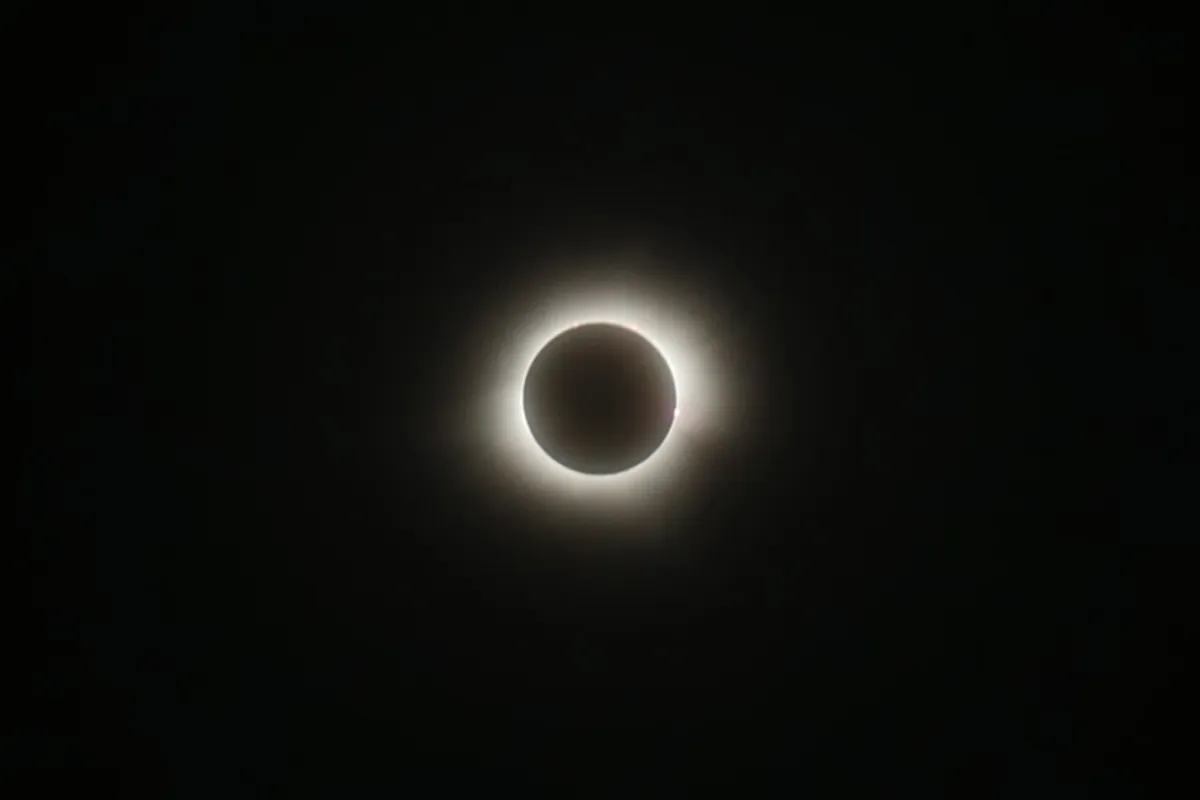
Renowned astrophotographer Andrew McCarthy took a beautiful shot of the eclipse in 2017 using just the automatic settings on a DSLR and a good zoom lens.
“That photo was captured using automatic settings and a 300mm telephoto lens on an extremely old DSLR. This [in 2024] I will be capturing a much more technically complex shot, which will be a high dynamic range photo using several telescopes and cameras all working simultaneously for the four minutes of the eclipse. The resulting image will have much more detail and dynamic range if I succeed,” McCarthy told IFLScience before the 2024 eclipse.
As you can see, he very much succeeded in that photograph!
If the turnaround on this eclipse is too quick, know there is another one in a year. It will be on August 2, 2027, and it’s the longest this century.


