Space and Physics
 PUBLISHED
 13
13



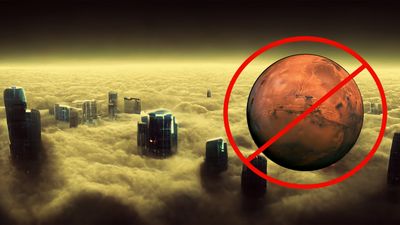


I am so over Mars. That red dust ball gets all the attention, all the plans, and all the projects. But is it truly the final frontier? I believe humanity should be doing something more out of a science fiction book rather than just aiming to pitch a few inflatable structures on the rusty soil of the Red Planet. To that end, we should send humans to Venus.
Venus doesn't have the good PR that Mars is getting
Many of the people I interact with are in the pocket of Big Mars. The anti-Venus propaganda is rife, and I, too, have unwittingly pushed that agenda in the past. “Venus is a hellish world; Venus is Earth’s evil twin.”
I’m sorry, but is Mars a tropical paradise with an all-inclusive hotel? I don’t think so!
On Mars, you are constantly bombarded by radiation – in the form of both light and matter particles – which isn't exactly ideal, is it? Maybe we can cover our buildings in soil to shield ourselves from the cosmic rays. But oh, Martian soil is toxic to humans and plants? Well, that isn't how it was sold to me!
People who think we should explore Venus are under no illusion that the planet is an undiscovered paradise. Its surface temperature can melt lead. The atmospheric pressure there would crush you – it's like getting the weight of an adult bison on every square inch of your body.
We from Team Venus don't sugarcoat the challenges of space settlement, and our goal isn't some “boots on the ground” that is only good for the stock market. We aim higher than that: roughly 35 miles higher.
A city in the clouds... just like in Star Wars
Between 50 and 60 kilometers (31 to 37 miles) from the surface of Venus, you have something of a habitable pocket. The temperature is Earth-normal, the atmospheric pressure is like Earth’s at sea level, and the carbon dioxide-rich atmosphere provides natural shielding. The layer of atmosphere is safe in terms of both temperature and radiation.
We could build a floating settlement, and the standard Earth-like atmosphere inside would keep it buoyant against the carbon-dioxide-rich air outside. And we don't have to restrict ourselves to a single outpost. It would be easy to travel among them; you are already in the air floating about, so you just need to add some propulsion.
On top of that, gravity is pretty much Earth-normal too. No need to concern yourself with the deleterious effects of low gravity on Mars.
In short, you could have healthy settlements very easily on Venus. And they would look properly sci-fi!
Getting to Venus is faster than going to Mars
Venus gets closer to Earth than any other planet – even though Mercury is statistically the closest planet to all the others at any given point.
At its closest, Earth and Venus are just 38 million kilometers (23.6 million miles), and at the farthest point, Venus is 261 million kilometers (162 million miles) away. That’s significantly closer than Mars's 56-million-kilometer (35-million-mile) minimum and 401-million-kilometer (249-million-mile) maximum.
The launch window between Earth and Venus also happens faster, coming round once every 19 months instead of every 26 months like that of Mars. Travelling there and back is faster, too, meaning we can send supplies or bring back explorers at a higher cadence than any hypothetical Mars exploration.
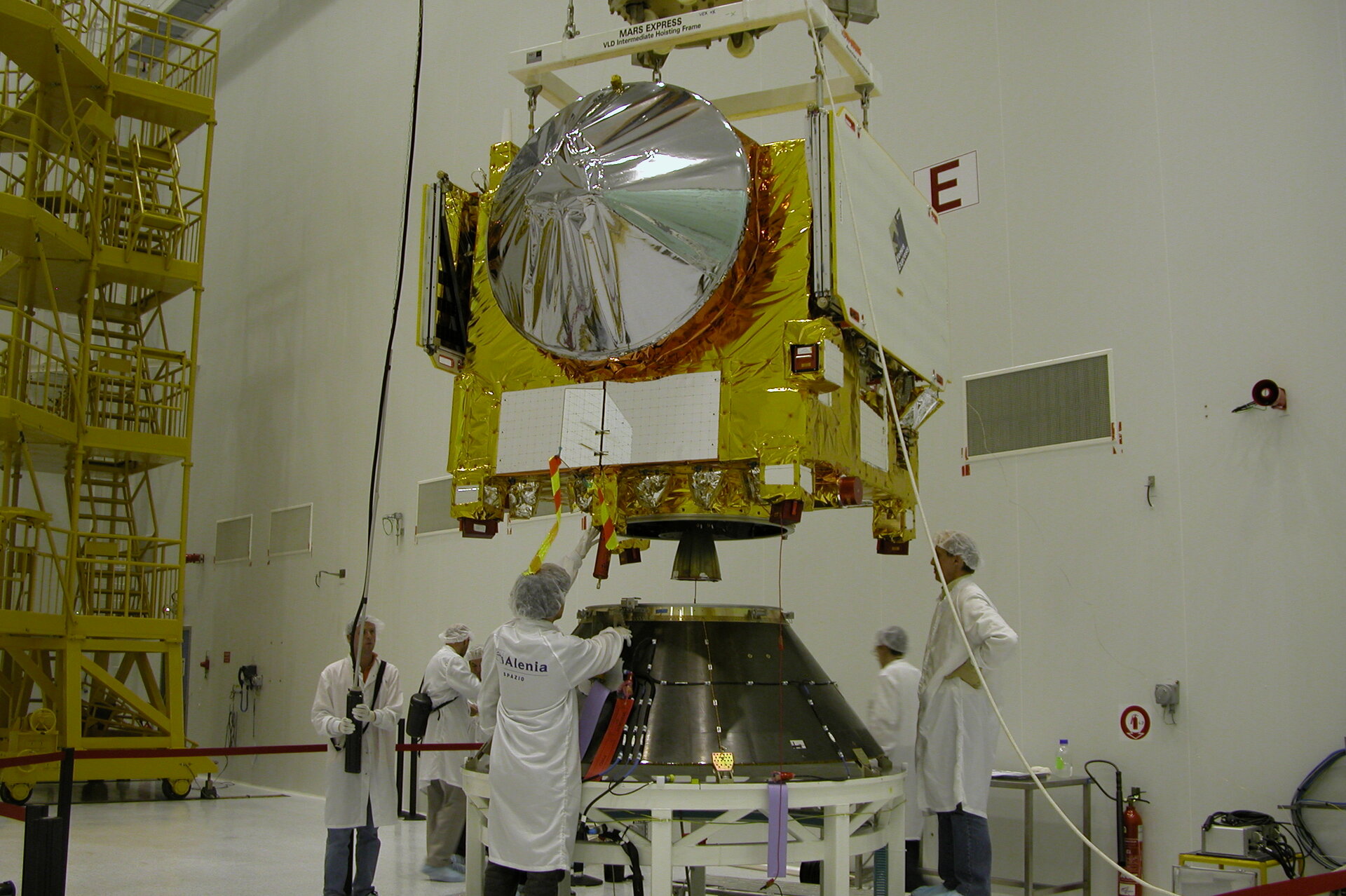
Missions like Venera 1 got to Venus in just 97 days. ESA’s Venus Express, which performed an orbital insertion around the planet, took 153 days. This is still shorter than the minimum seven months needed to get to Mars.
Current spacecraft aren't designed with the cosmic radiation of deep space in mind. Focusing on Venus rather than Mars would mean astronauts have significantly less radiation exposure during the journey.
We will plan and we will succeed!
Sure, there are some challenges, but it wouldn’t be an adventure without them. The winds of Venus at that altitude are strong, hurricane-level strong, whipping aropund at between 210 and 370 kilometers (130 to 230 miles) per hour.
The other challenge is the sulfuric acid clouds. The rain doesn’t get down to the ground, but it would definitely hit our cloud city. An acid environment isn't ideal, but we have plastics that are resistant to most concentrated acids. Think of Teflon!
We will also have to devise ways to grow food in transit and in Cloud City to reduce radiation exposure of transit and more, but this is where our prep will come in.
Supporters of Venus plans don't shy away from the fact these difficulties exist. What we do know, unlike the pro-Mars contingency, is that we need to work out the solution now and here on Earth.
That tech will immediately benefit humans on Earth. Don’t you think people might benefit from hurricane-proof structures? Or be glad to have nutritional food grown with limited resources? We can build outposts on Venus and benefit Earth at the same time.
We certainly aren't going to promise a city on Venus with a million people living there in a decade without having shown how to protect people from the environmental dangers that exist there. Doing that would be stupid!
IFLScience Hot Takes is a semi-satirical opinion column where we take a silly or outrageous idea and argue for it as if it's our earnestly held belief… as long as we can find good scientific reasons to back it up.
Do you agree with Alfredo? Do you think it is a bunch of nonsense, and is Mars still your number one? Let us know!