Nature
 PUBLISHED
 6
6


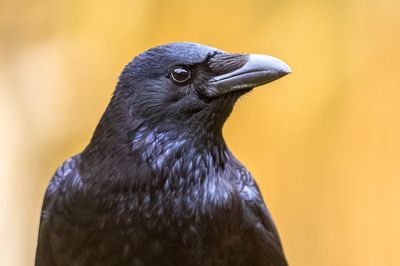


Crows are highly intelligent members of the corvid family, and while they may be easily confused with ravens, a recent study has revealed that they are capable of using statistical inference.
Statistical inference in this instance is where previous experience of choosing something influences that chance of making that choice again. In humans, it could look like choosing one place to eat over another based on how busy both establishments are likely to be.
Two carrion crows were trained at the University of Tübingen to peck at images on a touchscreen and thereby earn a reward. From there the experiment progressed. They were trained to associate nine different images with reward probabilities from 10, 20, and 30 through to 90 percent.
“We introduce the concept of probabilities, such as that not every peck to an image will result in a reward,” Dr Melissa Johnston, lead author of the study and a Humboldt Fellow at the University of Tübingen, told Ars Technica. “This is where the crows learn the unique pairings between the image on the screen and the likelihood of obtaining a reward.”
The crows were quickly able to learn the different probabilities of getting a reward associated with each of the images.
Trials were carried out after 10 days of training and the researchers found that the two crows were consistently able to pick the image related to the higher probability of a reward. This shows their ability to use statistical inference. The crows even remembered which images were associated with a higher reward after a month without any training.
“Crows were tasked with learning rather abstract quantities (i.e., not whole numbers), associating them with abstract symbols, and then applying that combination of information in a reward maximizing way,” Johnston added.
The results show that the crows were able to make statistical inferences, repeatedly choosing the images with the higher reward probabilities. Both crows chose the higher reward 76 percent of the time. They were also more likely to choose the image with the highest reward when that choice included a reward probability of over 50 percent.
These carrion crows now join giraffes in being able to make statistical inferences, what will they get up to next?
The paper is published in Current Biology.