Space and Physics
 PUBLISHED
 2
2


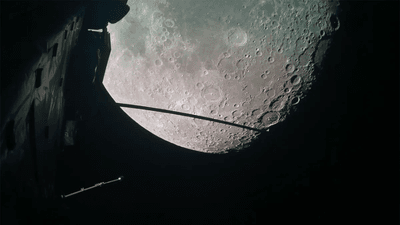


The Jupiter Icy Moons Explorer (JUICE) mission run by the European Space Agency (ESA) has made its first detection of the ingredients of life.
JUICE has a long mission ahead of it. Launched in April 2023, the spacecraft has to make several gravitational assists before it reaches its target of Jupiter and three of its largest moons – Ganymede, Callisto, and Europa – including one never-before-attempted maneuver using both the Earth and the Moon.
While performing that maneuver in August 2024, JUICE conducted tests of its Moons and Jupiter Imaging Spectrometer (MAJIS) and the Submillimetre Wave Instrument (SWI), ahead of collecting data on Jupiter's moons.
"During the Earth flyby, SWI 'listened' for the signals from hundreds of molecules in Earth’s atmosphere, including water and the so-called ‘CHNOPS’ elements (carbon, hydrogen, nitrogen, oxygen, phosphorous and sulphur)," ESA explained in a statement. "MAJIS also measured the composition of the atmosphere, detecting important molecules such as oxygen, ozone, carbon dioxide and water."
As well as this, the MAJIS instrument made detailed temperature maps of the planet. The good news is that ESA have confirmed that there are signs of life on Earth.

While undoubtedly great news that there is life on this planet (let's not say intelligent life just yet), the detection really shows that the instruments are fully operational and capable of detecting telltale signatures of life, at least where it is abundant.
That mission is still far from beginning, with the probe still set to make two more flybys of Earth and one flyby of Venus before it arrives at the gas giant in 2031. But now we know that the instruments are able to detect life, and exciting times lie ahead.