Nature
 PUBLISHED
 2
2


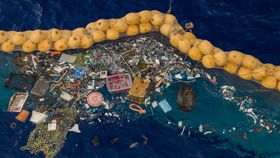


The Great Pacific Garbage Patch, a human-made monument of floating plastic trash and other assorted crap, has welcomed some new visitors.
Biologists have spotted whales frolicking in the Great Pacific Garbage Patch for the first time. Given the known dangers of plastic pollution to marine life, this is a deeply worrying observation.
Reporting in the journal Marine Biodiversity, researchers from the Ocean Cleanup Foundation studied the Great Pacific Garbage Patch and observed at least four sperm whales (including a mother and calf pair), three beaked whales, two baleen whales, and at least five other cetaceans.
“Our sightings of numerous ocean plastics of a wide range of sizes suggest that cetaceans within the [Great Pacific Garbage Patch] are likely impacted by plastic pollution, either through ingestion or entanglement interactions with debris items,” the study authors conclude.
The 14 cetaceans were spotted from a Vietnam War-era aircraft using photography, infrared imagery, and LIDAR data back in October 2016. Their primary aim was to actually count ocean plastics. Along with countless small pieces of plastic and small synthetic particles, they also encountered 1,280 pieces of debris larger than 50 centimeters – a ratio of approximately 90 large plastic objects per animal sighted.

The patch can be found between Hawaii and California in one of the most remote regions of the Pacific Ocean. It consists of 80,000 tonnes (88,000 tons) of floating plastic nets, fishing rope, plastic consumer goods, and all manner of other non-biodegradable trash. The patch isn't just a singular floating landfill in the middle of the ocean. Instead, it’s a general area with a high concentration of plastic pollution, with some areas being peppered with more trash than others.
Ocean garbage patches are formed by rotating ocean currents called “gyres.” In simplest terms, vast ocean currents sweep up and transport plastic pollution. These streams of garbage then become encircled by other ocean currents, entrapping them like sheepdogs rounding up a herd.
The scourge of plastic pollution in our oceans is well known. Its effects on wildlife are especially noticeable with large animals, such as seabirds and cetaceans. For example, a male Cuvier's beaked whale was discovered earlier this year along the coastline of the Philippines with 40 kilograms (88 pounds) of plastic trash in its guts.
While the main worries are entanglement and ingestion, plastics can harm the environment and biodiversity in a number of ways. For one, they are known to foster certain bacteria, which could have implications for disease in the ocean.