Nature
 PUBLISHED

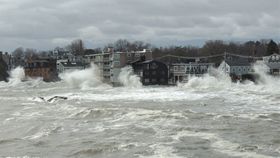


Increased storm frequency and intensity paired with sea-level rise could make 100-year floods – so named because they occur every century – an annual occurrence in some parts of the US. New research published in Nature Communications suggests that destructive flooding may soon happen every year in New England and up to every 30 years in the southeast Atlantic and the Gulf of Mexico.
Coastal flooding intensity is determined by a combination of sea-level rise and storm surges but varies from each location due to ocean circulation and ongoing adjustments of ice sheets, a process known as glacial isostatic adjustment. In order to identify current and future degrees of flood risk in different regions of the US, Princeton researchers conducted a “critical” analysis that incorporates cyclone climatology and flood hazards in the face of sea-level rise and climate change by simulating storm conditions based on historical and future flood levels – variables often analyzed separately. By combining the data, researchers were able to create a hydrodynamic model that changes at the county-level to understand and predict future trends.

Coastal counties along the US Atlantic and Gulf Coasts (numbers represent the county ID). The study area is divided into four regions: New England (green), mid-Atlantic (orange), southeast Atlantic (blue), and Gulf of Mexico (red). Reza Marsooli et al
They found that flooding will continue to increase throughout the end of the century; northern latitudes will see more floods every year partly because of sea-level rise, while southern latitudes, particularly the Gulf of Mexico, will see increases in flood levels because of both sea-level rise and increasing storm intensity and frequency.
"For the Gulf of Mexico, we found the effect of storm change is compatible with or more significant than the effect of sea-level rise for 40 percent of counties. So, if we neglect the effects of storm climatology change, we would significantly underestimate the impact of climate change for these regions," study author Ning Lin in a statement.
The hydrodynamic model used to simulate future predictions underestimates future flooding as it neglects to incorporate waves impacted during storm surges. It also assumes that sea-level rise and storm tides are independent of each other. Despite these limitations, the study authors note that accurate maps customized to local conditions can help governments and agencies prioritize adaptation and mitigation efforts as the world prepares for climate change.
"Policymakers can compare the spatial risk change, identify hotspots, and prioritize the resource allocation for risk reduction," said Lin. "Coastal counties can use the county-specific estimates in their decision making: Is their risk going to significantly change? Should they apply more specific, higher-resolution data to quantify the risk? Should they apply coastal flood defenses or other planning strategies or policy for reducing future risk?"
Global sea-level rise could reach 2 meters (6.6 feet) by the end of the century – double what we previously thought – according to a study published earlier this year. Sea level rise is already wiping out billions of dollars in coastal property in just five US states, while World Heritage Sites around the planet are threatened by flooding and coastal erosion.

The relative contributions of rising sea levels and changing storms differed according to the area of the country being studied. In northern areas, sea-level rise is a major contributor to increased flooding, while changing storm dynamics are relatively more important in southern areas. Reza Marsooli et al