


 Nature
 PUBLISHED


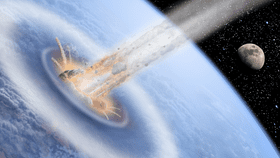


Sixty-six million years ago, an asteroid roughly 14 kilometers (9 miles) in diameter hit the shallow water off the modern-day Yucatan peninsula in Mexico. Chicxulub, as it is known, was the size of a mountain and moving as fast as a speeding bullet. When it hit the water, its top was still higher than airplane cruising altitude. The devastation it caused was extreme. It wiped out three-quarters of all species, including non-avian dinosaurs and flying reptiles.
Now, researchers have created the first global simulation of the tsunamis that followed the Chicxulub impact. The team modeled what happened 10 minutes after the impact. The crater was around 1.5 kilometers (1mile) deep, and all the water was pushed out on impact. Then the water rushed back into the crater, meeting the Earth's crust that was pushed up by the impact, before rushing back out, forming the "collapse wave". This type of displacement tsunami is known as a megatsunami.
"As far as we know, we are the first to globally model the tsunami from impact to the end of wave propagation," lead author Molly Range, from the University of Michigan, told Live Science. "It wasn’t until starting this project that I realized the actual scale of this tsunami, and it’s been a fun research story to share."
The first wave was estimated to be an incredible 1.5 kilometers (1 mile) in height, but the ones that followed were also huge. The model showed that in the first 24 hours, these tidal waves spread from the Gulf of Mexico to both the North Atlantic and the Pacific oceans (the Americas weren’t connected back then). The complexity of the simulation increased by the 48 hours mark as waves reflected and refracted around the world.
The team estimated that the impact tidal wave was at least 2,600 times more energetic than the December 26, 2004, Indian Ocean Tsunami, which is one of the largest tsunamis on record. Upper limits put the energy ratio at a number over 10 times higher. The team also suggests that the tsunamis might have disturbed sediments over 6,000 kilometers (3,700 miles) away from the impact origin and the seas and oceans experienced waves 14 meters (46 feet) high in both the North Atlantic and South Pacific. In some spots in the Gulf of Mexico, the waves were up to 100 meters (330 feet) high.
The study, yet to be published, was presented at the Fall Meeting of the American Geophysical Union in Washington in December. A follow-up study is also awaiting publication, which will corroborate the model with evidence of the predicted sediment disruption.
[H/T: Live Science]


 1
1