Nature
 PUBLISHED
 3
3


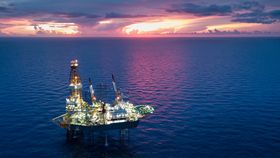


Communities of bacteria capable of breaking down crude oil and diesel fuel have been discovered in the chilly waters of the Canadian Arctic. As reported in the journal Applied and Environmental Microbiology, the discovery could offer a potential way to help clear up oil spills and other environmental mishaps.
Researchers from the University of Calgary in Canada came across the bacteria along the coast of the Labrador Sea, the portion of the North Atlantic Ocean between the Labrador Peninsula of eastern Canada and Greenland.
In the lab, the team simulated a mini oil spill in a bottle by combining sediment from the top of the seabed, artificial seawater, and either diesel or crude oil. To mimic the conditions of the Labrador Sea, the water was chilled to at 4°C (39.2°F).
Genomic sequencing revealed a number of different bacteria genera that showed hydrocarbon biodegradation potential – including Paraperlucidibaca, Cycloclasticus, and Zhongshania – in the waters. These bacteria were found to help break down low concentrations of both diesel and crude oil. At higher concentrations, however, only some of the diesel was consumed, suggesting the bacteria were being impacted by the toxicity of the unrefined crude oil.
Importantly, the hydrocarbon-eating ability was enhanced if the bacteria were “fed” nutrients, like nitrogen and phosphorus – an idea that could potentially help boost future efforts to clean up oil spills.
Casey Hubert, study co-author and Associate Professor of Geomicrobiology at the University of Calgary said in a press release that these bacteria "may represent key players in the response to Arctic marine oil spills."
This part of the world’s oceans is set to see some major changes in the coming years. Much of the Labrador Sea is covered in ice over winter and spring months, but the unfolding climate crisis is likely to shorten this icy period and extend the portions of the sea that remain ice-free all year. Less ice means more opportunity for industrial activity and maritime shipping in the area, which will increase the risk of oil and diesel spills. If this rather bleak vision of the future comes to fruition, our knowledge of these oil-chomping bacteria could become all the more useful.
"These permanently cold waters are seeing increasing industrial activity related to maritime shipping and offshore oil and gas sector activities," Dr Hubert added.
“As climate change extends ice-free periods and increasing industrial activity takes place in the Arctic, it is important to understand the ways in which the Arctic marine microbiome will respond if there is an oil or fuel spill," he explained.