Nature
 PUBLISHED


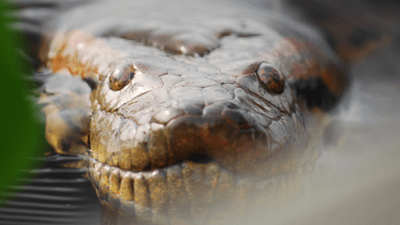


A new study has reconstructed anacondas that lived in what’s now Venezuela 12 million years ago. The fossil vertebrae reveal that anacondas were giants back in the Middle to Upper Miocene and have stayed giant ever since, an unusual trend for life on Earth.
Most animals that lived between 12.4 to 5.3 million years ago have gotten smaller over time in response to environmental changes. Back then the Earth was warmer, wetter, and full of food.
It was a period that gave rise to giants, like Purussaurus, a 12-meter (39.4-foot) caiman, and Stupendemys, a 3.2-meter (10.5-foot) freshwater turtle. Some giants got smaller, some – such as Purussaurus and Stupendemys – went extinct, but the anaconda? It made its own rules.
The authors of the new study looked at 183 fossilized anaconda vertebrae, thought to account for around 32 individual snakes. They then used this data to figure out how long the anacondas would’ve been when they were still alive.
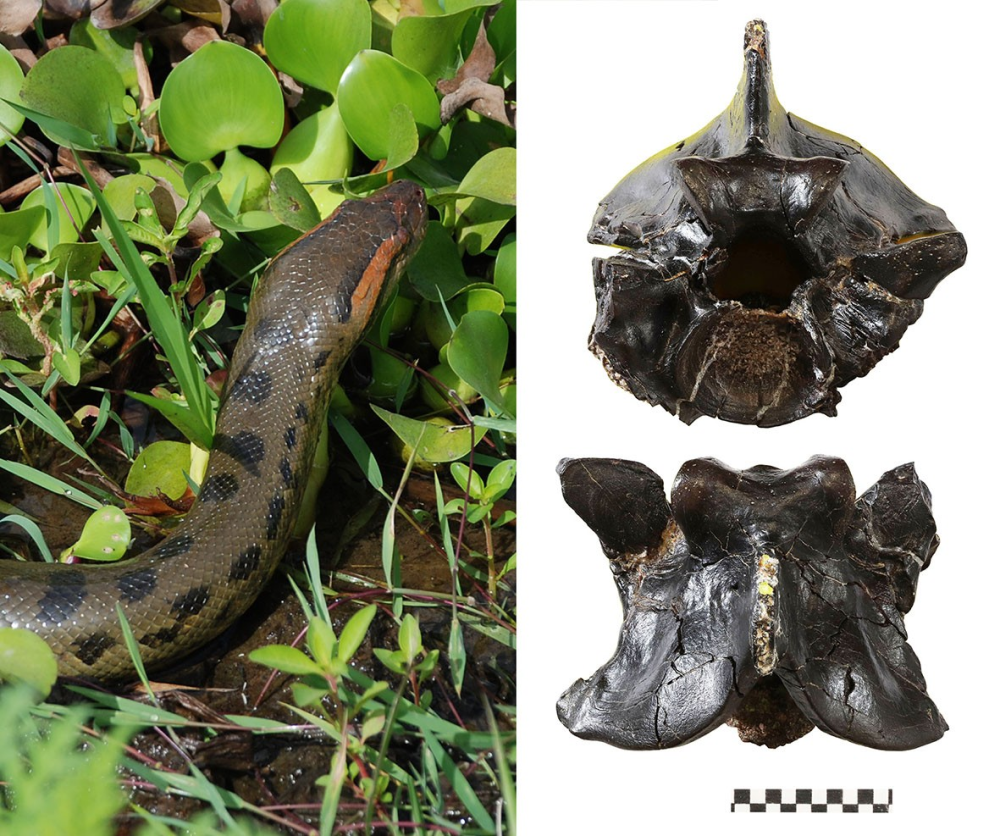
As the heaviest extant snake on Earth, anacondas are big today, so it was expected that Miocene-era anacondas would’ve been even larger, but the fossil bones revealed they were around 5.3 meters (17 feet) long, which is about the same size as anacondas today.
"This is a surprising result because we expected to find the ancient anacondas were seven or eight metres long," said lead author Andrés Alfonso-Rojas, a PhD student and Gates Cambridge Scholar in the Department of Zoology at the University of Cambridge, in a statement. "But we don’t have any evidence of a larger snake from the Miocene when global temperatures were warmer."
"By measuring the fossils, we found that anacondas evolved a large body size shortly after they appeared in tropical South America around 12.4 million years ago, and their size hasn’t changed since."
That they’ve maintained their gigantism for so long may come down to anacondas’ chosen habitat. Today, they live in swamps, marshes, and rivers in warm and wet areas. We know they were more common in the Miocene, but across the Amazonian region, there remains enough water, warmth, and food to keep them huge.
Most anacondas (of which there are several species) are around 4 to 5 meters (13.1 to 16.4 feet) long, but there have been some record-breaking specimens closer to the 7-meter (22.9-foot) mark. Titanoboa still trumps anaconda in terms of being the largest snake ever to have lived, but anacondas’ resilience has kept them super-sized for millions of years.
"Other species like giant crocodiles and giant turtles have gone extinct since the Miocene, probably due to cooling global temperatures and shrinking habitats, but the giant anacondas have survived," said Alfonso-Rojas. "They are super-resilient."
The study is published in the Journal of Vertebrate Paleontology.