Humans
 PUBLISHED


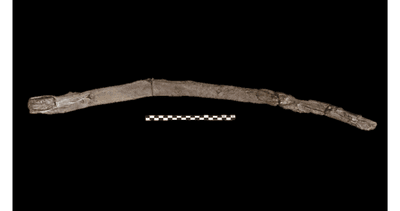


Two wooden tools found in southern Greece are 430,000 years old, a new study claims, making them the oldest handheld wooden tools known by 40,000 years. Given how much more likely wooden tools are to break down with time than their stone counterparts, the finding makes it likely that mastery of wood was an important part of our ancestral toolkit for a very long time.
At Marathousa 1 in the Peloponnese region, elephants and other animals were butchered by the shores of what was a lake more than 400,000 years ago. Homo sapiens had yet to evolve at this point, let alone leave Africa, but our relatives were well established in southeastern Europe in the Middle Pleistocene (774,000 to 129,000 years ago).
“The Middle Pleistocene was a critical phase in human evolution, during which more complex behaviors developed. The earliest reliable evidence of the targeted technological use of plants also dates from this period,” said study author Professor Katerina Harvati of the University of Tübingen in a statement sent to IFLScience.
Many stone and bone tools have been found at the site. “Unlike stones, wooden objects need special conditions to survive over long periods of time,” said study author Dr Annemieke Milks of the University of Reading. “We examined all the wooden remains closely, looking at their surfaces under microscopes. We found marks from chopping and carving on two objects – clear signs that early humans had shaped them."
One object initially suspected of being shaped by humans turned out to have been clawed by a bear or other large carnivore, but two items showed clear signs of being shaped in ways only hominins can do. One is four pieces of alder that were once a single tool at least 81 centimeters (32 inches) long. The researchers think it was used for digging in the mud at the side of the lake, or stripping tree bark from other pieces of wood. The tool has many carving marks on it, and a knot was almost entirely chopped off, presumably to avoid protrusions interfering with its role.

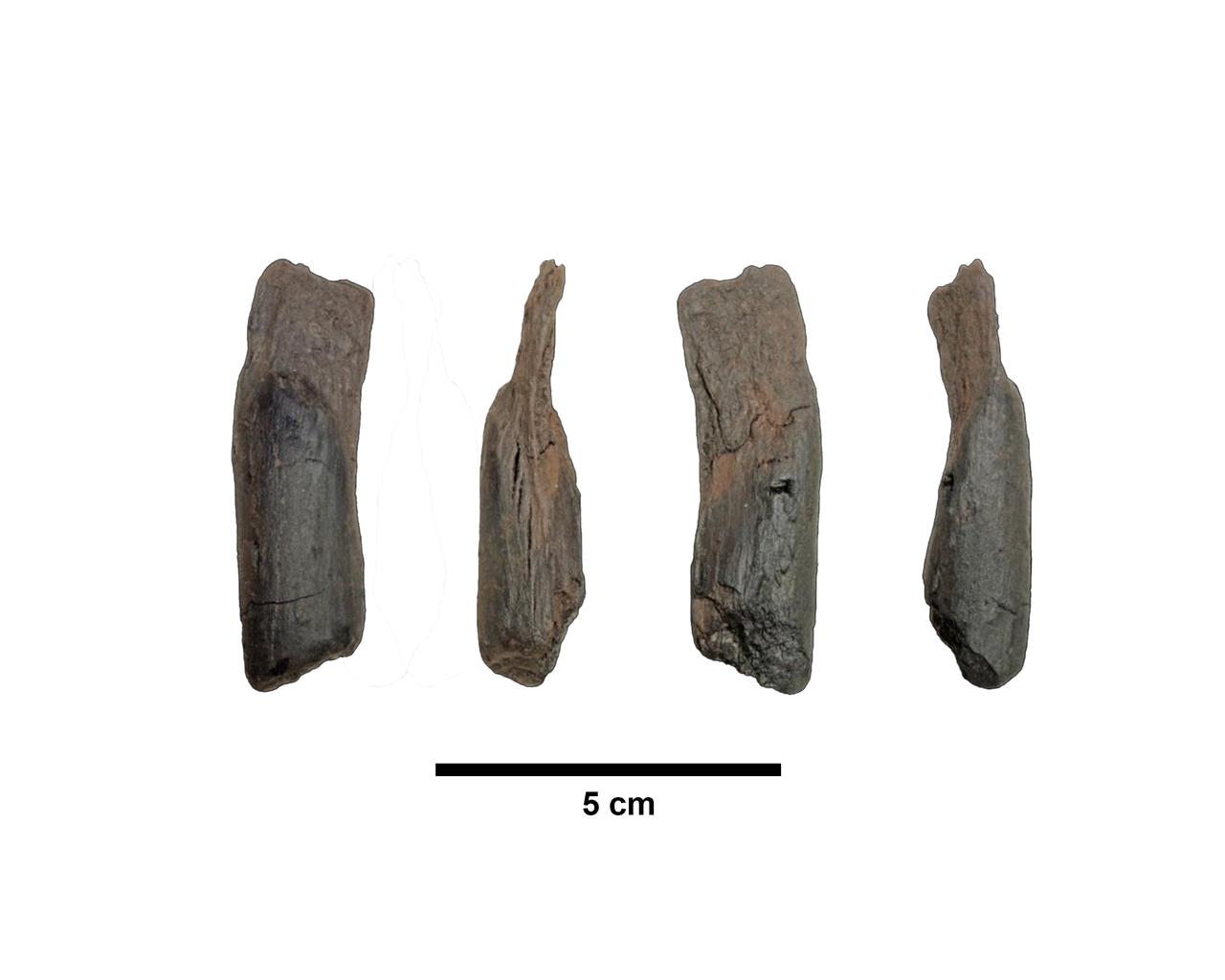
The application of a smaller piece, formed from willow or poplar, is harder to determine. It is just 5.7 centimeters (2.3 inches) long and is unlike more modern wooden tools, but it has been cut too many times to be coincidental, probably representing strikes to remove bark.
Although beaver tooth marks can sometimes be mistaken for human cuts on wooden tools, the authors note there are no signs of the distinctive traces the dam builders leave on wood anywhere at the site.
Evidence of the use of wood in the latter part of the Middle Pleistocene comes from many parts of the world, but this is the closest we have got to the middle of the Middle. “The oldest wooden tools come from places such as the United Kingdom, Zambia, Germany, and China and include weapons, digging sticks, and tool handles. However, they are all more recent than our finds from Marathousa 1,” Milks said.
The only older evidence we have for the use of wood is the astonishing discovery of interlocking logs for a protective structure at Kalambo Falls, Zambia, around 46,000 years before these items were made.
“This shows once again how exceptionally good the conditions at the Marathousa 1 site are for preservation. And the fact that large carnivores left their mark near the butchered elephant alongside human activity indicates fierce competition between the two,” said Harvati. If a bear wants to steal your dinner, a stick might be a poor weapon against claws, but you probably still want it.
The study is published in Proceedings of the National Academies of Science.