Nature
 PUBLISHED
 1
1


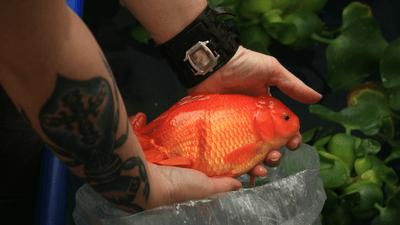


Wild waterways in Canada are under siege from a fleet of giant wild goldfish that have been introduced as invasive species, often by humans looking to get rid of pets. Goldfish may look pretty innocuous, but as hardy animals they can grow to enormous sizes in their surprisingly long lives.
There are many breeds of goldfish, but as a general rule, they are hardy, golden types of domesticated carp. They come in all kinds of curious arrangements, like the celestial eye goldfish, and are sometimes hybridized with other fish like koi, as was the case for The Carrot found in France, who weighed the same as a 10-year-old.
While The Carrot was contained within BlueWater Lakes, a sport and recreation fishery, elsewhere goldfish are roaming freshwater environments in which they are aliens. In their adopted homes, not only do they grow to enormous sizes but they also multiply at an incredible rate, with females able to produce around 150,000 eggs within a year.
“Females don't even need a male (to reproduce),” said Brian Heise, an associate professor in the department of natural resource sciences at Thompson Rivers University, to CBC. “They have a special process called gynogenesis in which the female will get the sperm from a different kind of minnow … to start the eggs developing, even though they're not fertilized.”
As they grow in number and size, they can rip up habitats, outcompete native species, and ferry around diseases and parasites that threaten wild animals. Their favorite foods include fish eggs, larvae, and aquatic plants, and their bolshy behavior can kick up silt to the extent that cloudy waters prevent underwater plants getting the sunlight they need to survive.
It’s for these reasons that scientists are concerned about a spike in reports of giant wild goldfish in freshwater habitats north of Vancouver, including Terrace, Quesnel and Whistler.
“In Canada, goldfish live in the homes of many families, but it’s important that they remain as pets, and not be released into the wild,” writes Canada’s Invasive Species Center. “It is essential to not release your pet goldfish into the wild to protect the integrity of natural ecosystems in Canada.”
How big do goldfish get?
The reason we associate goldfish with being mini, bowl-dwelling animals is that to an extent their size is dictated by their environment. A fish kept in a small tank on modest feed will stay small, partly due to stress, and will stay that way until they die.
However, if you upgrade that same goldfish to a big tank with lots of food, it’ll quickly blossom into a much bigger fish. That said, if you treat a goldfish to an aquarium-grade tank it won’t become whale-sized, but depending on the carp/minnow mix in a fish they can get far larger than most people expect.
It’s never a good idea to dump unwanted pets into wild waterways, but the US Fish and Wildlife Service have tips on breaking up with Mr Bubbles if you really need to part ways.