Nature
 PUBLISHED




Step inside London’s Grant Museum of Zoology and among the many things in jars you may spot a grass snake unlike any you’ve ever seen alive. Its flesh has turned see-through revealing a vibrant pink skeleton underneath, rib bones jutting out into tissue that has been transformed, how? Why, it’s the art of diaphonization.
Also known as alizarin preparation, this magic trick of chemistry is nothing new, having been developed back in 1897 and modified over the years. Its key function is to fix biological specimens and preserve them in a way that exposes the internal anatomy rather than the animal’s external features, and if you’re wondering what such a specimen might feel like, they’re apparently reminiscent of a popular candy.
“They basically feel like giant gummy bears with bones,” said Mark Breen Klein in Stuffed. “You use chemistry in order to highlight the underlying structures of the animal, the cartilage and the bones, and then [you] alter the refractive index so the way that light works with the skin and muscle, so it becomes transparent. I'm trying to look a little deeper than just the skin and see the underlying tissue that really show how an animal interacted with the world or what they came from, even.”

Diaphonization involves preserving the whole animal, but it’s not suitable for every species. Thick plumage or coarse fur can get in the way, and it’s typically more effective on small and juvenile forms rather than large adult animals.
The process can alter slightly but it comes down to a series of key steps. Firstly, the animal is treated with formalin to fix the tissues, and the skin and internal organs are removed. It may be bleached, and the specimen can be soaked in dyes like alcian blue for a few days to highlight cartilage.
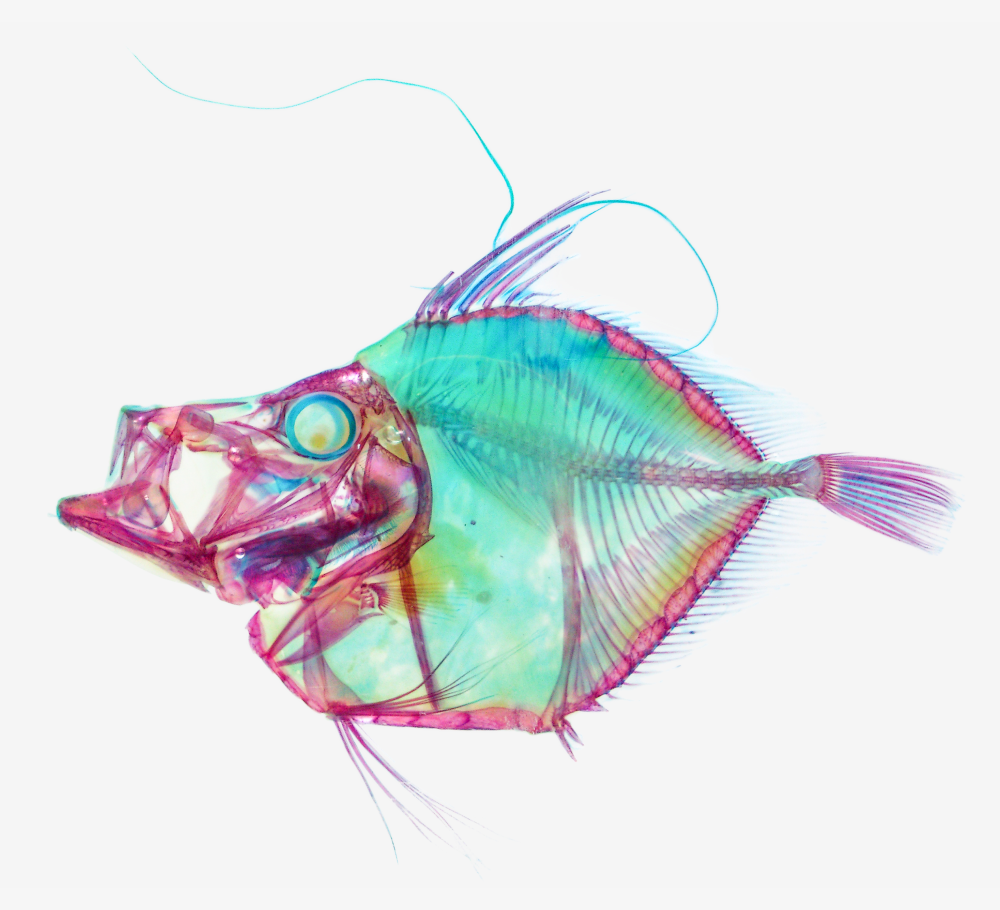
Bathing in some kind of enzyme solution (typically trypsin) is the crucial step that makes the creatures transparent, digesting the tissues so that they become softer and easier to see through. The pinky-red of those bones we were describing in the grass snake is achieved through staining with alizarin red, and the final result is placed in preserving solution so it’s suitable for long-term storage.
Before the invention of scanning technologies, diaphonization was a great way to get a look at the inside of an animal while all its bones were still in-situ. Now, we have incredible ways of getting a detailed breakdown of what's going on inside an animal, or human, with MRI and CT machines, but these specimens remain in many museums as a hat-tip to one of science’s coolest magic tricks.