


 Nature
 PUBLISHED



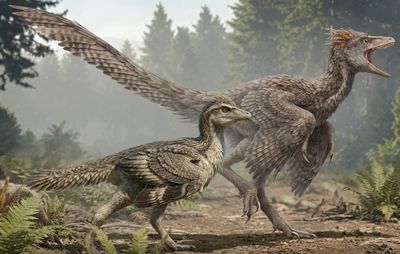


If asked to describe the essential features of a bird, most people would probably mention feathers, light bones, or a toothless beak. Aerodynamic tails are less likely to make the list, but they played a big part in the success of the only surviving dinosaurs.
Distinctive tail vertebrae are a crucial and much-overlooked component in birds’ success. Palaeontologists have wondered how the short avian tail developed from the dinosaurs’ longer counterpart, and think they now have an answer: shortening and loss of vertebrae and then the fusion of the vertebrae of the tip of the tail into a structure known as the pygostyle.
It’s plausible that the lift and control their tails enabled by these changes may even have played a part in birds surviving the mass extinction when all other dinosaurs – and many other living species – went extinct.
There are three developments key to allowing modern birds to shake a tail feather: a reduction in the number of vertebrae in the tail, the surviving vertebrae becoming shorter, and those vertebrae then fusing together.
Collectively, this gave birds less unnecessary weight, better flight control, and a center of mass that moved forwards. But the combination raises a new version of the “which came first” question about the order in which these changes occurred.
A new species of dinosaur from southeastern China now suggests that vertebrae fusion came last.
How to build a bird
Flight in Earth’s gravity is hard, particularly for animals larger than most flying insects, so birds needed multiple developments to make the leap to soar. Ground-based predecessors of birds had long bony tails, but by the time they’d fully taken to the air, the first true birds already had short tails and a pygostyle that supported feathers that assisted in flight.
The fossil record of this shift is patchy, partly because the light bones of birds and their early ancestors don’t preserve well. Moreover, a team led by Professor Min Wang of the Chinese Academy of Sciences notes long- and short-tailed species of dinosaurs coexisted in space and time when birds were first evolving.
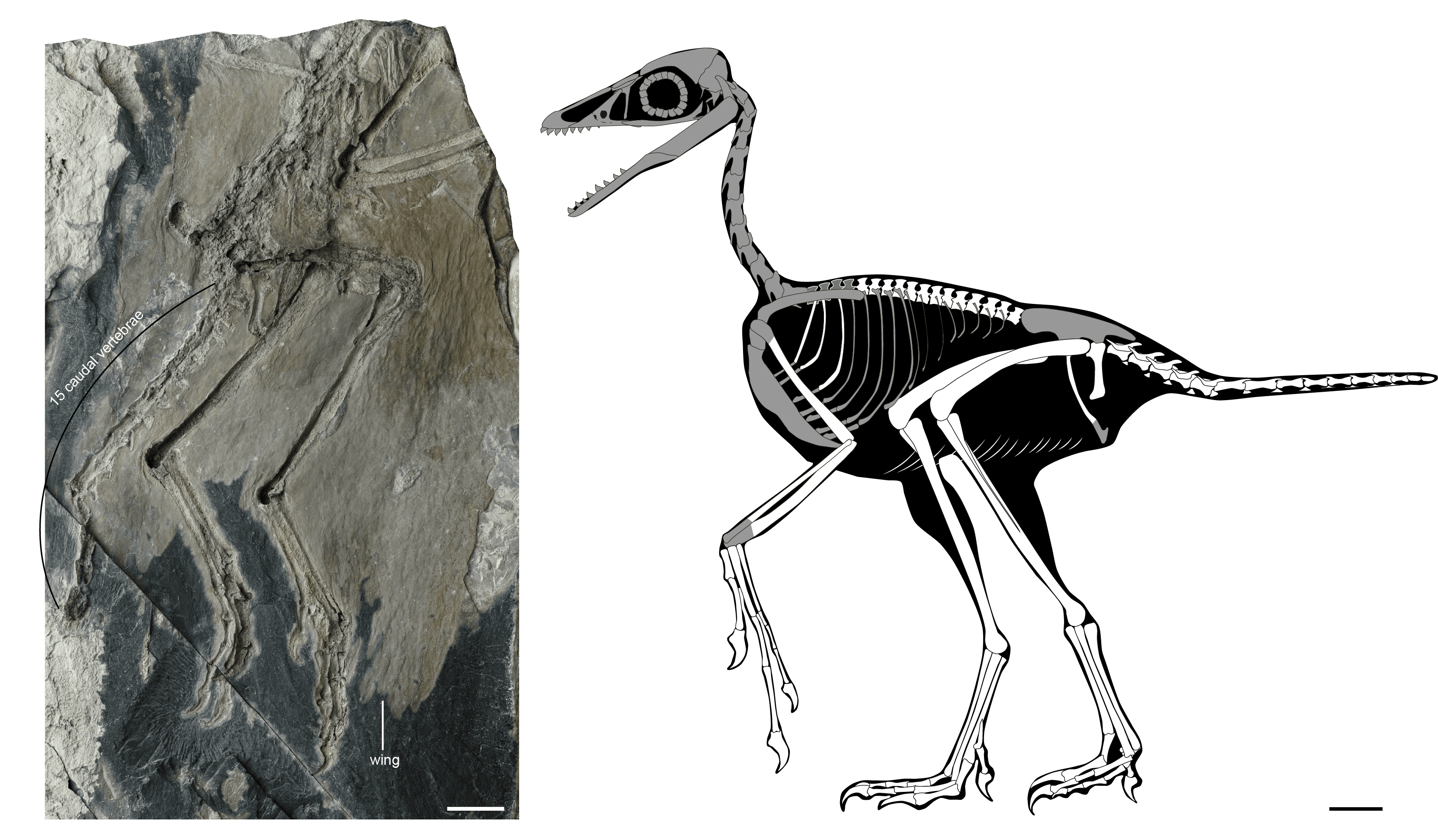
Now a new species named Zhengheornis buyu has been found. Although its head is missing, the body, including the spine, is very well preserved. That preservation means Z. buyu has plenty to tell us about the way birds’ predecessors adapted to life in the air.
But the most important lessons involve its tail, which had 15 vertebrae. This interesting as it’s fewer than comparable species. For example, Archaeopteryx, thought to have been slightly more dinosaury than Z. buyu, but living around the same time, had 23 or 24 tail vertebrae, and some other species around this time had more than 30.
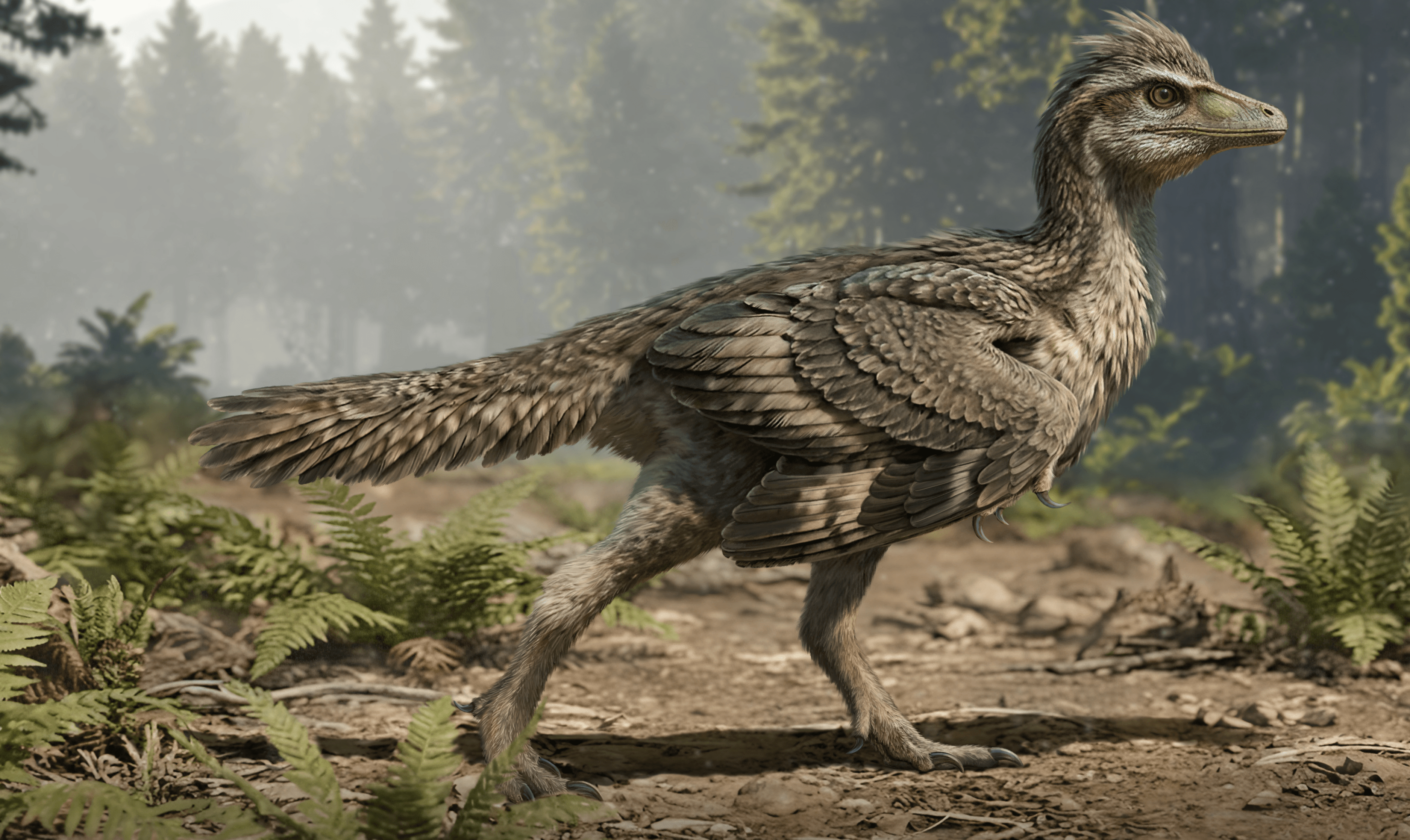
Along with the reduced number, Z. buyu’s vertebrae were also shorter, and therefore more rigid, which would have allowed the animal to fan its tail feathers. Critically, however, the vertebrae are not fused together into a pygostyle.
The evolution of birds was not a simple process of one species replacing another to become more and more bird-like.
Instead many avialans, the category that includes birds and their nearest dinosaur relatives, experimented with multiple paths. Some species maintained long tails despite evolving other bird-like features, while it is even possible that long tails occasionally re-evolved, showing the advantages were not all one way.
Consequently, we cannot say that all avialans took the same path to the form we see today, but in at least this case, the shortening preceded the process of vertebrate fusion.
Based on a single specimen, Z. buyu is thought to have weighed between 74 and 163 grams (2.6-5.7 ounces), or similar to a modern blue jay. That makes it the smallest of the Jurassic bird-like dinosaurs.
The study is published in Science Advances.



 1
1