Humans
 PUBLISHED





While you may think it is important to regularly clean your toilet, you’re potentially robbing future archaeologists of a chance to investigate your lifestyle.
While analyzing fecal scrapings from Ancient Roman chamber pots in the southeastern Balkans, researchers have unveiled new insights into the lives of people living 1,800 years ago. In particular, they have identified the various parasites that infested these ancient citizens, one of which was believed to have originated in Central America. The results are the earliest known evidence of Cryptosporidium, a protozoan parasite, in this region.
Paleoparasitology – the study of parasites in archaeological materials and their context – has become increasingly popular for archaeological researchers since the start of the century. Although it may sound a bit gross, as detection methods have advanced scientists have developed new ways to identify traces of these little organisms in ancient specimens.
By 2017, methodological improvements allowed researchers to draw more accurate conclusions, such as the observation that many ancient parasites show a high degree of similarity to ones found in animals. They also found that samples taken from the ground – from rubbish pits, toilets, or burials – were not overly reliable for analysis. The issue here is that the sample can easily become contaminated from other sources (such as animal waste).
But chamber pots – a portable toilet used in homes, especially at night, before the advent of domestic plumbing – are unique to humans and so ideal for this type of analysis. For one thing, chamber pots typically belonged to a single household and maybe even specific individuals. This means there less of a risk of them being contaminated in the same way a communal toilet might be. At the same time, their “contents” can undergo a process of mineralization which effectively turns it into a “time capsule” filled with delicate biological data.
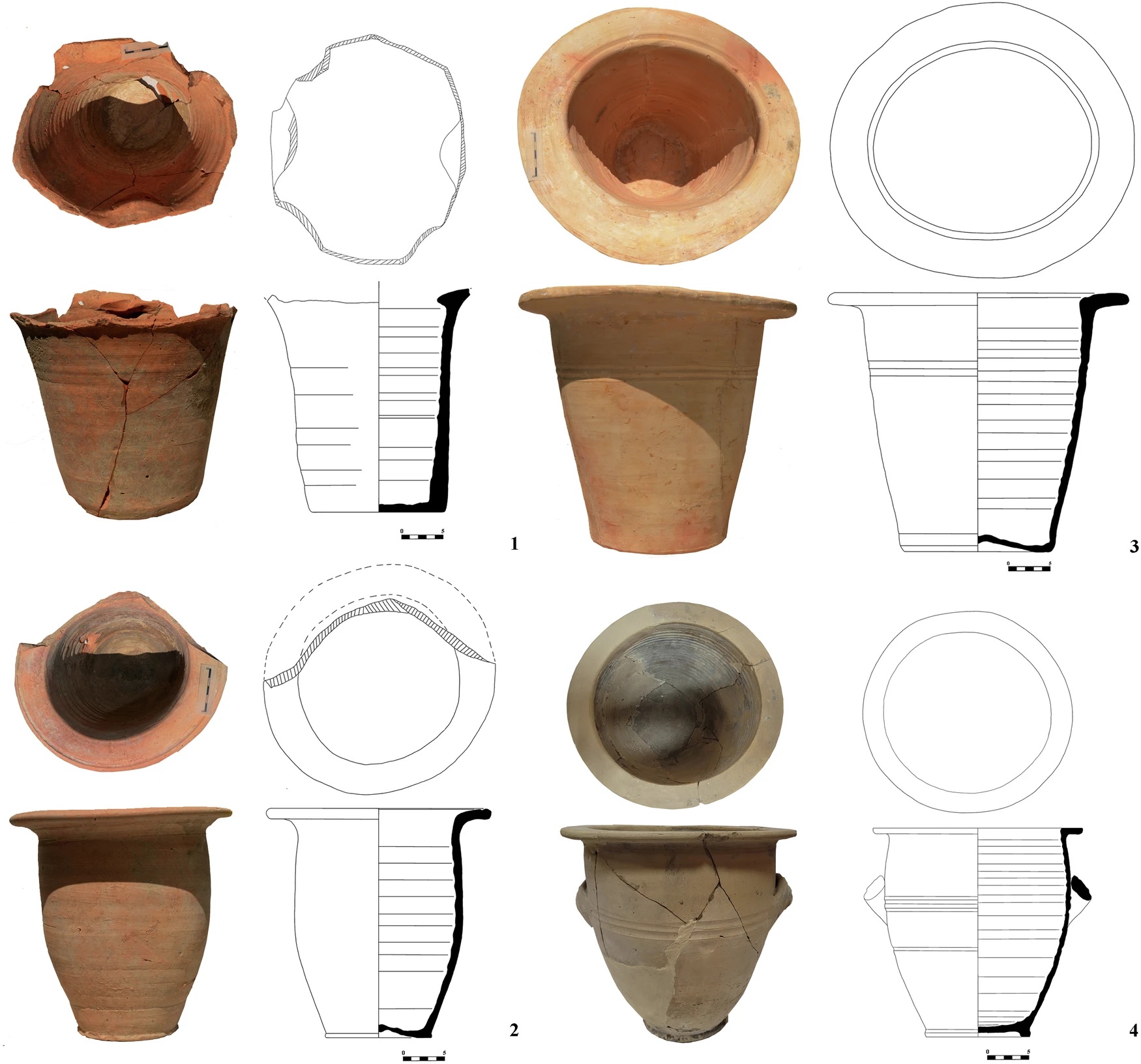
In 2022, an interdisciplinary team of researchers examined Roman era chamber pots dating to between the second and fourth centuries CE. The vessels were found at two archaeological towns in the lower Danube, known as Novae and Marcianopolis.
Using a combination of archaeology, history, paleoparasitology, and modern laboratory methods, the team were able to classify traces of ancient DNA left in the mineralized remains of ancient urine and feces left on the pots.
They did this by first scraping off materials from the crusty remains on the ceramic surface, where liquid deposits remained, and from the bottom, where solid waste became stuck. After this, they team rehydrated the material and passed it through special sieve to isolate parasites, their remains, and their eggs, which were scanned using classic magnification techniques.
It is not always easy to differentiate between different types of parasites, so the team used ancient DNA (aDNA) analysis to identify each species. They then used enzyme-linked immunosorbent assays (ELISAs), a laboratory technique used to detect and measure specific molecules, such as proteins, antibodies, antigens, or hormones. In this instance, antibodies were used to draw and bind to parasite proteins specifically. Chemicals can then be added to the sample the change color if the target is present.
This was the first time this technique was used in this type of archaeological setting.
The results from the dried and mineralized sediments turned up various parasites, including tapeworm eggs, a dysentery-causing parasite called Entamoeba histolytica, and, more surprisingly, the protozoan Cryptosporidium parvum.
This parasite was first scientifically described in 1907, and human infections were not recognized until the 1970s. For decades, scientists believed the parasite originated in Mexico during the seventh and eighth centuries, but its presence in these pots completely changes that view. This is the earliest known evidence of the parasite in Europe, as well as the second piece of credible evidence of its presence on the continent more generally.
The study offers a range of insights into the sanitary conditions and health of the inhabitants of these Roman towns. It is likely that the infections were transmitted through contaminated drinking water or close contact with animals. For instance, in Novae, the researchers indicate that water supplied from the castella aquae – a reservoir located on the Danube – was a likely source as it was close to where the chamber pot owners lived.
The study is published in the journal npj Heritage Science.