Health and Medicine
 PUBLISHED





Since his appointment as Health and Human Services Secretary, Robert F. Kennedy Jr has been in one fight after another with medical scientists. However, while battles of research funding, nutrition advice, and vaccines have made the headlines, only a few media outlets have picked up on a much more fundamental disagreement, one that dates back to the 19th century.
In his 2021 book The Real Anthony Fauci: Bill Gates, Big Pharma, and the Global War on Democracy and Public Health, Kennedy indicated his disagreement with germ theory, which proposes that many diseases are caused by bacteria, viruses, and prions. Although the book doesn’t give a clear alternative explanation for what Kennedy thinks explains these diseases, the text refers positively to miasma theory, a widespread alternative for centuries that was largely abandoned by 1900.
Unfortunately, although the senators grilled Kennedy extensively on specific topics, including vaccines, during his confirmation hearings, no questions were asked about where he stood on germ theory. Even senators opposed to Kennedy’s nomination may not have been aware of what he had written, or may have failed to see its significance. Consequently, we don’t know if Kennedy still agrees with what he wrote in five years ago, although there is no record of him having rejected it.
Irrespective of where Kennedy stands today, opposition to germ theory still surfaces sometimes, particularly among the most hardline anti-vaxxers. Although most anti-vaxxers are not germ theory deniers, the anti-vaccine movement has served as something of an incubator for it, ironically like a researcher’s petri dish.
That’s terrifying, because as bad as a world without vaccines would be, abandoning germ theory means also doing without antibiotics, chlorinated drinking water, hand and wound sanitizers, antiviral drugs, surgical masks, and sterilization techniques such as UV light. Collectively, these account for most of the reasons why humans today typically live twice as long as in any previous period of human history, at least in countries with the wealth to act on the recommendations germ theory provides.
Germ theory deniers aren’t generally coming for all of these medical miracles at once, but expect to see a wider range of that list being targeted as deniers’ profiles grow.
If you sometimes find yourself confronted with anti-science views online or at family gatherings, it’s good to be prepared on why they’re wrong, and as always, some history helps.
The origins of germ theory
The idea of transmissible disease bearing “seeds” goes back to Ancient Greece, if not before. Some accounts even referred to “minute animals, invisible to the eye” as causes of serious diseases, but without proof, the idea remained a minority one.
Athanasius Kircher saw microorganisms he called worms with a microscope in 1646, and 10 years later, attributed bubonic plague to those he saw in blood. However, he was probably seeing red blood cells, not plague bacteria, and his idea remained a fringe opinion for centuries, at the cost of millions of lives.
Ignaz Semmelweis and John Snow successfully used early understandings of germ theory to prevent disease. Semmelweis slashed the rate of maternal mortality by having doctors wash their hands in chlorinated lime and John Snow halted cholera outbreaks by stopping people drinking from contaminated water pumps. Yet while Snow most definitely did not know nothing, neither of them could identify what was on the doctors’ hands or in the water that was so dangerous, delaying widespread adoption of hygienic practices.
It was Louis Pasteur who put the pieces together to allow germ theory to achieve widespread acceptance. Having demonstrated that boric acid could kill bacteria, Pasteur applied it to the genitals of women after childbirth. Although it might have been better to clean the hands of medical staff instead, the approach slashed the rate of death from postpartum infections, indicating the bacteria were responsible.
Pasteur also showed that microorganisms carried in the air would flourish in a nutrient broth, but not if they couldn’t gain entrance. This proved that life did not spontaneously appear today, whatever may have occurred billions of years ago. Therefore, if one could kill the cause of a disease, and prevent it reestablishing itself, transmission could be prevented.
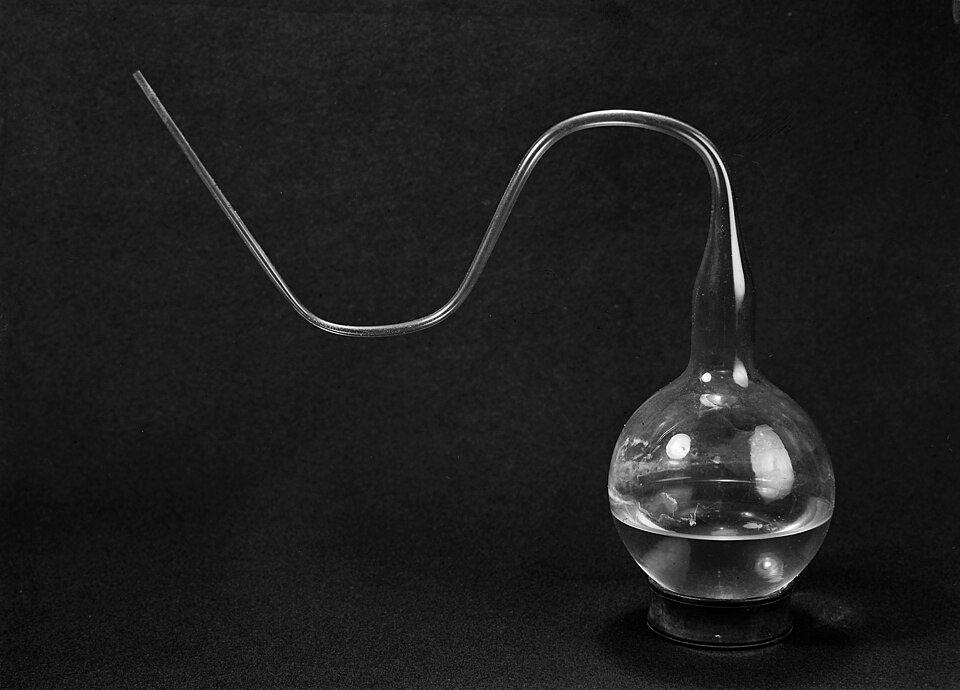
This led to the idea for which Pasteur is most remembered, the process to which he gave his name: pasteurization. When milk, and subsequently other liquids, are heated enough to kill any bacteria they were carrying and stored in sealed containers, they became safe to drink, Pasteur showed. Wine had been boiled for centuries to prevent spoilage, but without germ theory to back it up, this had not taken off. Among other things, Pasteur’s research that showed that temperatures of 50-60 °C (122-140 °F) could kill the relevant bacteria, rather than temperatures that damaged the flavor.
Pasteurization not only saved millions of lives from disease previously carried by cow’s milk, it allowed milk to be transported from the countryside to cities with confidence, dramatically improving urban nutrition. Meanwhile, Pasteur’s work inspired scientists to identify the causes of diseases, and to find ways to control their spread, inside and outside the body.
The germ theory strawman
One of the ways that germ theory is often attacked is by pretending that medical practitioners say bacteria and viruses are the only cause of disease, and that nothing else matters. Yet no one disputes that many diseases are genetic, or have causes such as radiation or poisons, or that even when diseases have microbial causes, other things matter.
The doctor prescribing antibiotics or antiviral drugs is well aware that a malnourished patient is going to be more susceptible to the disease. There’s definitely a case to argue that too much emphasis has been placed on drugs, and too little on diet, but pretending modern medicine treats nutrition as irrelevant is simply dishonest.
A few medical researchers may rush to pin the blame for every disease without a known cause on a virus, but they’re the exception. It’s far more common for debate as to whether, and how much, infectious agents matter in complex diseases to take decades. For example, the case has been building for many years that the Epstein-Barr virus is the trigger for most cases of multiple sclerosis (MS), but this took a long time to be accepted because MS does sometimes occur in people who were never exposed to Epstein-Barr. Meanwhile, there is still uncertainty about why the virus eventually triggers the body’s immune system to attack some people’s nerves, but not others.
Germ theory evidence
The fact there is still debate as to the role of microbes in some diseases shouldn’t distract from the far larger number of conditions where we know they’re the cause.
And we know this not through a single piece of evidence, but because diverse tests keep giving the same answer.
The fact that deaths from diseases like bovine tuberculosis plummeted once we started pasteurizing milk, or that an infected cut became much less likely to kill when antibiotics became available is pretty good evidence in itself.
The eradication of smallpox, near elimination of polio, and ending of mumps, rubella, and (for a while) measles, in places where vaccination was widespread adds to the picture. Germ theory deniers love to wave around their own, or their children’s healthy status, despite not being vaccinated, as evidence against the theory, but it is in fact the opposite. These people are kept safe only by the herd resistance of highly vaccinated populations. Take them to somewhere the disease is still spreading, and there is a high chance they will catch it quickly.
Moreover, we can grow most of these diseases in the lab, culturing them, and more recently, sequencing their DNA, from samples taken from sick individuals. Germ theory’s predictions have repeatedly been confirmed. The theory took off at a time when bacteria could be seen under microscopes, but viruses could not. Scientists observing the spread of some diseases in humans and plants, without being able to spot the cause, reasoned there must be an infectious agent too small to see, and proved it by infecting healthy plants. Decades later, the invention of the electron microscope revealed the nature of these particles.
Whatever you think about the ethics of animal experimentation, there’s no justification for ignoring the evidence it produces. It’s seldom possible to keep humans under truly controlled conditions, but we do it all the time with animals. When rats kept in identical cages and exposed to the same food and air get sick or don’t, depending on exposure to an infectious agent, the cause is clear.
Those arguing against germ theory are effectively saying that bacteria and viruses cause disease in plants and every animal we have studied, but somehow human diseases have unique causes. That’s implausible even in relation to diseases only humans get, like smallpox. However, it’s far more common that at least some animals suffer similar symptoms to ours, and the more closely related to us they are, the more likely they are to share our symptoms from the same things that infect us.
Denial of specific diseases
Even among people who might not deny germ theory in general, there is often resistance when applied to specific diseases, particularly viral ones.
COVID-19 conspiracy theories have been so numerous and widespread you may have forgotten how early in the pandemic some people tried to blame it on 5G transmitters. Although some claimed the transmitters were activating viruses that would otherwise be harmless, others called the virus harmless or non-existent. A particularly elaborate version of this also blamed the 1918-1920 influenza pandemic on the birth of broadcast radio, which only happened after the worst had passed.
Germ theory denial is often disguised. For example, people who claim masks won’t protect you against transmissible diseases may have valid points in regard to people who fit them poorly, use them erratically, or have materials with too large holes. Yet when these are addressed, some will go on to insist masks never work, apparently because they are blaming the air, not particles within it, for the disease.
Likewise, not all raw milk advocates are germ theory deniers. Some simply have great, possibly excessive, confidence in the cleanliness of the farms they get their milk from. Nevertheless, the dangerous fad is driven in part by a refusal to believe that milk that doesn’t smell or taste bad can transmit lethal diseases, or that pasteurization fixes this.
The most damaging recent example of germ theory denial, one which Kennedy has promoted in the past, relates to AIDS. Along with those who called AIDS God’s judgement for “sin”, Kennedy, among others, blamed it on the popularity of amyl nitrite “poppers” in the gay community rather than the human immunodeficiency virus (HIV).
Leaving aside the fact that many Americans who died of AIDS had never heard of amyl nitrite, this claim became even less plausible once AIDS became more widespread in Africa than it had ever been in the US or Europe. Faced with this fact, germ theory deniers pivoted to blaming African AIDS on malnutrition. As noted before, lack of access to healthy food can certainly increase vulnerability to disease, but it was never explained why popper users in the West and underfed people in developing countries should suddenly start getting the same symptoms. Nor why people who combined the use of poppers with adherence to condoms seldom got AIDS.
Despite these obvious points, and the evidence of similar viruses in animals, HIV denial became so widespread on the Internet, even before social media, that Thabo Mbeki, then President of South Africa, became convinced of its merits. Mbeki’s and his government's failure to promote safe-sex practices or make anti-retroviral drugs available is estimated to have led to an additional 330,000 deaths in South Africa alone before it ceased. The spread of the idea into other countries extended the damage.
Little wonder that when Kennedy attacked, rather than honored, Antony Fauci for having been an early endorser of the idea that HIV caused AIDS, medical historians were very alarmed.
All “explainer” articles are confirmed by fact checkers to be correct at time of publishing. Text, images, and links may be edited, removed, or added to at a later date to keep information current.