Nature



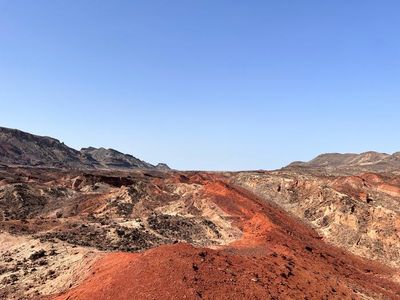


The crust beneath part of Kenya and Ethiopia is thinner than geologists thought, new measurements have found. That has important implications for the geology of the area and, more tentatively, could force a reconsideration of where humans came from.
A third of all the ancient hominin fossils in Africa come from the Turkana Rift, which makes up a tiny portion of the continent and is just one component of the East African Rift.
The area is known as the “cradle of humankind” as a result. However, palaeoanthropologists who specialize in South African research have long argued that the real action was happening near the continent’s southern tip. East Africa gets the attention, they claim, because the area’s volcanic eruptions gave us a better picture of what took place than South Africa’s limestone caves, particularly regarding timing. In other words, it’s East Africa’s geology that is special, not its evolutionary significance.
That argument has been taken a step further with the discovery that the Turkana Rift is further along the path to a continental split than previously recognized. Moreover, Columbia University PhD student Christian Rowan and co-authors argue, it entered that critical stage just about the time fossils of human ancestors started being preserved in the region in large numbers. Perhaps, therefore, the reason we know about Lucy and not a million like her elsewhere in Africa is that the ground beneath her feet was pulling itself apart.
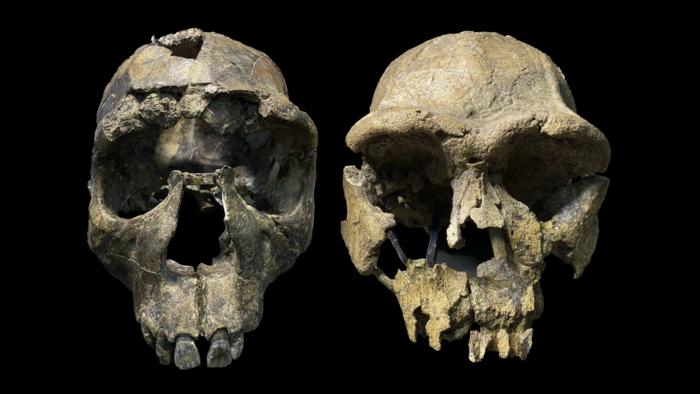
Continents have come together and ripped apart countless times since Earth developed tectonic plates, although we’re still uncertain when that was. The break-up involves a three-stage process: stretching, necking, and oceanization, and Turkana is at the necking stage.
Necking occurs when part of the crust is stretched and thinned while either side is almost unaffected. You can see something similar when you pull apart material with the right consistency, such as Blu Tack, taffy, or dough.
“The thinner the crust gets, the weaker it becomes, which helps promote continued rifting,” Rowan said in a statement. The condition becomes self-reinforcing, passing a critical threshold where a break-up is inevitable. Eventually, crust gets so thin that magma from the mantle surges through, producing a seafloor. We can see what that is like by looking northeast of the Turkana Rift to the Red Sea.
It’s a very slow process. The Turkana Rift started separating 45 million years ago, but reflected acoustic waves indicate necking only began around 4 million years ago, accompanied by widespread eruptions. Our ancestors had split from the other apes before this, but it’s only around that time that their fossils became abundant around the Turkana rift, and the authors don’t think that’s a coincidence. The subsidence caused by the necking led to more fine-grained sediments – ideal for preserving fossils – being deposited in the valley, and ash from volcanic eruptions provided a timeline.
The new measurements indicate necking has reached the point where the crust at the rift is 13 kilometers (8 miles) thick, compared with 35 kilometers (21 miles) thick on either side.
The researchers think that the rift started separating at some earlier point in time and then stopped for unknown reasons. However, the previous round weakened the crust at Turkana so that, when the process began again, there was less resistance. That’s not something geologists are aware of happening elsewhere. “It challenges some of the more traditional ideas of how continents break apart,” Rowan said.
The Turkana Rift is the only one in the world known to be in this crucial necking stage, making it a most interesting rift to observe. “In essence, we now have a front row seat to observe a critical rifting phase that had fundamentally shaped all rifted margins across the world,” said Folarin Kolawole at Columbia.
Human evolution, or at least our understanding of it, was probably shaped by the timing of the rift formation. Had the Turkana Rift continued necking during its previous round, much of East Africa might be an island in the Indian Ocean that early hominins would have struggled to reach.
On the other hand, the authors argue, if rifting had started later, we would have a much less impressive fossil record from the area. Being geologists, rather than palaeoanthropologists, the authors leave it to others to consider the extent to which the rift valley really was a hotspot for evolution or whether its exceptional preservation has inflated its perceived importance.
The study is published in Nature Communications.