


 Humans
 PUBLISHED




Often, when archaeologists discover the remains of some long-dead ancestors, figuring out the details of their lives is kind of… well, vibes-based, honestly. Is there an adult and a child buried together? That’s most likely a parent and child. A man and a woman together? Married. A tall person with a sword? Probably a dude. You get the picture.
In reality, though, human identities and relationships have rarely been so cut-and-dried. “[Our] assumptions […] almost always require revision,” explains a new paper from researchers in Poland and Germany. “Family structures and interpersonal relationships are complex and are not always unambiguously expressed in funerary practice.”
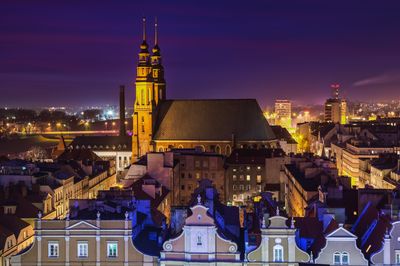
Thus it is that two adults found buried together at the Cathedral Church of the Exaltation of the Holy Cross in Opole, Poland, have now been reconsidered. “We show that both individuals are genetically females and unrelated, providing the first genetically confirmed same-sex double burial from medieval Poland.”
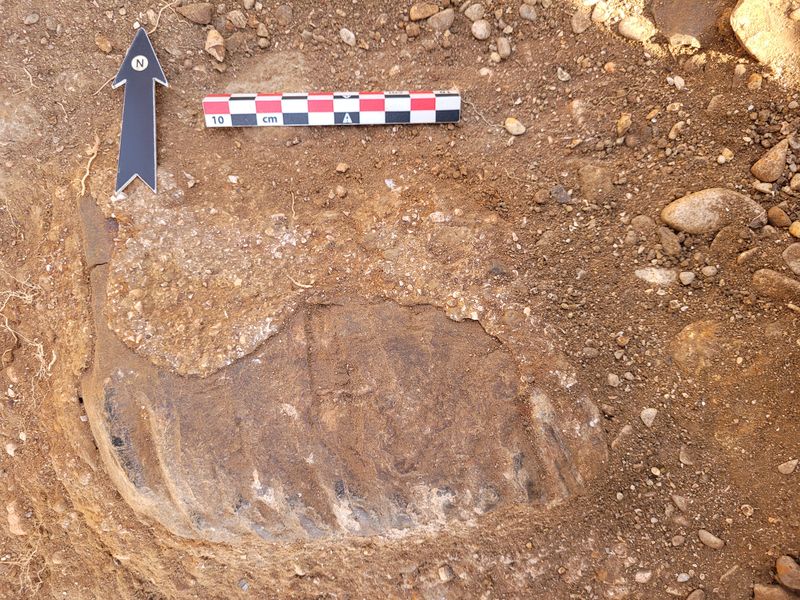
The pair were first discovered a few years ago, in an excavation of the cathedral that ran from May 2022 to November 2023, found “buried in a mutual embrace,” the paper explains, and “quickly dubbed the ‘hugging skeletons’ and interpreted as lovers.” And of course, it’s still possible that was the case – the genetic analysis confirmed that the two women were no relation to each other – but don’t start unfurling the pride flag just yet.
Here's the disappointing truth: just because two people could be romantically linked isn’t proof that they definitely were. And we’re not being prudes here: the researchers are careful to warn against making the same mistakes as their predecessors when it comes to assuming based on your own biases.
“[A]rchaeologists must guard against projecting modern cultural categories onto past practices,” they write, especially “where material evidence cannot distinguish between multiple plausible explanations.” Could the two women have been lovers? Yes, maybe – though getting evidence of that would be difficult, since same-sex relationships were heavily proscribed by the 13th century, when the cathedral was built.
That’s not to say no such relationships existed, and lesbian ones in particular may have flown under the radar for the standard misogynistic reasons. But the church record-keepers and historians probably weren’t going to be raving about them, is the point – and as for signing off on a joint burial in hallowed ground? It’s not impossible, but it’s kind of a long shot.
So, what other possibilities are there? Well, perhaps the two women had a “fictive kinship” – that is, they weren’t sisters, but they may as well have been. We’ve all known a pair of gals like that, and if we haven’t, then we’ve at least known somebody who was adopted, or had a stepmom or dad, or performed some badass blood oath ritual to bind their spirit to a compatriot for eternity. Those are all examples of fictive kinships: family-like relationships that aren’t based on blood or marriage, but are nevertheless real and legitimate for all intents and purposes.
Is that the case? Again, it’s possible. It’s also possible there’s some other explanation – it might be that the two women died in some sudden calamity, and burying them together was just more efficient, the researchers suggest; heck, it might just be that they were extraordinarily prescient and wanted to confuse future archaeologists.
The truth is, we’ll probably never know for sure. Best we can say is that the two ladies had some kind of connection, and it was one that their community recognized and considered important enough to commit to the earth.
“The atypical burial of two biological women in such a prestigious location illustrates the complexity of funeral practices,” the authors conclude, “and the dynamic relationship between the living and the dead, shaped by changing social and religious landscapes.”
In other words? There’s nowt so queer as folk.
The study is published in the Journal of Archaeological Science: Reports.


 2
2