Humans
 PUBLISHED
 1
1




A 5,700-year-old tomb has been found to contain five generations of one family, buried over the course of a century. The find provides unprecedented insight into kinship networks in Britain shortly after the introduction of farming – even the bodies' placement reveals much about how society was structured at the time.
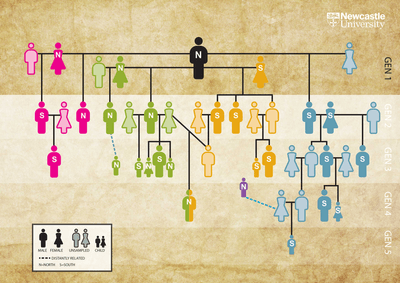
The Hazleton Long Barrow contains bones and teeth of many individuals, with 35 preserved well enough that scientists successfully sequenced their DNA. The findings reveal 27 of these were closely related. Most descended from a single patriarch who had children with at least four women.
“The excellent DNA preservation at the tomb and the use of the latest technologies in ancient DNA recovery and analysis allowed us to uncover the oldest family tree ever reconstructed and analyze it to understand something profound about the social structure of these ancient groups,” said lead geneticist Dr Iñigo Olalde of the University of the Basque Country and Ikerbasque in a statement.
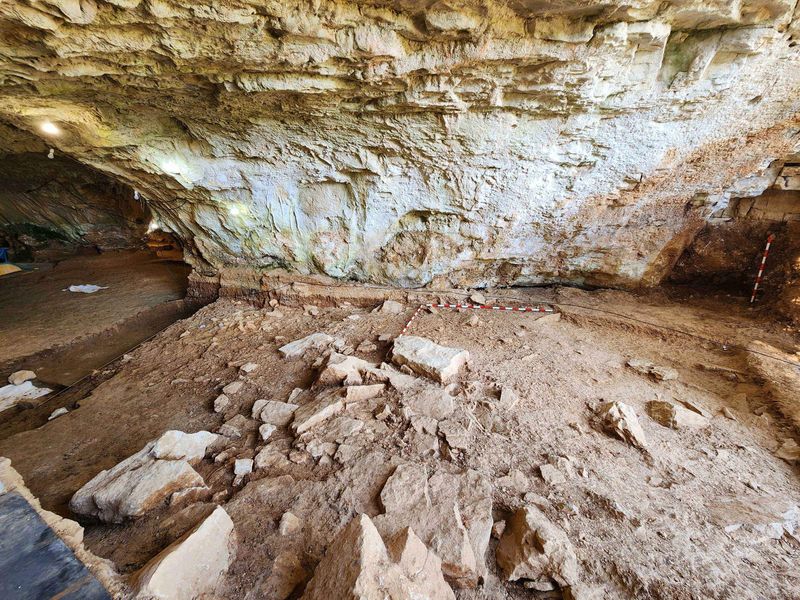
The Barrow is made up of a long spine with L-shaped chambers to the north and south, each of which contains many bodies.
“Just one extraordinary finding is that initially each of the two halves of the tomb were used to place the remains of the dead from one of two branches of the same family,” said first author Dr Chris Fowler of Newcastle University. “This is of wider importance because it suggests that the architectural layout of other Neolithic tombs might tell us about how kinship operated at those tombs.”
Besides the founding father, the barrow contains three of the four women he had children with, six of those children (two from the missing mother), seven grandchildren, three great-grandchildren, and one great-great-grandchild.
The barrow contains a woman who apparently married into the family, as well as three “stepsons” – men whose mothers were buried in the tomb, but who were not descended from the family on the male line.

The father was buried on the north side of the barrow, along with two of his partners. It's not clear if a north-side burial indicated any favored status, but most sons were buried on the same side as their mother, and subsequent generations usually followed suit. There are exceptions – two daughters of the family who did not survive childhood are also buried on their familial side. However, adult women descended from this line are not found here, which the authors interpret to mean they moved away.
Although a thousand ancient DNA samples from siblings or cousins have been sequenced, the paper notes; “There have been almost no multigenerational families where the exact relationships of all the individuals have been uniquely characterized.” This discovery stands out, but with many other long cairns nearby, perhaps not for long.
In a gift to screenwriters, one woman, whose DNA has not been found, had children both with one of the patriarch’s sons and with one of his grandsons via a different mother.
The barrow holds five men and three women who show no signs of being related to the others. The women might have married members of the family but had no sons, but the men's presence suggests adoption was common.
“Anthropological studies have made it clear that kinship – the relationships of family connection and belonging that have a central role in organizing societies – varies markedly across cultures,” the paper notes.
“It was difficult to imagine just a few years ago that we would ever know about Neolithic kinship structures,” Dr Ron Pinhasi of the University of Vienna said, but large graves like this could change things.
The study is published in Nature.
An earlier version of this article was published in December 2021.