


 Health and Medicine
 PUBLISHED


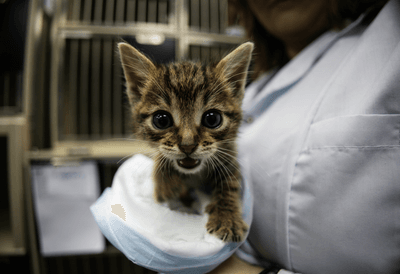


Cats have long been something of a medical mystery. Compared to dogs, our feline friends receive a fraction of the research attention, but a sweeping new international study is changing that by mapping the genetics of cat tumors for the first time at scale. Not only are the findings a boon for veterinary care, the researchers told IFLScience that it's a “win-win” for both pet and human health alike.
The project is a genuine global effort, bringing together scientists from the Wellcome Sanger Institute in the UK, the Ontario Veterinary College in Canada, the University of Bern in Switzerland, Cornell University College of Veterinary Medicine in the US, and more. Together, they studied different types of tumors from almost 500 pet cats across five countries in an attempt to better understand cat cancers at the genetic scale.
The team says this is the first time it’s been done at this large scale, not least because cats remain relatively understudied, especially compared to dogs and humans.
“Funding opportunities for veterinary medical research are nowhere near as available as for human medical research. On top of that, funding opportunities for canine research far outweigh those available for feline research,” senior author Dr Louise van der Weyden, of the Wellcome Sanger Institute, and Dr Geoffrey Wood, University of Guelph pathobiology professor and co-senior author of the international study, told IFLScience.
This disparity isn’t due to dog-centric favoritism nor the aloofness of cats; part of the reason has to do with pharmaceuticals and money. The researchers explain: “Dogs, especially purpose-bred beagles, have been used in drug testing whereas cats have not, so there was likely a greater general interest in their genome.”
The domestic dog genome was first sequenced in 2005, with increasingly detailed models following over the years. The cat genome didn't get its first proper draft until 2007, and a more complete version didn't arrive until 2014. Now that researchers have better genome assemblies to work with, studying feline genetics – and therefore their cancers – has become slightly easier.
Studying cat cancers and comparing across species to humans is a win-win.
Dr Louise van der Weyden and Dr Geoffrey Wood
In the new study, the researchers showed that some cat cancers bear a remarkable resemblance to their human equivalents.
The clearest parallel emerged in mammary cancers. The most common driver gene found in cat mammary tumors was FBXW7, mutated in over 50 percent of cases. In humans, FBXW7 mutations in breast cancer are associated with a worse outcome. The second most common was PIK3CA, appearing in 47 percent of cat mammary carcinoma tumors. The same genetic change is found in human breast cancer, where it is already targeted by a class of drugs called PI3K inhibitors.
By finding these kinds of links, the researchers show how veterinary science and human medicine can actively inform each other, and hopefully deliver real, impactful treatments that benefit both species.
“Studying cat cancers and comparing across species to humans is a win-win. Cats benefit because there are already drugs developed for human cancer that target specific mutations or pathways, so knowing what is common between humans and cats opens up treatment options for cats,” the two researchers added.
“By performing ‘comparative oncogenomics’, which is comparing the genetic alterations in found in tumours across different animal species, we showed that for some cancer types, domestic cats are a good spontaneous model for the equivalent cancer type in humans. Thus, what we learn from clinical trials in domestic cats could be used to inform human clinical trials. Similarly, successful oncology therapeutic approaches in humans could then be trialled in cats,” the pair said.
The study is published in the journal Science.



 1
1