Nature
 PUBLISHED


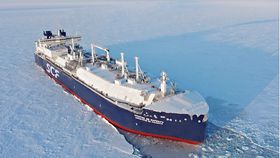


Once upon a time, crossing the Arctic was the ultimate challenge. From Franklin to Peary, the Arctic didn’t make it easy, and not every expedition was successful. Now, a Russian tanker has sailed through the usually icy waters without any kind of ice breaker for the first time ever. A success for shipping routes, surely, but a worrying example of climate change too.
The tanker crossed from Norway to South Korea in just 19 days, 30 percent faster than taking the usual route through the Suez Canal, traversing the Russian Arctic section of the route in just six and a half days.
Due to the current rate of melting sea ice in the Arctic, it’s predicted that ships will be able to cross it during the summer months by 2040, and ocean shipping lanes will be navigable all year round by 2100.
Usually, the only way to sail through the Arctic is with the aid of an icebreaker, but the tanker is specially designed to take advantage of the melting sea ice by having an inbuilt one that allowed it to get through ice around 1.2 meters (4 feet) thick without an escort.
It was the Christophe de Margerie’s maiden voyage, carrying cargo that included liquified natural gas (LNG) from a brand new $27 million dollar LNG facility in the Yamal Peninsula, Siberia.
"Previously there was only a window of navigation from our summer to autumn, but this ship will be able to sail westwards from Sabetta which is the Yamal energy port, all year round and eastwards from July to December," said Bill Spears, spokesman of the ship’s owner, Sovcomflot.
"Before the northern sea route was only open for four months and you had to have ice-breakers – so it's a significant development."
While the record-breaking travel time can be attributed to the tanker’s new technology, the record low sea ice also made it possible. We know that ice is melting in the Arctic twice as fast as anywhere else and there are obvious fears that increased traffic will damage the fragile ecosystem.
According to Spears, the ship does have green credentials. It can run on the natural gas it’s carrying, which reduces its sulphur oxide emissions by 90 percent and nitrous oxide emissions by 80 percent.
But the fact ships are now being designed in anticipation of less sea ice – you have to be pretty confident to spend $300 million on a new ship design – doesn’t bode well for the future of the Arctic.