Nature
 PUBLISHED
 2
2





It is undeniable that we are changing the planet’s climate. The reality of this is backed by study after study – and the latest one shows that the rate at which carbon dioxide is being released into the atmosphere now has no natural counterparts over the last 50,000 years.
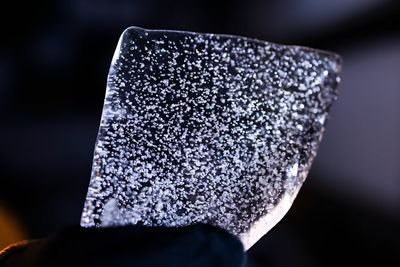
Researchers analyzed the gas that has been trapped in Antarctic ice over that period. They found that in the last largest natural increase, carbon dioxide rose by 14 parts per million over 55 years. This took place 7,000 years ago. The same increase now takes between 5 and 6 years.
"Studying the past teaches us how today is different. The rate of CO2 change today really is unprecedented," lead author Kathleen Wendt, an assistant professor at Oregon State University's College of Earth, Ocean, and Atmospheric Sciences, said in a statement. "Our research identified the fastest rates of past natural CO2 rise ever observed, and the rate occurring today, largely driven by human emissions, is 10 times higher."
Previous analysis has shown that there were peculiar jumps in carbon dioxide during the last ice age, which ended around 10,000 years ago, but there weren’t enough details to work out what was happening during that time. These periods are called Heinrich Events, and the new work has delivered crucial insights into their cause.
"These Heinrich Events are truly remarkable," added co-author Christo Buizert, an associate professor in the same department. "We think they are caused by a dramatic collapse of the North American ice sheet. This sets into motion a chain reaction that involves changes to the tropical monsoons, the Southern hemisphere westerly winds and these large burps of CO2 coming out of the oceans."
A potentially important player during the Heinrich Events is the westerly winds. They do affect the circulation in the deep ocean, and during the rise of carbon dioxide, they appeared to be stronger. The strengthening led to the rapid release of CO2 from the Southern Ocean. This could be bad news for the future.
Previous research has suggested that the climate crisis is making the westerly wind stronger again. If this work is correct, it might mean that going forward, the Southern Ocean’s ability to trap the carbon dioxide we release will greatly diminish.
"We rely on the Southern Ocean to take up part of the carbon dioxide we emit, but rapidly increasing southerly winds weaken its ability to do so," Wendt said.
A paper describing the results is published in Proceedings of the National Academy of Sciences.