Nature
 PUBLISHED


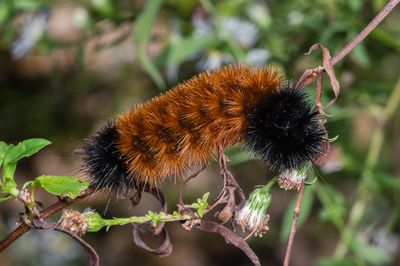


There are plenty of strategies in the animal world for surviving the winter; some, like the winners of Fat Bear Week, pile on the pounds and hunker down, sleeping through to warmer weather, while others brave the cold and extreme temperatures by finding safety and warmth in numbers. And some, like the woolly bear caterpillar, embrace the cold and simply freeze with the frost.
The woolly bear caterpillar is just one of the life stages of what will eventually become an Isabella tiger moth (Pyrrharctia isabella). Before it gets to that stage, though, the woolly bear caterpillar is one of the few species that can survive winter in its caterpillar form.
It can do this because the caterpillars can produce a compound called glycerol, which acts as an antifreeze agent, lowering the temperature at which they freeze and giving them more time to freeze in a more controlled way.
That process includes removing excess water from their cells and moving it into the spaces between them. This liquid freezes, but the cells remain unfrozen due to this removal and glycerol, meaning the ice doesn't damage the cells at all. This allows the caterpillars to survive freezing and thawing multiple times in the winter, though it is best for their little woolly bodies if they can remain frozen until the spring using their cryoprotectant to keep them safe.
There’s even an old tale that suggests that woolly bear caterpillars can predict the winter weather. According to folklore, the length of the caterpillars' black bands varies in relation to how harsh the winter will be; the longer the black parts, the more severe, snowy, and colder the winter will be. However, if the brown middle band is longer, then the winter will be milder. If the head of the caterpillar is dark, then the start of winter will be bad, and if the tail end is dark, then the end of winter will be particularly harsh.
Of course, this is all just local tales, and the coloration of a woolly bear has no impact on the weather patterns. Instead, the older caterpillars simply have larger brown sections.
If all of this wasn't enough to be getting on with, woolly bear caterpillars are also believed to be the first recorded self-medicating insect, deliberately eating poisonous plants to get rid of parasites. Not bad for a creature less than 5 centimeters (2 inches) long.

 1
1