Nature
 PUBLISHED
 2
2


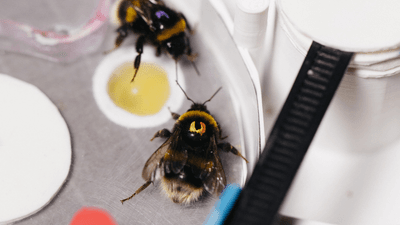


The cumulative acquisition of knowledge through culture was once thought to be unique to humans – but now, new research has shown that it's a trait that may extend to invertebrates. Sending a bunch of bumblebees on a quest to learn how to reach a reward in a puzzle box has shown that they too can train one another, demonstrating an unprecedented degree of social learning in a non-human species.
The task at hand was a complicated one, chosen specifically because it was something that a bee would never come up with on its own. That meant it had to first be trained how to complete the task by a human, and so bee school was in session.
The bee had to learn how to push a tab out of the way so that it could use a second tab to expose a patch of delicious sucrose reward. It sounds simple to us, but getting a bee to do it is impressive because the first step – moving that pesky tab out of the way – doesn’t result in a reward, which is typically what it takes to get an animal to do something.
Untrained bees weren’t able to solve the puzzle, but those that were trained picked it up after two days. Then, the student became the master as the 15 trained demonstrator bees were paired up with observer bees, who had received no training and hadn’t flown around the puzzle box before.
Of those 15 observers, five successfully completed the box challenge, receiving their sugary prize with the shifting of a few tabs. Footage shows the first successful attempt, followed by rapturous applause and calls of “well done, bee!”.
IFLScience doesn’t have a dedicated research site, but if it did, we’d sure like it to be like bee lab.
The capacity to inherit knowledge and pass it down through a community over time is referred to as culture, something that has not been demonstrated in invertebrates before. This new research therefore raises a lot of interesting questions – as, if bees are capable of spreading knowledge, it’s possible they’re capable of the transmission of culture.
“We used to think that humans were the only species where someone might head out on a quest [and] learn something so complicated that when they bring it back to their village, the others don’t believe it could have come from anywhere but the gods, and [then] pass that on to other generations,” said postdoctoral researcher Alice Bridges.
“It now seems at least plausible that a similar quest is going on in social insects, and that changes everything,” concluded Professor of Sensory and Behavioural Ecology Lars Chittka.
The study is published in the journal Nature.