Humans
 PUBLISHED


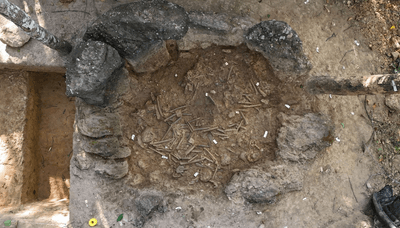


As mortuary rituals go, this might be one of the strangest and most fascinating discovered yet. In the mountainous jungles of Southeast Asia, archaeologists have discovered a giant stone jar packed with the skeletal remains of 37 different people.
Stranger still, radiocarbon dating of bone and teeth samples from the jar indicates it was used over a remarkably long period, possibly up to 270 years. This suggests different family clans returned to the site time and time again, refilling it with the remains of each new generation.
Known as Site 75, the giant jar has recently been studied by an international team of archaeologists led by James Cook University in Australia and the Lao Department of Heritage. It sits on the Xieng Khouang Plateau in northern Laos, a region where hundreds of similar stone vessels are found, an area known as the Plain of Jars.
This jar, however, is exceptional. It dwarfs most others on the plateau, measuring 1.3 metres (over 4 feet) high and more than 2 metres (6.5 feet) wide. Owing to its size and jam-packed contents, the researchers believe it may be the clearest key yet to understanding why this practice existed.
Site 75 dates to around 890–1160 CE, a period when Southeast Asia was becoming increasingly interconnected through the rise of powerful neighbouring civilizations, including China's Song Dynasty and Cambodia's Khmer Empire. Evidence of this flourishing trade and cultural exchange can be seen in the jar's beads, which chemical analysis revealed to have originated as far afield as South India and Mesopotamia. This growing continental exchange likely helped to spread the unusual mortuary practice across Asia and eventually into the Pacific, the researchers say.
“While to modern observers placing human remains inside giant stone jars may appear unusual, secondary burial practices, where bodies are initially left to decompose before selected bones are reburied, are actually quite widespread across Asia and the Pacific,” Dr Nicholas Skopal, co-leader of the study and archaeologist at James Cook University in Australia, told IFLScience.
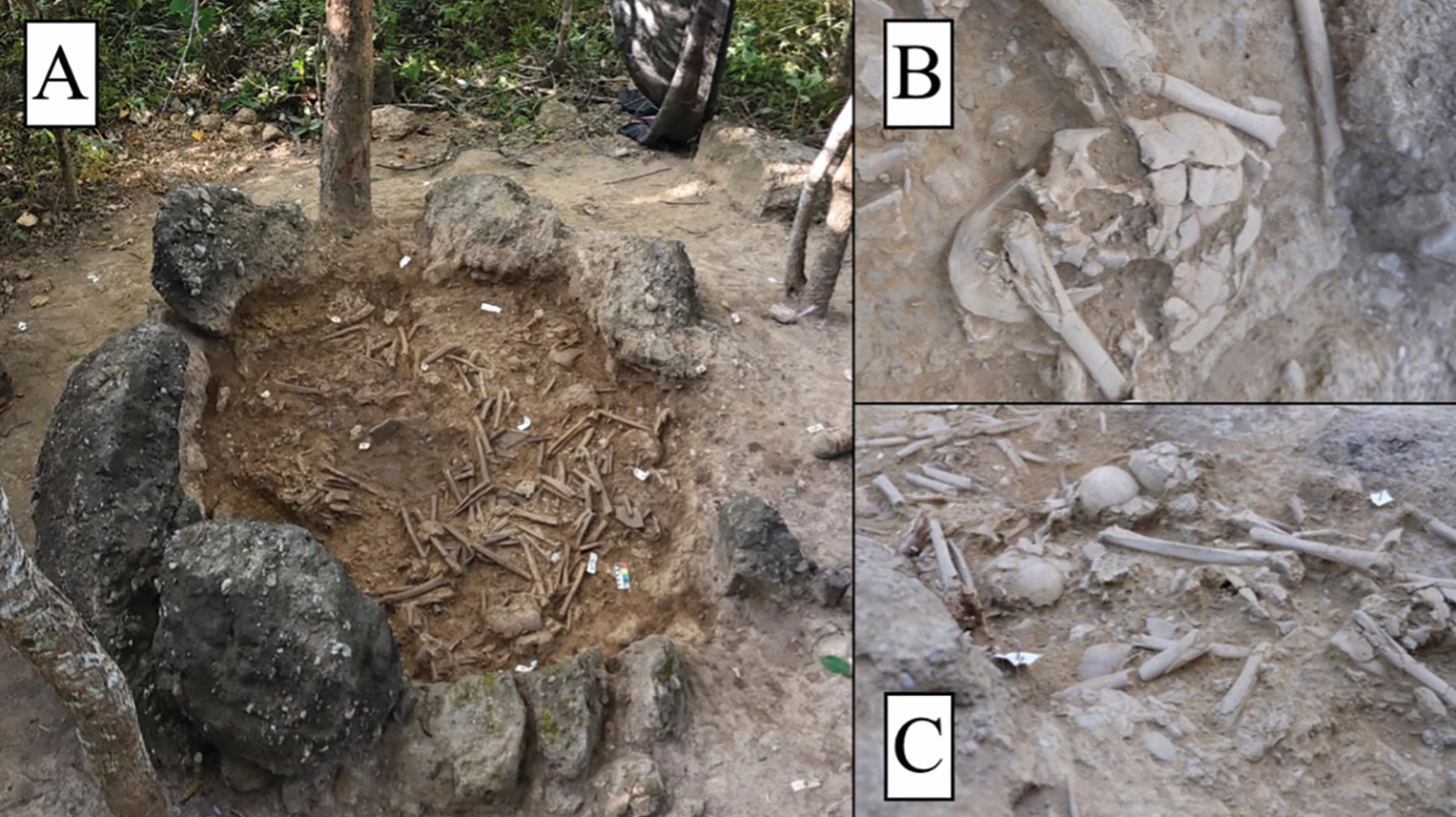
“At Site 75, the large jar appears to have acted as a collective ossuary that communities returned to over generations. The repeated use of the jar, combined with the associated offerings such as beads, pottery, and metal objects, suggests these were important ceremonial spaces tied to memory, identity, and ancestral ritual,” said Dr Skopal.
As Skopal mentions, the bodies were not simply tossed into the communal jar shortly after death and left to decompose alongside their long-gone relatives. A forensic analysis of the bones suggested they were deposited here after an initial stage of decomposition elsewhere in a deliberate, multi-stage process.
“In many cultures, decomposition represents a transitional phase between death and the ancestor world. The movement of bones from one location to another may have been symbolic, marking the completion of this transformation,” explained Skopal.
“At Site 75, we suspect the smaller nearby jars may have acted as temporary decomposition containers before remains were transferred into the much larger Jar 1. This could explain why many jars across the Plain of Jars are empty today, the bones may have later been removed again or transferred elsewhere as part of an extended funerary sequence."
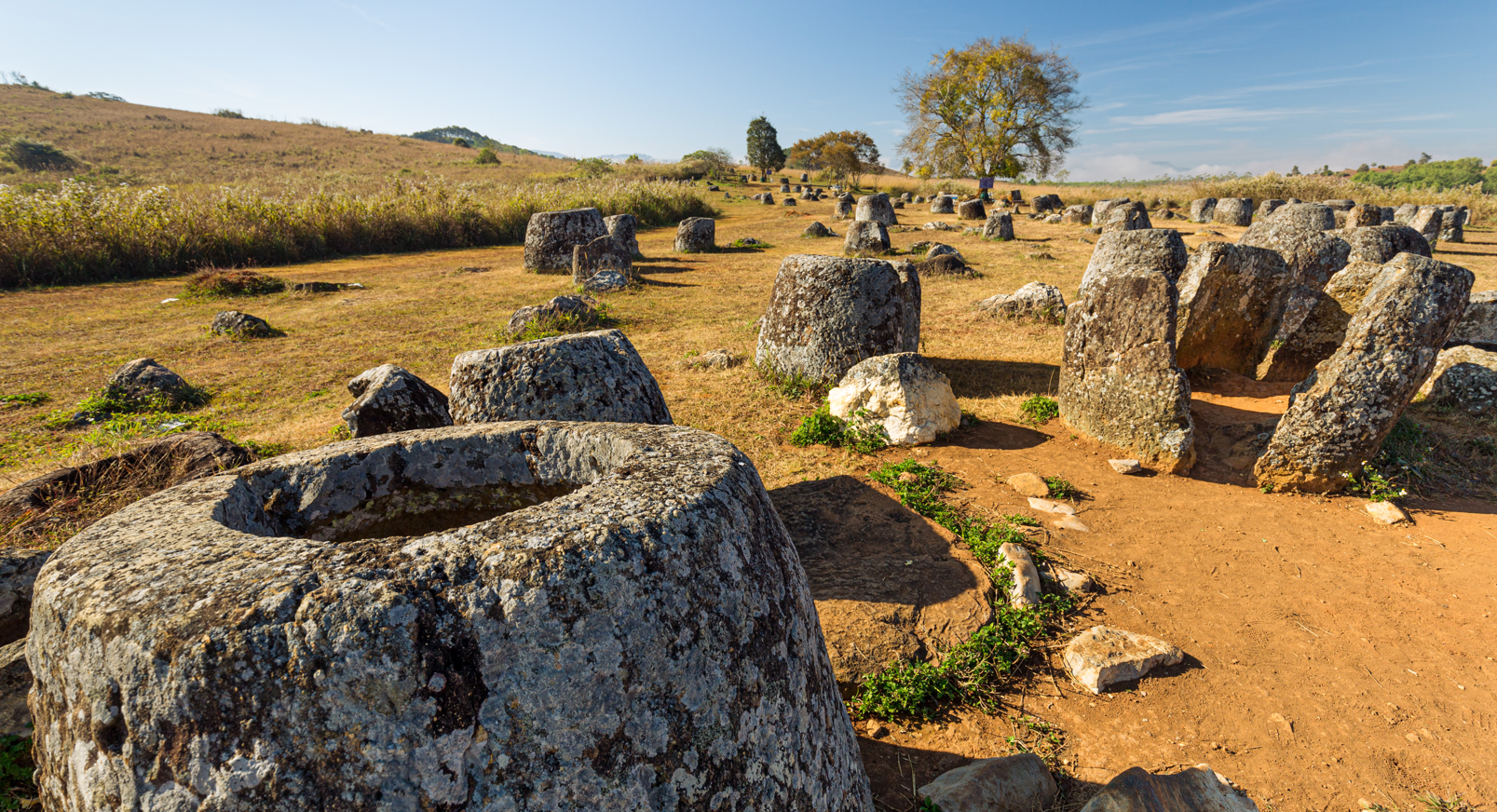
Archaeological work in this part of the world is no easy feat, which is partly why these jars have often not received the academic attention they deserve. Skopal explains that many of the sites are extremely remote, located in dense forest or mountainous terrain, and only reachable by four-wheel drive vehicles and treacherous hikes. There is also the ever-present danger of unexploded bombs, which still litter the Laotian landscape as a legacy of the Vietnam War.
Despite these hurdles, the researchers are keen to return to the Plain of Jars and deepen their understanding. Who exactly were these people? Were they definitely related by blood, or by something else entirely? Could ancient DNA finally put a human identity to the bones inside the jar?
“The discoveries complement the work being undertaken at Site 1 by other teams, while also showing that mortuary practices varied between communities. Future work will involve a full bioanthropological study and ancient DNA analysis of the individuals from Jar 1, which we hope will provide new insight into who these people were and how they were connected to wider populations across Southeast Asia,” said Skopal.
The new study is published in the journal Antiquity.