Nature
 PUBLISHED


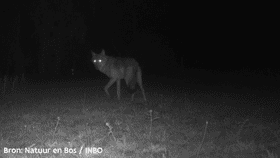


Naya, the first wild wolf in Belgium in over a century, has been missing since spring. Following an extensive search for the missing she-wolf, local conservation groups and environment agencies now believe she was killed along with her cubs.
“The nature investigation cell of 'Nature and Forest' assumes that the she-wolf was maliciously killed,” the Agency for Nature and Forests, the Flemish government’s environment agency, said in a statement on Monday, September 30.
“It can be assumed that if the she-wolf was killed, the perpetrators of the environmental crime would have deliberately invaded the she-wolf's nesting area to search for the she-wolf with her cubs on the nest and kill them there.”
Naya was first spotted on Belgian soil in January 2018 after researchers tracked her as she journeyed across the border from the Netherlands and into the north-eastern Flemish region of Flanders.
She was last officially seen in May 2019. At the time, she was clearly pregnant. Although she was not seen over the summer, her male partner was spotted carrying food, which is a promising sign that the mother and cubs are alive and well. However, as summer drew by, he stopped bringing back food.
After word got around of an anonymous tip that stated the wolf was intentionally poisoned, an investigation was launched using ground searches, drones, and a review of images documenting the local wolves. However, they found no evidence of poison in wolf poop from the area. Based on the little hard evidence they have, the Agency for Nature and Forests said that if the she-wolf was killed, it was likely in a malicious act.
However, local hunting associations have dismissed these claims as an attempt to smear the reputation of hunting. Speaking to Flemish newspaper Het Nieuwsblad, one hunter said the accusation was “tendentious” and that the local hunting association is considering whether to file a legal complaint for defamation, even though the Agency for Nature and Forests does not officially mention hunters.
“They say they are 100 percent sure, but they have no proof," he added.
The disappearance of Naya marks another hurdle in the recent resurgence of wolves to Central and Western Europe, with wild populations being spotted in Germany, Denmark, and Austria. Scotland and England are also considering the active reintroduction of wolves into certain areas.
However, as this recent story highlights, humans and wolves have a strong tendency to clash, especially in rural areas where the safety of livestock is a priority.