Nature
 PUBLISHED


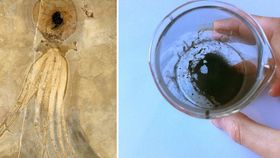


Dutch artist Esther van Hulsen has used some 95-million-year-old octopus ink to illustrate a prehistoric octopus. After all, it's what the fossilized octopus would have wanted.
The prehistoric octopus fossil was found in Lebanon in 2009. While fossils of cephalopods are pretty rare in this area of the Middle East, this specimen was particularly special as it featured an intact ink sac. The specimen was bought by PallVenn (the Society of Friends of the Paleontological Museum Oslo) and gifted to the Paleontological Museum in Oslo. By mixing the dried pigment powder from the fossilized ink sack with water, she was able to create the ink.
Van Hulsen’s illustration can now be found side-by-side with the original fossil at the Natural History Museum in Oslo.

Image credit: Esther van Hulsen