Space and Physics
 PUBLISHED


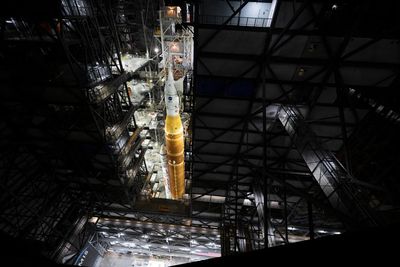


The Artemis II mission will carry with it bone marrow tissue made from the mission’s astronauts’ own cells. Observations on how spaceflight affects these “organs-on-a-chip” will provide a better understanding of the hazards of longer space missions, and potentially enhance medical procedures at home.
Artemis II will blast off from the Kennedy Space Center and, all going well, will take humans beyond low Earth orbit for the first time in 54 years and further from Earth than we have ever been before. Although the mission is primarily being promoted as a stepping-stone to a future Moon landing and possible base, NASA isn’t wasting the opportunity for scientific research the mission will provide.
Having caught astronomers’ bug for terrible acronyms, NASA has named an experiment taking tissue made from astronauts’ bone marrow with them on the journey AVATAR (A Virtual Astronaut Tissue Analog Response).
“AVATAR is NASA’s visionary tissue chip experiment that will revolutionize the very way we will do science, medicine, and human multi-planetary exploration,” said NASA’s Dr Nicky Fox in a statement. “Each tissue chip is a tiny sample uniquely created so that we can examine how the effects of deep space act on each human explorer before we go to ensure we pack the appropriate medical supplies tailored to each individual’s needs as we travel back to the Moon, and onward to Mars.”
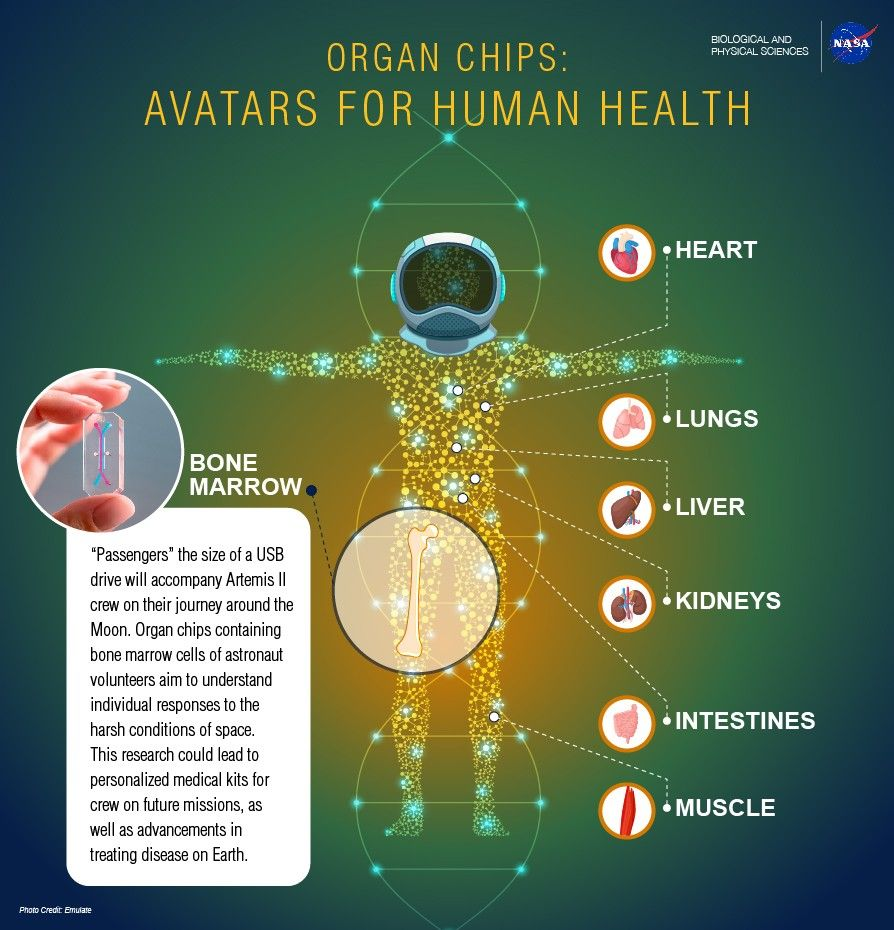
The main ingredients of our blood, including red and white blood cells and platelets, are made in bone marrow. Decades before other stem cell transplants were on the horizon, bone marrow donations were saving lives from leukemia and other cancers. Bone marrow on a chip is more than a decade old.
Cells that can survive so well outside the body represent the ideal candidate for studying the effects of space. To provide a point of comparison, the tissue will be made from cells taken from the bone marrow of the Artemis II astronauts that will be riding beside it.
Organ-on-a-chip (shortened to organ chips) experiments have helped advance medical research in recent years, often offering cheaper and quicker alternatives to animal research without the ethical concerns. They use living stem cells grown to replicate the structures of human organs, such as lungs, hearts or even brains, so the effects of medication or certain stresses can be observed.
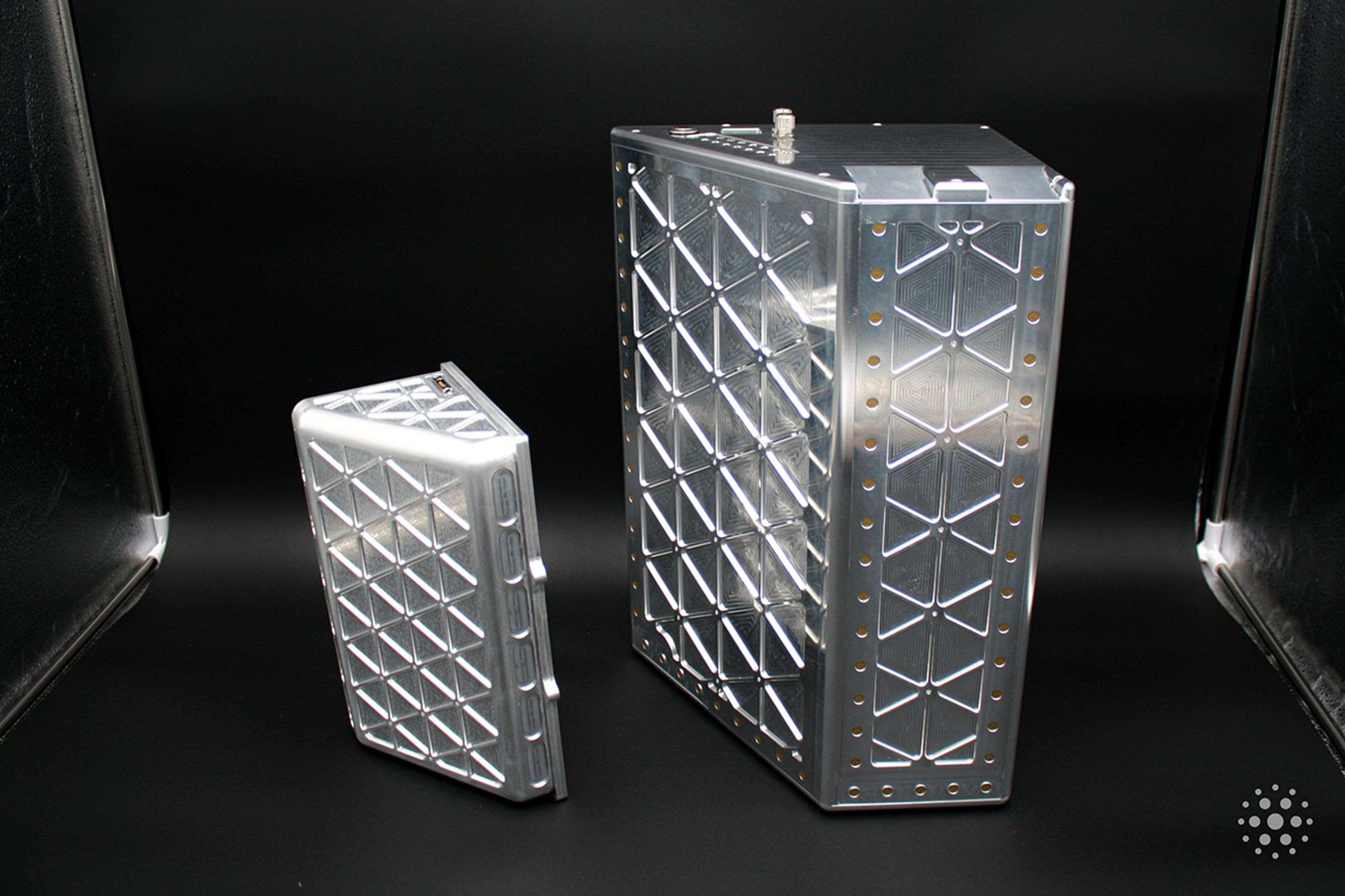
Now NASA wants to use this approach to study long-distance spaceflight.
We’ve had decades to study the effect of microgravity on astronauts’ health, but almost all of this has been done on space stations inside the Van Allen Belts, providing a radiation environment very different from lunar or Mars missions. Artemis II will only last 10 days, but that’s still much more insight than anything we’ve had before on how safe long-term exposure to radiation will be.
Besides being well suited to making organ chips, bone marrow is known to be particularly sensitive to radiation, the primary concern for longer missions. We also already know that bone marrow cells develop differently in microgravity, contributing to the loss of bone density that is among the biggest challenges for long-term space missions.
“For NASA, organ chips could provide vital data for protecting astronaut health on deep space missions,” said NASA’s Dr Lisa Carnell. “As we go farther and stay longer in space, crew will have only limited access to on-site clinical healthcare. Therefore, it’ll be critical to understand if there are unique and specific healthcare needs of each astronaut, so that we can send the right supplies with them on future missions.”
Upon return, DNA from cells carried on the chips will be sequenced to see what changes have been produced, and this data will be compared with that for cells taken directly from the returned astronauts’ bodies.
Bone marrow donations were once painful operations, but AVATAR takes advantage of the fact that blood collected cells platelet contain small numbers of stem and progenitor bone marrow cells, which can be separated from other cells. By placing these cells next to blood vessel cells, simulations of bone marrow can be made.
In addition to the value of the research for longer space missions, it is hoped AVATAR will improve our understanding of how radiotherapy affects bone marrow, allowing future treatments to be more targeted.