Space and Physics
 PUBLISHED
 5
5



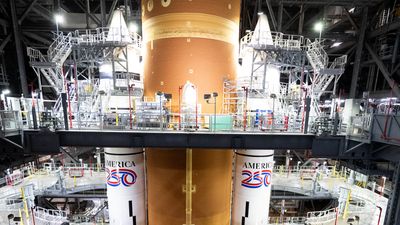


For the first time in decades, astronauts will be flying to deep space. Artemis II is scheduled to launch in the coming weeks and will see NASA's Reid Wiseman, Victor Glover, Christina Koch, and Canadian astronaut Jeremy Hansen break records as they travel 9,260 kilometers (5,750 miles) past the Moon – the first humans to go to the Moon since 1972. The first step of that launch is expected to happen early on January 17. NASA's massive Space Launch System (SLS) rocket is going to be rolled out of the Vehicle Assembly Building (VAB) and taken to the launchpad. How do you move a rocket from assembly site to the launchpad 6 kilometers away? Very carefully and with some of the largest machines ever to move on land.
The SLS will be moved the 6.4 kilometers (4 miles) from VAB to Launch Pad 39-B at the Kennedy Space Center in Florida using NASA's Crawler-Transporters (CTs). These are the world’s heaviest self-powered vehicles at around 2.7 milion kilograms (6 million pounds) and are capable of carrying a total load of up to 8.2 million kilograms (18 million pounds), which is equivalent to 4/5 the weight of the Eiffel Tower, 13 Christ the Redeemers, 20 fully-loaded 777 airplanes, 60 Statues Of Liberty (without Plinth), or 80 blue whales.
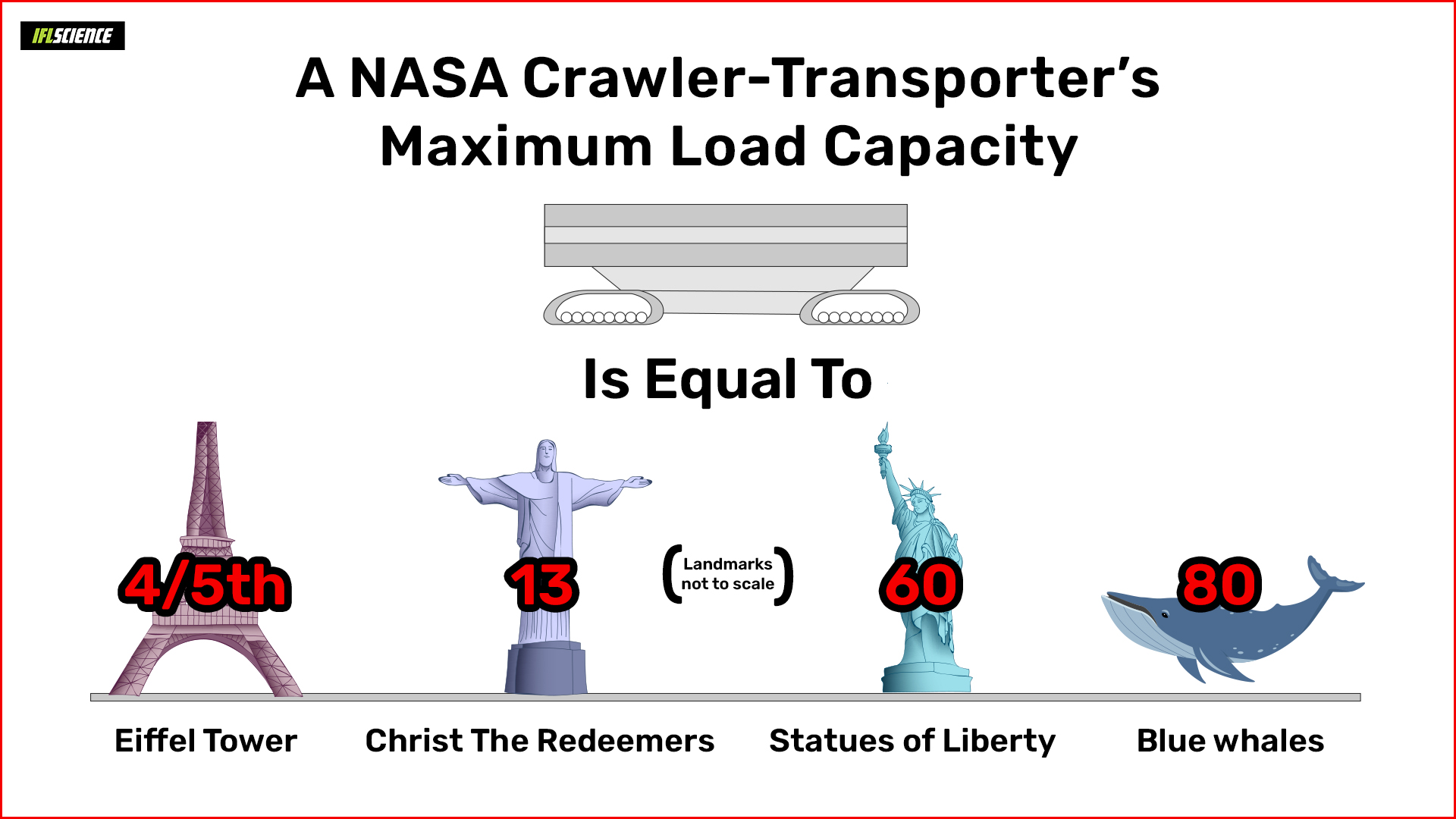
SLS is actually about a third of the maximum load capacity, but it will still take the CT about 12 hours to complete the journey from VAB to the launchpad. Once the spacecraft and rocket arrive, the mission team will carry out testing to make sure everything is as it should be. This will culminate with a wet rehearsal when the cryogenic propellants are loaded into the rocket.
There will be several runs to demonstrate the team's ability to hold, resume, and recycle the final 10 minutes of the countdown, all the way down to 30 seconds before launch (T-minus 30). If problems arise, the SLS and the Orion spacecraft will roll back into the VAB.
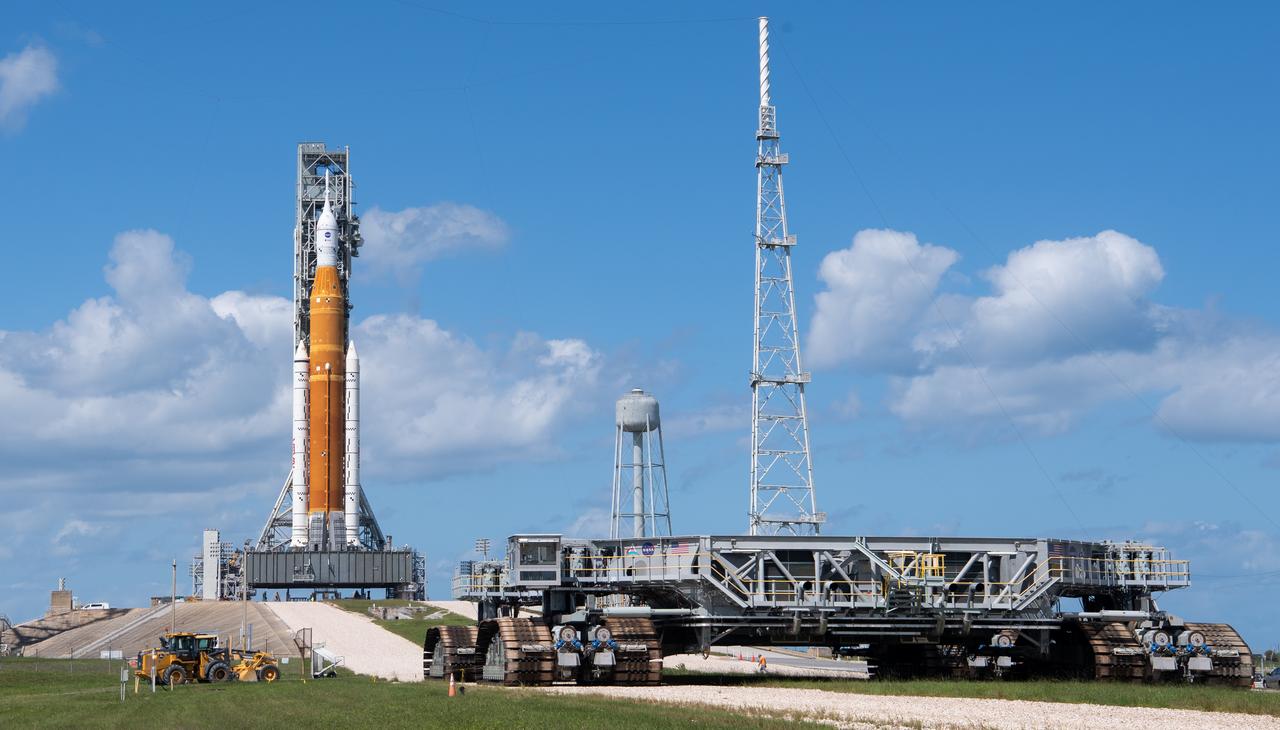
“We are moving closer to Artemis II, with rollout just around the corner,” Lori Glaze, acting associate administrator for NASA’s Exploration Systems Development Mission Directorate, said in a statement. “We have important steps remaining on our path to launch and crew safety will remain our top priority at every turn, as we near humanity’s return to the Moon.”
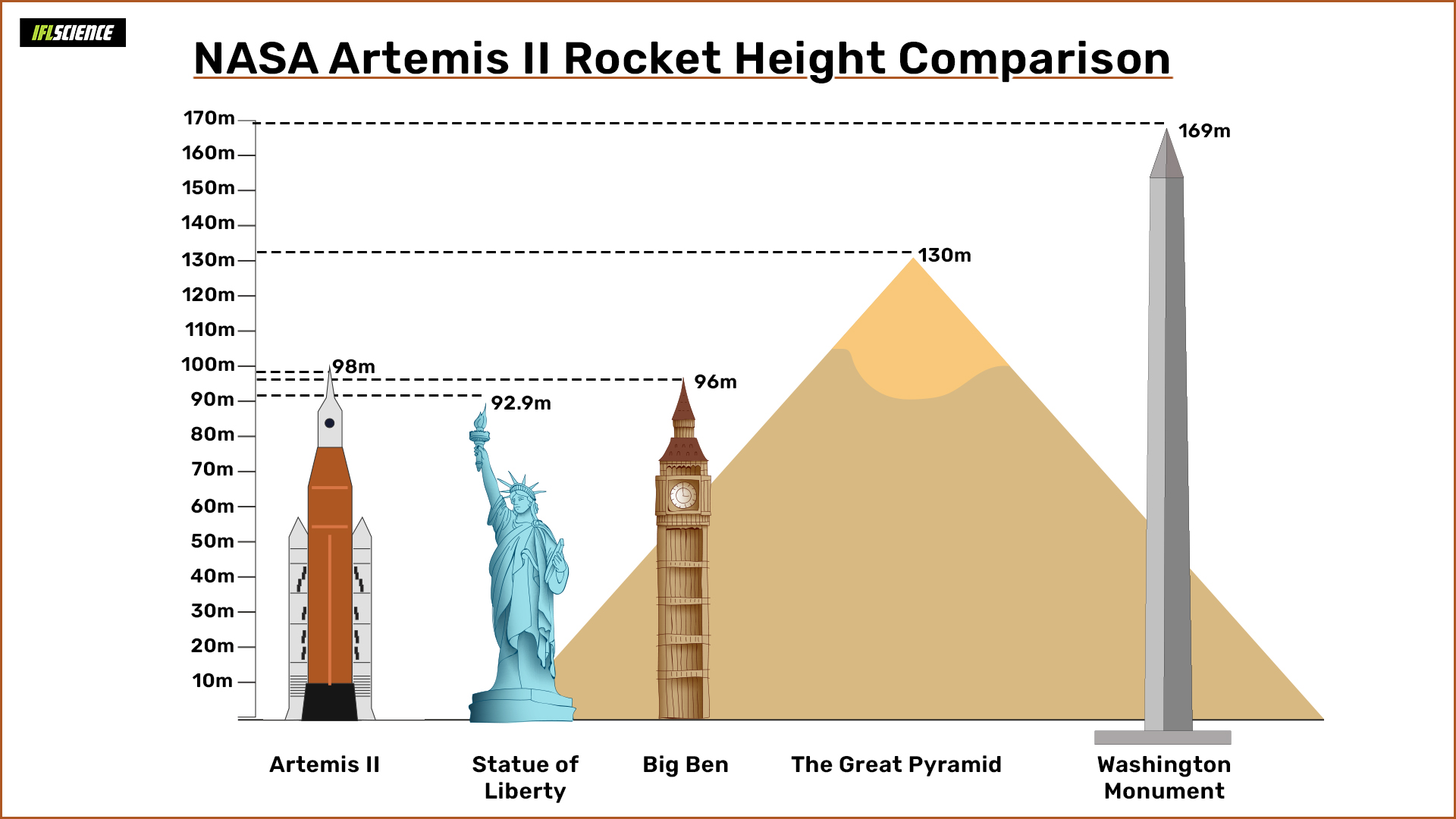
SLS is one of the biggest rockets ever built (SpaceX's Starship is even larger). It has the largest solid propellant boosters ever built for flight, a technology that comes from the Space Shuttle era. In its version for Artemis II, it will be 98.1 meters (322 feet) tall.
To get to the Moon, the Orion spacecraft needs to be in the right position with respect to where the Moon is going to be and to make sure it will never be in darkness for more than 90 minutes. The mission will not land on the Moon but go around it. The actual date will depend on how the wet rehearsal goes, how the weather is, and other Earthly factors. To guarantee the optimal conditions, NASA has picked three launch windows with multiple launch dates:
- February Launch opportunities: 6, 7, 8, 10, and 11
- March Launch opportunities: 6, 7, 8, 9, 11
- April Launch opportunities: 1, 3, 4, 5, 6
How to watch NASA roll out its massive Moon rocket
NASA is targeting no earlier than 7 am EST (12 pm UTC) on January 17 and will be livestreaming the journey on its YouTube channel. However, watching a truck moving at roughly 0.5 kilometers per hour for 12 hours may not be everyone's thing. Luckily, at 9 am EST (2 pm UTC), another livestream with the Artemis II crew and NASA administrator Jared Issacman will start, where they will be answering questions about the upcoming historic mission.
Artemis II will be the first crewed mission of the Artemis program and will break multiple human spaceflight records, including the farthest a woman and a person of color have traveled beyond low-Earth orbit and beyond the orbit of the Moon.
This article has been updated to include information on the official NASA livestream of the rocket rollout.