


 Space and Physics
 PUBLISHED



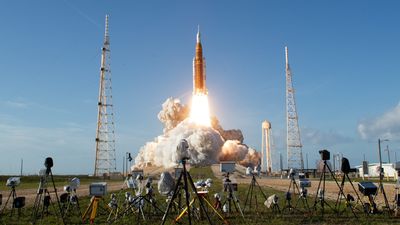


Artemis II and its crew of four astronauts have made it to high Earth orbit, marking the first stage of their journey to the Moon and the first time humans have been enroute to our planet’s satellite in 54 years.
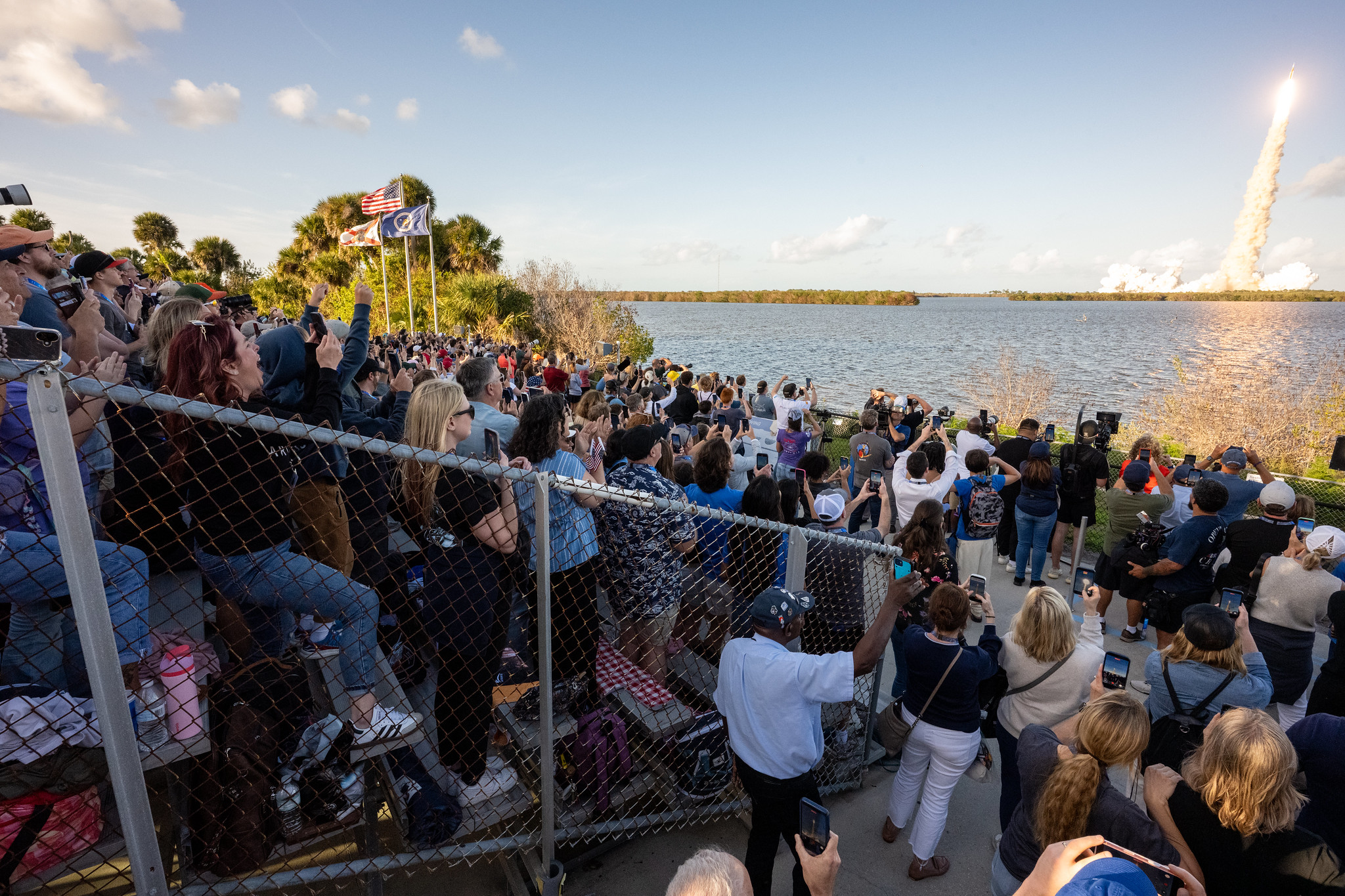
The launch window for the mission opened at 6:24 pm EDT last night on April 1, and while the countdown briefly stalled just prior to the 10-minute “terminal count” to give engineers more time for final preparation, clearance was given unanimously just 11 minutes later, and the rocket lifted off successfully from the launchpad at Kennedy Space Center, Florida, at 6:35 pm EDT.
All aspects of the Space Launch System (SLS) and boosters performed smoothly, and the Orion capsule survived both the natural hazards of Earth’s atmosphere and the many artificial obstacles in low Earth orbit around our planet, bringing NASA astronauts Reid Wiseman, Victor Glover, and Christina Koch, as well as Canadian astronaut Jeremy Hansen, safely into orbit.
Eighteen minutes after launch, the capsule’s solar array wings, extensible solar panels on the sides of the craft, deployed as intended.
Rather than charting a course directly for the Moon, Artemis II first entered an elliptical orbit at an altitude peaking at 2,200 kilometers (1,400 miles), after which it conducted two burns.
The first burn raised the lowest orbital point (perigee) to an altitude of around 1,600 kilometers (1,000 miles), and the second boosted the peak (apogee) to an altitude of 70,000 km (44,000 miles) above Earth. A further perigee raise burn will be performed when the crew wakes after a sleep break at 7:00 am EDT.
Between orbital burns, the crew tested Orion’s ability to move precisely relative to the detached upper stage of the SLS, known as the proximity operations demonstration. The SLS is standing in for another spacecraft, and this capacity will be crucial for Artemis III and later missions, which will need to dock with a lunar Human Landing System.
You can watch the view from the spacecraft here:
Successful as the launch system has been, not everything in the capsule has been perfect. The first toilet to go beyond low Earth orbit had a “controller issue”, which NASA Associate Administrator Amit Kshatriya said at a press conference would take a few hours to resolve. NASA has since declared the issue fixed, no doubt to the crew’s relief – although the Apollo astronauts managed without a toilet, that didn’t always go well.
A valve between two of the Orion’s four water tanks also closed during launch. “You know, when you shake the thing, things like that happen,” Kshatriya said, before expressing confidence the problem would also be resolved quickly.
Kshatriya also reported a failure in a latching current limiter, part of the spacecraft’s power distribution system, noting that this happens when electronics are exposed to radiation. He added that only one has been reported so far on this mission, while there were 24 during Artemis I.


 1
1