Space and Physics
 PUBLISHED


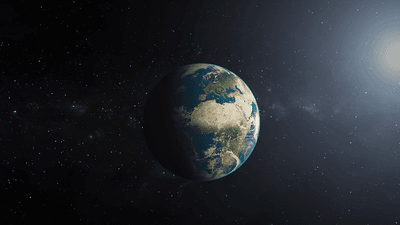


There's an odd claim that circulates the Internet every year that on July 8, nearly all of the Earth's population will experience sunlight at the exact same time. The weirdest thing about this claim is that it is basically true.
So, how can this possibly be the case? There are a few factors in play.
The first is that Earth's landmass is not distributed evenly, with around 68 percent of it being in the northern hemisphere. Due to this, and more favorable conditions for farming, around 90 percent of Earth's population lives in the hemisphere currently pointed right at the Sun. But that is 90 percent of the population, not 99 percent of the population.
You might (reasonably) assume that the northern hemisphere would experience the most sunlight simultaneously on the summer solstice, the day when the Sun appears the highest in the sky, and the day is at its longest. But the time when 99 percent of the population is in sunlight comes on July 8, at around 11:00-11:03 UTC, according to analysis from timeanddate.com.
If you're reading this, you have missed it, but thanks to new analysis from the team, it turns out you will only have to wait a day to experience the same phenomenon.
Looking at their own sunlight data, as well as population data from the Center for International Earth Science Information Network, the team found that basically all of the population will see sunlight at roughly the time Internet memes suggested (around 11:15 UTC). At that time, only the sparsely populated Australia and New Zealand, and parts of Southeast Asia and Antarctica will miss out on the Sun's rays. The rest will experience some sort of sunlight, ranging from full daylight to a nice bit of twilight.
However, some of this will be indirect sunlight; when the Sun is below the horizon but you can still see its light. This portion of the population will still be illuminated by the sun's rays, but not really enough to properly notice it's not nighttime. As well as this, around 3 percent of the population will be in "astronomical twilight", which occurs when the Sun remains around 12 to 18 degrees below the horizon.
At these levels of sunlight astronomical observations are still possible, so whether 99 percent of the Earth's population really is in sunlight depends on whether you count this at all.
Though the team stresses that figuring this out is a messy business, this year they extended their analysis to look for other days where this might be true. Essentially, they found that this phenomenon actually happens quite a lot of the time, beginning in May 18 and ending around mid-July. The time varies but is always around 11:00 UTC. For around 60 days of the year, just for a few minutes, nearly all humans are getting light from our star.