Space and Physics
 PUBLISHED



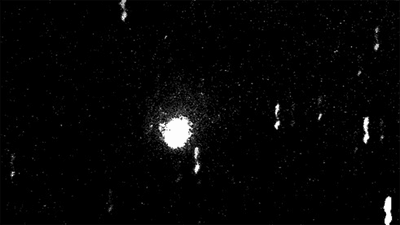


If you have clear skies and access to binoculars or a small telescope, now is your chance to see a 10-kilometer (6.2-mile) comet, first spotted 153 years ago, as it makes a close approach to the Earth.
On July 4 1873, German astronomer and prolific comet-hunter Wilhelm Tempel spotted a faint object moving in a southeastern direction in the constellation of Pisces. Tempel was able to observe the comet again the following night, and again over the coming months until it disappeared from view on October 20.
It was quickly determined to be a short-period comet, and initial calculations based on its trajectory suggested it completed its orbit once every 5 or 5.5 years. On July 19, 1878, Tempel observed the comet entering our little region of spacetime once more, confirming a more precise estimate of 5.16 years.
At around 10 kilometers across, 10P is about the same size as the asteroid thought to have wiped out the dinosaurs, which is why we are fortunate that its orbit takes it from just inside the orbit of Jupiter to just inside the orbit of Mars.
On 3 August 2026, during the comet's closest approach, it will be a comfortable 0.4144 astronomical units (AU) from Earth, with one AU being the average distance between Earth and the Sun. In even more reassuring units, that's around 62,000,000 kilometers (38,500,000 miles).
We now know those 18th-century astronomers were a smidge off with their calculations, and the comet orbits the Sun every 5.37 years. This short period makes it a prime target for repeated observations and figuring out how these objects evolve over time.
However, despite frequent visits inside the orbit of Mars, don't go thinking you can just miss this opportunity and catch it on the next pass.
"While telescopic improvements now allow it to be observed at every apparition, the roughly 5.5 year period results in apparitions which alternate between favorable and unfavorable viewing geometries," a paper on the comet explains. "Consequently, Tempel 2 was well placed for observing in 1978, 1988, and 1999, but poorly placed in 1983, 1994, and 2004 when it reached perihelion on the far side of the Sun."
As comets approach the Sun and heat up, they sublimate ice and gas, changing their composition. Looking at the comet over time, that team found its rotation had slowed significantly over time, likely the result of asymmetrical outgassing as the comet heats and cools along its orbit.
The five-year orbital period of 10P, as well as the Jupiter-family comet being a lot closer than other comets out there (looking at you, Halley's Comet), has made it a tempting target for space missions. But despite several aborted mission concepts, including a proposal to repurpose NASA's Mariner 3 spacecraft, no spacecraft has yet been launched to see the comet up close.
Until such a mission emerges, you may as well see it with your own equipment. From the beginning of July, the comet should be visible in the constellation of Capricornus to anyone with a pair of binoculars or a small telescope.
The best views should come around perihelion, or the comet's closest approach to the Sun, when it will reach around magnitude 7 in brightness, by then traveling near the constellation of Piscis Austrinus. It should be visible to viewers in both hemispheres, though it will appear far higher in the sky for viewers in the south.
Once that's been ticked off, there are plenty of other treats in wait in the night skies, including comet 2P/Encke, the progenitor of the "Halloween fireballs" and subject of one of the coolest space photos to date.