Health and Medicine
 PUBLISHED





In the movie 127 Hours Later, a sound that sends shivers down your spine marks the moment an unlucky hiker finally releases the part of his body that was trapping him in a ravine. It’s the true tale of Aaron Ralston, whose arm was stuck under a boulder for five days until he cut it off to free himself.
Remove an arm – or any limb, for that matter – and there’s a very good chance you’ll bleed to death unless you can find help. With intervention, you can expect to recover within a few months to a year if you manage to steer clear of infection, though phantom limb pain is a common complication (and it isn’t exclusive to limbs).
Ralston’s amputation was done under suboptimal conditions, to say the least, and yet he survived in an incredible demonstration of what the human body can learn to live without.
So, how far does that ability stretch? Are there, for example, organs that we can remove without fatal consequences? And how do doctors manage their removal in circumstances where keeping them will do more harm than good?
It’s got to go
Inflammation. Disease. Injury. Many scenarios may render a piece of our body more trouble than it’s worth.
One example you’re likely familiar with is the appendix: a pesky little worm of an organ tagged onto the large intestine. It sits on the lower right side of the body, somewhere this writer noticed was getting a bit tender in the summer of 2006.
A healthy appendix is often hard to spot on ultrasound, so when mine came waving across the screen, coupled with a fever and rebound tenderness, the decision was made. It’s got to go.
Most organs can be partially removed without killing the human, but very few can be totally removed.
Dr Daniel Funnell
There was a time we considered the appendix little more than a vestige of human evolution, left over from the days when we needed a bit of extra help to break down tough plant matter. We’ve since discovered it might not be so useless after all, containing a “reservoir” of the healthy gut bacteria that have become so in vogue in recent years.
It’s possible, then, that during pre-industrial times when getting a severe case of the poops was a lot more common, the appendix could provide a vital infusion of bacteria and fungi to replenish what was lost.
So, am I doomed to a lifetime of inadequate digestion? Not really.
Fortunately, we now live in an era of improved sanitation and greater awareness of the myriad ways we can support our gut microbiome, and its removal has even been connected to reduced incidence and severity of irritable bowel diseases like ulcerative colitis.
On occasion, the removal of an appendix can be the difference between life and death. There was even a time it was recommended people have theirs removed preventatively before embarking on long stints in Antarctica.
Why? Because one person who didn’t ended up having to remove their own.
Yes, this was the tortured fate of one of the most famous appendectomy patients of all time: Russian surgeon Ivanovich Rogozov, who was simply not willing to delegate when he fell ill during a 1961 expedition.
As the only medical professional present, he took the wheel (and a mirror) and removed his own appendix as three – no doubt horrified – non-medically trained assistants looked on.
Suffice to say, the appendix can very much be put in the bracket of things we can live without. See also certain lymph tissues like adenoids and tonsils that are commonly removed in childhood.
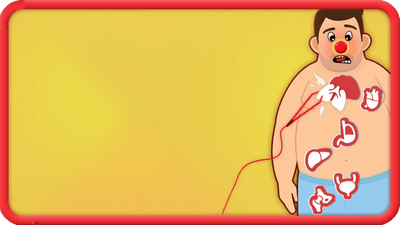
But what about if we plus things up a little? Like that red-nosed, pot-bellied man we all used to play Operation on (what was wrong with him, anyway?), can we just go plucking things out at random?
The non-negotiables
“Most organs can be partially removed without killing the human, but very few can be totally removed,” intensivist Dr Daniel Funnell told IFLScience.
“People can survive with one kidney, half a liver, one lung, even half a brain. But if you remove the entirety of these organ systems, death will happen rapidly.”
It probably doesn’t take a doctor to muddle out that you can’t remove a whole brain, but as for what’s needed to support a patient after some-kind-of-organ-ectomy? That definitely does.
Modern medicine has innovated all kinds of machines that can step in to pick up the slack when the compromised body cannot.
Ask someone on the street to point out on your body where they think the thymus gland is and they’ll probably reply, ‘please sir, you’re scaring my children,’ but the thymus has a vital role in T-cell maturation.
Dr Daniel Funnell
Lost a kidney? We have dialysis machines that can filter out electrolytes and toxins. For the lungs, there are extra-corporeal membrane oxygenators that effectively bypass circuits that can take blood from the large vessels in the chest, fill it with oxygen, remove carbon dioxide, and pump it back into the vessels again.
Even our hearts can take a break thanks to ventricular assist devices that pump blood around the body, but things can get a little weird here. They pump continuously rather than in rhythmic bursts, sort of like water running through a hose, so people on these machines won’t have a pulse despite being alive.
It’s not a perfect replacement, but it can buy a patient time, acting as a bridge to recovery of the heart from whatever disease was affecting it, or as a back-up until a transplant organ is available.
Leave (get out)
Cancer is bad news for any organ system, but some make removal a lot more complicated than others.
Your adrenal glands, for example. A matching set of organs that sit atop your kidneys and typically do a grand job of secreting important hormones like adrenaline, noradrenaline, and dopamine. Throw a phaeochromocytoma into the mix, however, and that production goes haywire.
Patients with these kinds of tumors often report an “impending sense of doom” as this inappropriate release of a hormonal cocktail makes them feel, frankly, awful.
It’s a tricky one to diagnose, not least because sometimes the tumors are hiding elsewhere in the abdomen, in the heart, or even at the base of the brain. An adrenalectomy can resolve the issue, and it’s even possible to have both organs removed in rare cases that call for it.
Treatment pre-removal involves a witch’s broth of different medications to try and tackle the hormone slurry, and it means giving anaesthetics is fraught with peril.
“The phaeochromocytoma is a highly strung individual, and its response to certain drugs, inserting an airway for surgery, or the surgeons touching it intraoperatively, will be to unleash hell, which can cause rapid rise in blood pressure and heart rate, which needs to be controlled quickly to minimize complications like stroke or damage to the heart,” explained Dr Funnell.
“As if that wasn’t bad enough, once the tumour is removed, things will often swing the other way as all the hormones causing havoc will be gone, and this often results in a period of low blood pressure which is often difficult to treat, meaning they need to be monitored closely in a high dependency unit. Bastard adrenals.”
Bastard adrenals, indeed, and another tricky “ectomy” is that of the thymus.
“Ask someone on the street to point out on your body where they think the thymus gland is and they’ll probably reply, ‘please sir, you’re scaring my children,’ but the thymus has a vital role in T-cell maturation,” said Dr Funnell.
“As we age, the T-cell activity of the thymus reduces hugely and it becomes less important, but this sneaky poltroon of a gland can still create problems in adult life by causing an autoimmune condition known as myasthenia gravis.”
“Myasthenia gravis is a condition where the body attacks a specific part of the motor nerves, leading to symmetrical limb weakness that gets worse with exercise, as well as double vision and breathing difficulties. Removal of the thymus in patients with myasthenia gravis can often improve the symptoms significantly.”
Other organ systems that can be totally removed without the need for advanced organ support include the thyroid gland, the spleen, and the large bowel, but that’s not to say that you won’t run into problems without them.
For example, the spleen is one of the more readily removable organs, but removal still comes with a number of significant risks.
“It is an organ that has a number of odd little roles, like removing old red blood cells from the circulation, as well as important roles in immune response,” explained Dr Funnell.
“People who have a splenectomy (due to traumatic splenic rupture, lymphoma, or rare haematological conditions) are at risk of infection from encapsulated organisms that can cause conditions like meningitis, so need additional vaccinations and lifelong prophylactic antibiotics.”
“A feared and rare complication in the post-splenectomy patient is overwhelming post-splenectomy infection (OPSI), a condition characterised by rapid onset severe infection with multi-organ failure and death in approximately 50 percent of cases.”
Better together
When it comes to jettisoning the non-essentials, it helps to think of the human body a bit like a ship – built for going the distance, but not without its weak spots.
Sometimes, to stay afloat, you have to toss some cargo overboard. Maybe it’s the cannons, and that leaves you more vulnerable to attack. Perhaps you lose some crew, without whom things just don’t run as smoothly.
And all that rum you spilled in the process? Well, that’s just going to leave you miserable.
Steering a ship is a breeze compared to the countless tasks constantly needing to take place in order to keep a human body going. It figures, then, that when we lose something – be that an organ, tissue, or limb – even time, patience, therapy, and medication can only help us to recover so far.
Still, when the sails split and the pirates are coming, it’s nice to know modern medicine’s got a few life rafts to fall back on.
This Curious Questions feature first appeared in Issue 37 of our digital magazine CURIOUS. To access exclusive CURIOUS content first, and receive the quarterly digital magazine, become an All Access Member.