Health and Medicine
 PUBLISHED


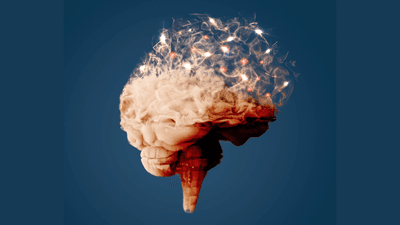


Your body is like your best friend. For better or worse you get to know all its quirks as you journey side-by-side through thick and thin. It figures, then, that when we suddenly lose part of our body, we can often feel as if it’s still with us. Unfortunately, that feeling can be a painful one.
The uncomfortable perception of a body part that’s no longer there is known as phantom pain. It’s something a lot of people have probably heard in reference to lost limbs, where a person may feel cramp in the calf of the leg they needed to have amputated, or perhaps pins and needles in an arm that’s no longer there.
It’s a poignant demonstration of the power of our brains, capable of delivering messages to us that are so convincing even when we can see with our eyes that the source of pain, well, doesn’t exist. It ties into nociception, a subcategory of somatosensation (our sense of touch), that helps us to detect and avoid noxious stimuli. A crucial system for things like avoiding touching fire for a second time when you got burnt the first, but one that can work against us in the context of amputated limbs.
“Many describe their phantom limb pains as a crawling feeling on the skin, a burning, the sudden feeling of a spike driven through the missing body part, or the feeling as if their hand is clenched and won’t open,” wrote neuroscientist Dr Austin Lim in his new book, Horror On The Brain: The Neuroscience Behind Science Fiction. “Up to 85 percent of amputees have these sensations, adding another challenge to the quality of life beyond adjusting to limb loss.”
To overcome phantom pain from amputation, scientists have developed neuroprosthesis that function by stimulating nerves in the leg that enable the wearer to know when the prosthesis makes contact with something. This can help by allowing for better detection of obstacles that could trip you up, and bridges the gap towards making the prosthesis feel like a part of the body.
Other approaches towards managing phantom pain have included medication and surgery, but there’s no perfect solution for all kinds of phantom pain. Not least because it can actually occur anywhere in the body.
“Every body part is sensitive to the phenomenon, such as a phantom erection pain following a penectomy,” explained Lim. “Internal organs are also prone to phantom sensations. After a hysterectomy, people may feel period cramps, and after a rectal amputation, people can feel phantom 'pharts'.”
People having their rectum and colon removed can experience something known as “phantom rectum syndrome”, affecting between 32 and 68 percent of patients following resection. Treatment of the condition follows similar lines to treatment of phantom limb syndrome, including analgesics, anticonvulsants, antidepressants, muscle relaxants, and cognitive behavioral therapy. It has been suggested that for phantom pain, the best line may be prevention by tackling pain in the affected body part before it is removed.
Want to hear more curious tales from neuroscience? Dr Austin Lim was at IFLScience’s latest CURIOUS Live talking all about the strangest science that’s inspired science fiction, and more from Horror On The Brain. The recording is available now to IFLScience subscribers.

 1
1