Health and Medicine
 PUBLISHED



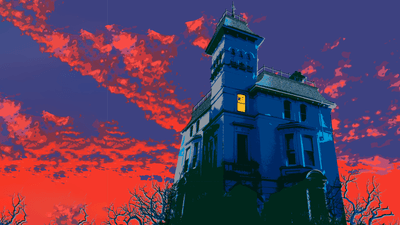


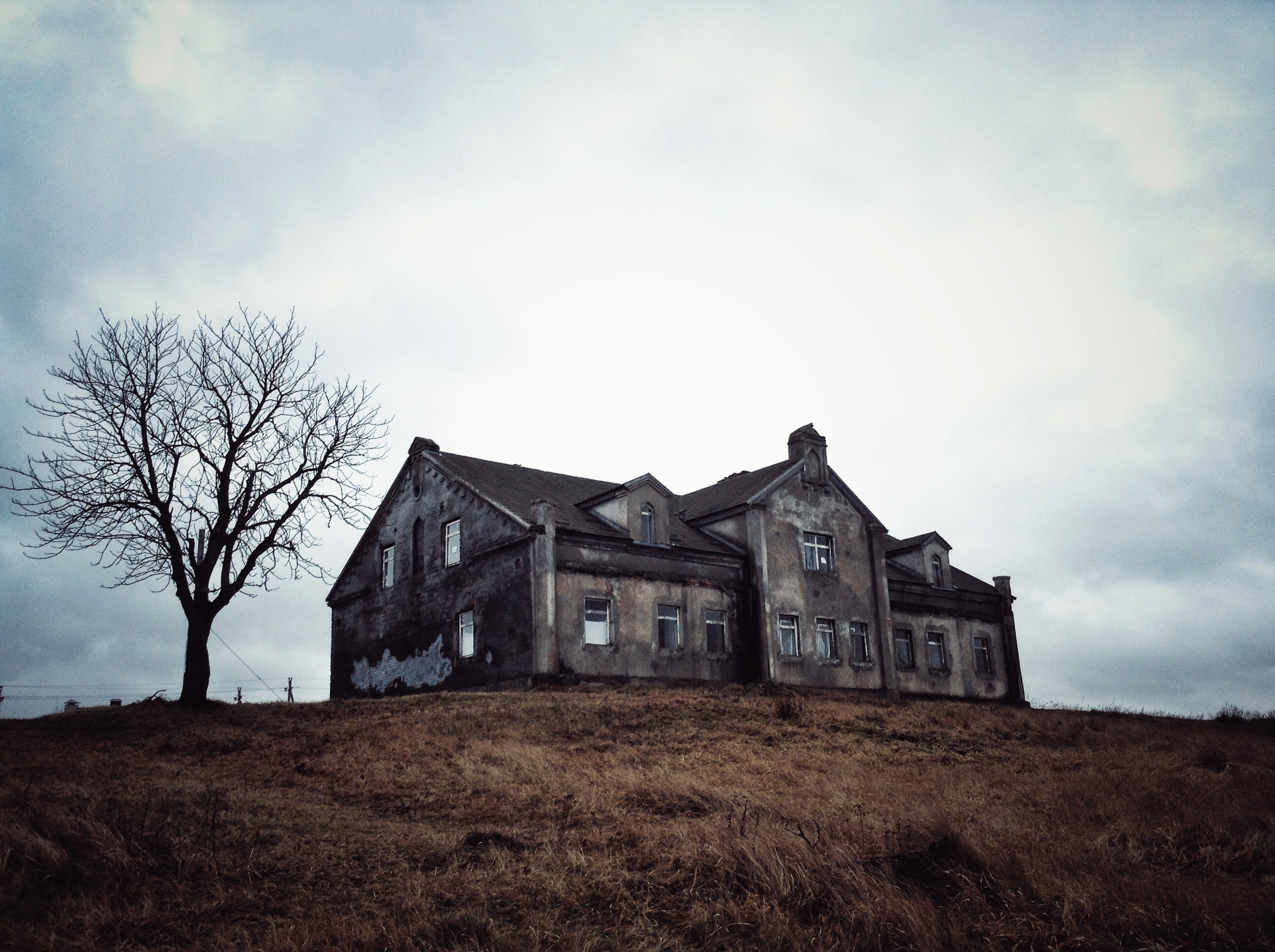
IFLScience recently had a bright idea: why don’t we cram ourselves into a car, hop on the road, and spend the night in the most haunted castle in Britain?
It was a pitch that was met with mixed emotions. For myself and my colleague Science Writer Dr Russel Moul, it sounded like a blast. Meanwhile, Custom Content Manager Dr Beccy Corkill and Senior Video Editor Chris Carpineti went a little green around the gills (even if it was – in fact – entirely Beccy’s idea).
It's rare to find someone that doesn't like any kind of fear at all.
Marc Andersen
The decision to spend the night at a castle that boasts an above-average number of ghost sightings, as well as its own in-house torture room, shone a light on the different ways people respond to frightening stimuli.
That we’re going anyway is surely a testament to the fact that even the more hesitant of haunted house visitors can’t resist the allure. So, why do we do it to ourselves?
Peek-a-boo
From the minute we can interact, humans begin toying with ways to feel fear.
Just look at everyone’s favorite jump-scare baby game, Peek-A-Boo. Tell a kid you’re a monster and chase them through the house and what do they do? Giggle! (Well, provided you actually know them.)
These are both early examples of the slightly paradoxical relationship humans have with fear. Ask anyone and they’ll tell you it’s a negative emotion, but quiz the queue outside the movie theater on fright night and they’ll say it’s precisely what they’re seeking.
Not everyone is chomping at the bit to watch the latest horror flick, however, and while some people are giggling their way through the haunted house experience, others are screaming. So, are we gore-glorifying thrill-seekers just a big bunch of weirdos, or is it normal to enjoy feeling fear?
“Absolutely,” cognitive scientist Marc Andersen at Aarhus University told IFLScience. “People tend to forget how there are so many other phenomena outside of horror [that can elicit fear]. People who say that they don't like horror will often like a good thriller, or listening to a true crime podcast; it’s really just levels.
If people are engaged in a recreational fear activity that is too scary for them, enjoyment goes down. But if it's not scary enough, enjoyment is also low. Maximum enjoyment is found at the peak of the rainbow, which is when the fear level is just right.
Matthias Clasen
“It's rare to find someone that doesn't like any kind of fear at all.”
Andersen should know, having set up the Recreational Fear Lab with associate professor in literature and media at Aarhus University, Matthias Clasen. It’s an institution that comes with a suitably bad-ass logo, conducting research that provides insights into human behavior as well as how to craft the ultimate video games.
“Our mission is to conduct scientific investigations of what we call recreational fear: activities that are about deriving pleasure from being frightened,” explained Clasen.
“It's a really interesting phenomenon, because it's not only incredibly pervasive, it's something that you'll see everywhere once you start looking for it, and it's also scientifically neglected.”
Recreational fear
Everything from taking up extreme sports to going on rollercoasters can fall under the umbrella term of recreational fear, and what scratches the itch for one person may not work on another.
Ironically, the optimum “sweet spot of fear” resembles the cute spot of meteorology.
“There's a sort of rainbow-shaped relationship between fear and enjoyment if you plot the two in a coordinate system,” said Clasen. “If people are engaged in a recreational fear activity that is too scary for them, enjoyment goes down. But if it's not scary enough, enjoyment is also low.”
“Maximum enjoyment is found at the peak of the rainbow, which is when the fear level is just right.”
Being able to identify and measure that rainbow both physiologically and in terms of participant feedback was a pivotal achievement in the team’s APEX of Fear project.
Like Black Mirror’s “Playtest” episode, it looked at how a virtual reality game could be adapted to a player’s personal fear sweet spot, making it just the right amount of scary to achieve optimum enjoyment.
Children tend to be interested in phenomena that somehow moderately deviates from what they know already. So, things they can't quite predict yet.
Matthias Clasen
The project was helped along by a sizable investment from the Danish Innovation Fund’s InnoExplorer scheme, and the interactive horror experts over at Dystopia Entertainment. Evidently, a lot of time and money goes into perfecting these experiences, begging the question: why is there so much demand?
Why do we enjoy being scared?
A lot of things in life that we perceive as being fun are actually very beneficial. Play from a young age teaches us all sorts, from better motor skills to higher intelligence, and the benefits are reflected in humans’ enduring history with gaming.
Acting out fictional scenarios can prepare us for when the real deal comes along. It figures, then, that volunteering to have the bejesus scared out of us can be a similarly mentally stimulating experience.
“Our working hypothesis is that it has to do with learning,” said Clasen. “Some of the science that we were inspired by comes from play and curiosity research, and those fields suggest that the rewards that are associated with play and curiosity in children – and adults – have to do with you being able to consume the information that you surround yourself with.”
“Children tend to be interested in phenomena that somehow moderately deviates from what they know already. So, things they can't quite predict yet, but that they have enough sense of that they might be able to learn about.”
“We think essentially that horror and fear work the same way in that if you get exposed to a manageable amount of fear – whatever that may be given your knowledge, skill sets, and competencies – then that's where you can extract enjoyment.”
“It’s really mediated by you learning about that situation or that scenario and gaining control over it.”
Control is crucial
Control can be pivotal when it comes to hitting the sweet spot or overshooting into all-out terror. Think of it like the thrill you get from surviving the scary bit in a movie, which you knew was fictional all along, versus how you feel when you’re home alone and suddenly think you might not be.
Fear can tip so easily into excitement because the chemistry that goes on behind our old friend “fight or flight” is equally involved in the onset of positive emotional states. High arousal is shared by good and bad feelings, but what comes next is often at the mercy of our surroundings.
“A major factor in how we experience fear has to do with the context,” said Assistant Professors of Psychiatry at Wayne State University Arash Javanbakht and Linda Saab.
“When our ‘thinking’ brain gives feedback to our ‘emotional’ brain and we perceive ourselves as being in a safe space, we can then quickly shift the way we experience that high arousal state, going from one of fear to one of enjoyment or excitement.”
So, the context of your horror movie sleepover can help your brain decide which drawer to file your fear in, but where is all that terror coming from to begin with?
The foundations of fear
The source of our screaming is the amygdala, a region of the brain that activates when we see a threat, like an axe-wielding clown.
That clown unleashes a cascade of physiological changes that should make us better at escaping it, from dilated pupils and bronchi to an elevated heart rate, respiratory rate, and blood pressure. That gets our blood pumping, better fuelling our muscles so we can leg it, all thanks to the amygdala.
Embarrassingly, it gets shown up sometimes.
Another part of our brain known as the hippocampus can see beyond that clown’s cheap rubber mask as the home of higher-level processing of precious context. This enables us to know the difference between coming face-to-face with actual John Wayne Gacey, or bumping into Tracie, the performing arts grad just trying to earn some Halloween bank.
How good we are at differentiating between perceived and real threats comes down to experience, but it can go either way. Have a bad run-in with a costume clown at a kid’s party and you may go on hating them despite knowing they’re not all serial killers.
Depending on the severity of the event, these kinds of personal experiences contribute to phobias.
But what about Chris?
If, like Chris, the prospect of spending the night in a haunted house is not one that sparks joy, you’re not alone.
As the team over at the Recreational Fear Lab has established, there’s no one-size-fits-all when it comes to the sweet spot of fear, and it doesn’t have to look like a bunch of ghosts and ghouls and torture rooms.
Spooky season is about fun (and the occasional opening of a gateway to hell), so don’t feel forced to squeeze yourself into someone else’s idea of Halloween hilarity.
And on that note, Russ and I need to go strongarm some colleagues into a car.
This Deep Dive first appeared in Issue 27 of our digital magazine CURIOUS. To access exclusive CURIOUS content first and receive the quarterly digital magazine, become an All Access Member.